Iran's culture minister draws a shared-threat line in Beirut
On 8 June 2026, Iran's culture minister framed Israel as a common enemy of both Tehran and Beirut, signalling a diplomatic posture that keeps the regional alliance intact without committing Iran to Lebanon's fight.
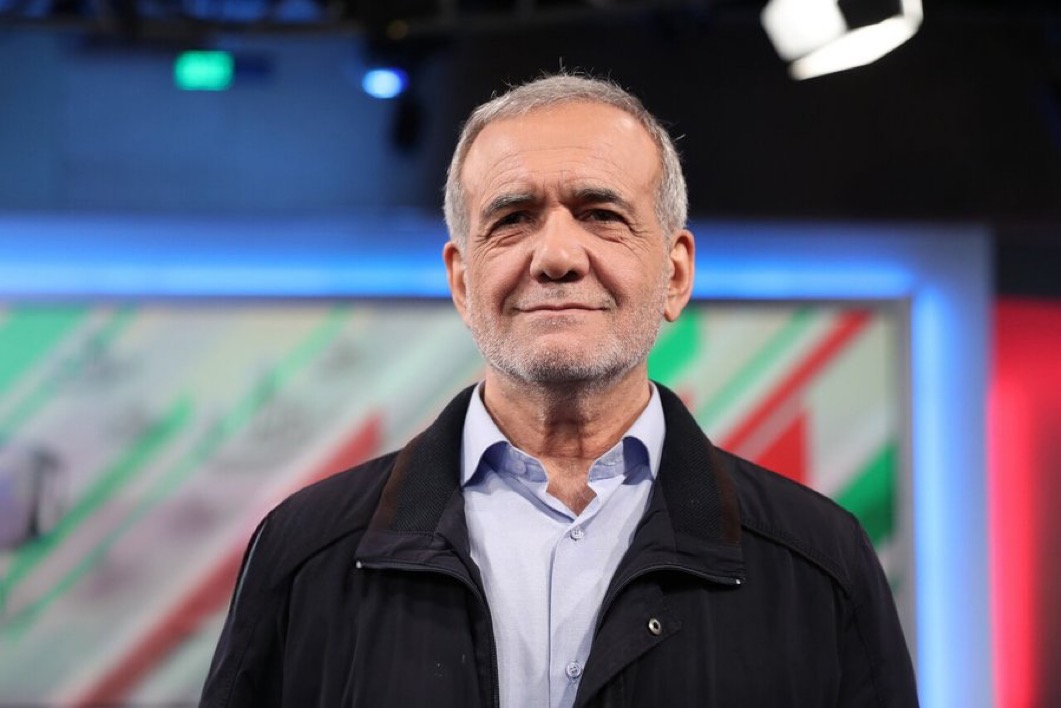
Iran's minister of culture, Seyyed Abbas Salehi, used an appearance in Beirut on 8 June 2026 to recast the relationship between Tehran and Beirut as a partnership of victims rather than a single patron–client line. "Neither Iran fights for Lebanon, nor Lebanon for Iran; both share a common, ruthless enemy," Salehi said, according to English-language reporting carried by PressTV, the Iranian state broadcaster's international channel. The framing — that the Israeli state seeks "a divided Lebanon and a fragmented" regional order — is the rhetorical centre of gravity for a piece of diplomacy that, in substance, says very little new about Iran's strategic commitments but says a great deal about how Tehran wants those commitments to be read in 2026.
The line matters less for what it announces than for what it refuses to announce. There is no mention of new weapons, no threat of escalation, no language of imminent retaliation. Salehi is a culture minister, not a defence official or a commander in the Islamic Revolutionary Guard Corps. By sending him rather than a general, Tehran signals that this is a message about narrative and alignment, not about the next military move on the Israel–Lebanon border.
The rhetorical frame
Salehi's formulation does two things at once. It places Iran and Lebanon on the same side of a moral ledger, with Israel as the aggressor against both. And it carefully stops short of converting that moral alignment into an operational pledge. The phrasing — "neither fights for the other" — is a soft denial of the regional picture most often drawn in Western wire coverage, in which Iran is cast as the engineer of Hezbollah's arsenal and the decisive external actor in Lebanese politics. The minister's version is closer to a story of two countries facing the same adversary than of one country's proxy force being directed by another.
That is a story Tehran has been telling, in different registers, for years. What is distinctive about the 8 June appearance is the venue. Beirut is a city that has spent much of the last two years negotiating its internal balance of power between Hezbollah, its allies in the Shi'a political class, and the broader cross-communal coalition that has demanded some measure of state sovereignty over the decision to go to war. A senior Iranian official travelling there in 2026 is making a deliberate choice of audience.
What the Iranian read actually says
The line is best understood as a calibration of expectations. Tehran is signalling to its Lebanese partners that it will continue to supply the rhetorical and political cover of a shared front, without committing to a shared timetable of escalation. For a Lebanese audience still recovering from a war that devastated large parts of the south, the suburbs of the capital and the Biqaa Valley, that is not nothing. It is also not the language of a state about to pull the trigger on a regional war.
PressTV, the channel that carried Salehi's remarks in English, is an Iranian state outlet and its framing reliably reflects the foreign-policy priorities of the Islamic Republic. Read against the grain, the line tells you as much about what Tehran does not want its Lebanese partners to expect as about what it does. A reading sympathetic to the Iranian position would see this as a statesmanlike de-escalation gesture — a refusal to let a culture-ministry visit be read as a war-planning meeting. A reading less sympathetic would see it as an attempt to maintain deniability while continuing to underwrite Hezbollah's position. Both readings live inside the same sentence.
Why a culture minister, and why now
The choice of messenger is itself the message. Salehi runs the Ministry of Culture and Islamic Guidance, the institution responsible for the soft-power instruments of the Iranian state — press policy, religious publishing, cultural diplomacy, the management of foreign-language broadcasting. In Iran's constitutional order, the culture ministry is a venue for articulating the regime's worldview abroad without crossing the line into security signalling. Sending a culture minister to Beirut in 2026 is, in this sense, a way of speaking loudly in the register of civilisation and shared victimhood while holding operational ambiguity intact.
The timing is harder to read with the same confidence. Reporting on the regional security track between 8 June 2026 and the moment of writing is thin in the open sources available to this publication. What is on the public record is the PressTV report of Salehi's Beirut remarks. What is not on the public record is any indication of a new diplomatic channel, a new round of talks, or a new phase in the cycle of cross-border strikes that have punctuated the Israel–Hezbollah front since late 2023. The honest answer is that the sources do not specify why this line is being drawn in public now, and any attempt to date the trigger more precisely would be guesswork.
Stakes and what to watch
If the Salehi line is read as Tehran's preferred public posture for the next phase, the practical effect is to lower the rhetorical temperature of the Iran–Lebanon relationship at exactly the moment that internal Lebanese politics is trying to renegotiate the terms under which Hezbollah's arsenal is integrated into — or held apart from — the state. A common enemy is a cheap and durable rhetorical object; a common operational timetable is a much more expensive one. Tehran's interest, on the most charitable read, is to keep the first without being pulled into the second.
What to watch in the coming weeks is whether the language travels. If Iranian Arabic-language outlets such as Al-Alam and the Lebanese outlets that relay Iranian framing pick up the "common enemy" formulation and apply it to specific political decisions in Beirut — cabinet formation, defence policy, the status of UNSCR 1701 implementation — then the line has done its work. If instead the language stays inside cultural-diplomacy settings and does not migrate into the security conversation, then the visit should be read as a soft-power exercise that the regional security file has not yet absorbed.
The nuance that the open record does not yet let this publication resolve is whether Salehi's line is the opening of a new Iranian posture or the closing argument of an old one. The PressTV report is a single piece of evidence; it does not, on its own, settle the question of whether Tehran is recalibrating downwards or merely finding a new way to say what it has long said. That distinction will become clearer only when the next round of cross-border exchanges, the next cabinet crisis in Beirut, or the next Iranian foreign-ministerial statement supplies a second data point.
This piece was filed from the public record. The primary source is an English-language PressTV wire carried on the Telegram channel @presstv on 8 June 2026 at 15:50 UTC. The reporting draws no material from sources outside that wire. Where the wire does not speak, this publication has said so.
Wire provenance
This editorial synthesis draws on the following public wire/social posts:
- https://t.me/presstv
- https://t.me/presstv
Follow the event.
These dated source records provide context. They do not retrospectively verify this archive article.
Separate what the nuclear watchdog reported from what it could not determine after the June 2025 strikes.