Iran's own intellectuals are warning that media illiteracy has become a strategic vulnerability
A senior researcher at a state-linked Islamic sciences institute has publicly framed Iran's information environment as a self-inflicted wound. The diagnosis matters more than the venue.
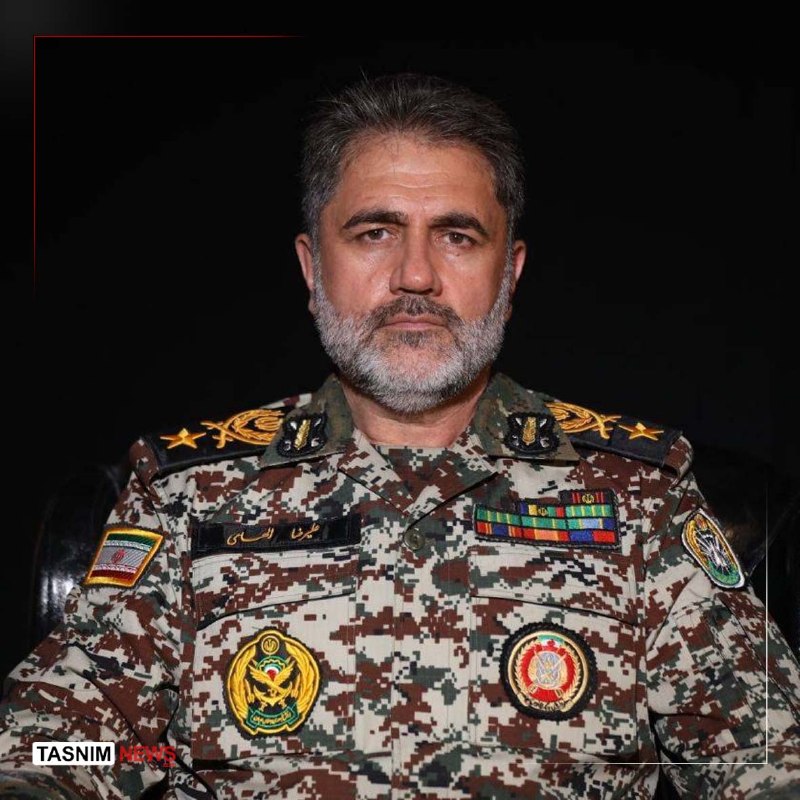
On 8 June 2026, Iran's Tasnim News English-language channel published a self-flagellating statement from one of the country's own establishment researchers: the Iranian public's weakness in the information environment is not the work of foreign enemies so much as a domestic failure of media literacy. Dr. Rasul Nowrozi, a member of the scientific staff of the Research Institute of Islamic Sciences, told the outlet that "every blow we got, we got from lack of media literacy." The diagnosis is striking less for its content than for its venue. It appeared on a channel that is itself part of the apparatus Nowrozi is critiquing. The Iranian public, in this telling, is losing the information war because it does not know how to read the war.
The framing matters. For years, the dominant Tehran line on hostile media coverage has been that adversarial foreign broadcasters and platform algorithms manufacture consent against the Islamic Republic. The new line does not deny that pressure, but it concedes the deeper point: a population that cannot parse competing narratives will absorb whichever narrative arrives first and loudest. That is a concession no Iranian official has previously been prepared to make on the record, and it lands at a moment when Tehran's information position is unusually exposed — economically strained, regionally pressured, and pitched to a domestic audience that watches satellite television and uses filtered messaging apps in defiance of state policy.
The venue is the message
Tasnim News is not a marginal outlet. The English-language Telegram channel that carried the 8 June item is the international-facing arm of a wire service closely identified with the Islamic Revolutionary Guard Corps, and the remarks were framed as a direct answer to a pointed question: why does Iran have so many enemies in the media? The phrasing is telling. It assumes the existence of an organised media hostility, asks only about its sources, and then turns inward to identify the domestic enabler. A researcher at a state-linked institute, speaking on a state-linked outlet, blaming the audience.
That sequence inverts the usual information-space playbook. In most contests of this kind, the state defends itself against external framing and treats domestic scepticism as a fifth-column problem to be managed. Here the state-aligned researcher is treating the domestic audience as the principal vulnerability. The implication is that the gap is not raw access to truth but the trained ability to recognise truth when it appears. If that reading holds, the policy prescription that follows is not more state broadcasting, not stricter platform filtering, and not louder counter-narratives. It is something closer to civic education, of a kind that has historically sat uneasily with the information-control machinery the Iranian state has built since 1979.
What "media literacy" means inside an authoritarian information market
The phrase has a particular shape in the Iranian context. It cannot mean what it means in a Stockholm secondary school — neutral tools for parsing competing claims — because the competing claims are not politically equivalent inside the country. State television, state-aligned wires such as Tasnim, IRNA, and PressTV, and the foreign-language arms of state broadcasting set the bounds of licit public discussion. Outside those bounds sit BBC Persian, Iran International, VOA Persian, Manoto, and a long tail of diaspora channels that are legal to receive in most Iranian homes via satellite dish but officially treated as psychological-warfare assets.
A media literacy programme launched against that backdrop has two possible shapes. The first, and the one Nowrozi's framing gestures toward, is defensive: teach Iranians to recognise hostile framing when it appears, to triangulate between sources, and to discount emotional manipulation. That is, in effect, a form of inoculation against foreign broadcasts. The second is structural: teach Iranians that all media — including domestic state media — operates with editorial intent, that no source is transparent, and that the official narrative is itself a constructed object. The second version is the one the Iranian state has historically refused to fund, because its logical endpoint is a citizen who treats the state broadcaster with the same scepticism as the BBC. By admitting the literacy gap in public, Nowrozi has opened a door that the second version might one day walk through, even if the first is the one currently being offered.
The structural frame: information asymmetry as a sovereign problem
The wider pattern here is not uniquely Iranian. Across a range of middle-income states facing sustained pressure from better-resourced external information operations, the discovery that the population cannot parse the news has moved from the margins of policy discussion toward the centre. The diagnosis is structurally similar: a sovereign state that cannot teach its citizens to read the information environment is, in effect, outsourcing a piece of its sovereignty to the platform owners and foreign broadcasters who do the teaching by default. That is true whether the state in question is Tehran, Caracas, or Minsk, and it cuts against a long post-Cold War habit of treating media literacy as a soft, almost decorative, civic-goods project. The harder version, which is now being articulated in Iran by an establishment voice, treats media literacy as a load-bearing element of national security.
There is a counter-narrative worth flagging, and the Iranian state-aligned ecosystem will reach for it by default. The literacy gap, on this read, is itself the product of hostile foreign information operations that have spent decades saturating the Iranian media market with disinformation designed to erode trust. In that telling, Nowrozi's diagnosis is correct in its surface form but inverted in its implication: the answer is not to teach citizens to be sceptical of all media, including state media, but to immunise them against the foreign layer while reinforcing the domestic one. The two readings cannot both be right, and the policy that emerges from Tehran's information ministries over the next 12 to 24 months will be the clearest signal of which way the state has decided to go.
Stakes and what to watch next
The stakes are concrete. If Tehran doubles down on the defensive version of media literacy — a curriculum built around recognising hostile framing and reinforcing official narratives — the practical effect is to widen the gap between the Iranian public's information diet and the official account, and to push more news consumption underground into satellite and encrypted channels where the state cannot observe it. If it moves toward the structural version, the state risks the very thing it has spent four decades preventing: a citizenry trained to ask who is speaking, on whose authority, and to what end. Neither outcome is stable.
Three things to watch. First, whether the Research Institute of Islamic Sciences publishes a fuller working paper behind Nowrozi's remarks, or whether the diagnosis remains a single interview. Second, whether the Supreme Council of the Cultural Revolution or the Ministry of Education moves to embed a media-literacy curriculum in secondary schools, and what that curriculum actually teaches. Third, whether the state-aligned media ecosystem absorbs the diagnosis and begins to publish more self-critical coverage of its own framing failures, or whether the moment passes and the apparatus returns to its default posture of treating hostile coverage as the sole problem. The 8 June interview will, in retrospect, look either like the start of a small but real shift in how Tehran thinks about its information position, or like a single permitted act of self-criticism that was always going to be safely contained. The evidence is not yet in.
Desk note: Monexus is sourcing this item to the Tasnim News English-language Telegram channel rather than a Western wire, because the Western wire layer did not carry the remarks and the substantive claim is the Iranian establishment's own self-diagnosis. That choice carries its own risks — the venue is state-aligned — so the framing above treats the diagnosis as newsworthy precisely because the messenger and the message are, unusually, the same institution.
Wire provenance
This editorial synthesis draws on the following public wire/social posts:
- https://t.me/tasnimnews_en