Iran's pause, Israel's probe, and the 48 hours holding the next war in place
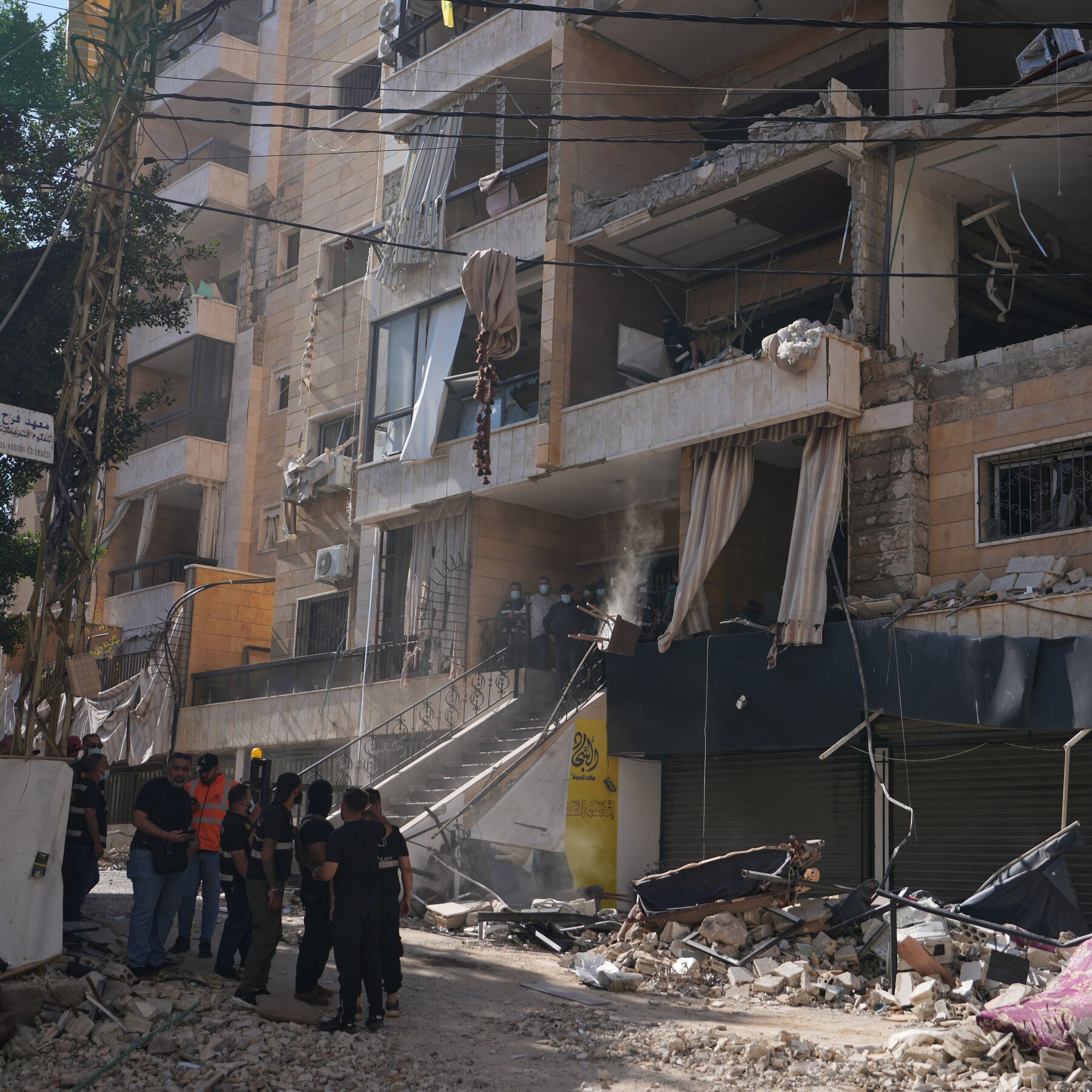
On 8 June 2026, just after 12:00 UTC, the Islamic Revolutionary Guard Corps announced that it was suspending military operations against Israel and warned — in language that mattered — that renewed attacks on Lebanon would bring the campaign back online within minutes. Roughly an hour later, sirens sounded across northern Israel, the IDF Spokesperson's office logged three projectiles launched from Lebanon toward soldiers operating inside Lebanese territory, and an Israeli strike hit Al-Kharayeb on the outskirts of Tyre, the second such strike since Iran's warning was issued. The pause and the airstrike exist in the same news cycle, separated by minutes of clock time and a much larger distance in signalling. That gap is the story.
The wire reports describe a tit-for-tat that has, for the moment, stopped compounding. That is not the same as saying the war is over. It is closer to saying the war has been told, out loud, by its most dangerous participant, to wait.
The pause is not a peace
What the IRGC declared, per coverage relayed by Bowe on X at 12:45 UTC and elaborated in the Palestine Chronicle's reporting on Iran's "painful response" posture, is a conditional cessation tied to a specific trigger: continued Israeli action in Lebanon. The mechanism is explicit — halt operations, retain the right to resume them, and attach the resumption key to a behaviour Tehran can monitor in real time. That is not diplomacy. It is deterrence-by-conditionality, and it works only as long as the condition is observed.
The Israeli strike on Tyre that landed within an hour of the announcement is therefore not a side-note. It is a stress test. The same arithmetic that produced the pause produces the next exchange if either side reads the other's restraint as a permission slip. The risk is structural, not rhetorical: each round buys less cooling-off time than the last, and the casus foederis that links Lebanon to Iran's declared red lines is now part of the public record.
What the IDF is actually saying
The IDF Spokesperson's English channel posted twice in the same minute — 12:59 UTC — describing three projectiles launched from Lebanon toward IDF soldiers operating inside southern Lebanon, and the framing matters. The language locates the fire on a battlefield populated by Israeli ground troops, not at Israeli civilian targets. Whether that framing is correct is a separate question from whether the wire reports reflect what Israeli commanders are now claiming; for now, the IDF is on record saying the projectiles were aimed at soldiers in Lebanon, and the Israeli strike that followed is being described, in the Telegram channel rnintel, as the second since Iran's warning.
A counter-narrative deserves airtime. Hezbollah-aligned outlets and Lebanese state media are likely to read the same sequence as continued Israeli aggression against Lebanese territory, with the IRGC pause functioning as a test the strike has now failed. The IDF line, by contrast, treats the projectiles as the originating violation, with the air response as a self-defence measure inside an active ground operation. Both readings are coherent with the facts on the wire. The dominant frame — that Iran has paused and Israel is continuing to strike — holds because the strike is the observable, dated, geolocated event, while Iranian intent is read off a statement.
The plain structural pattern
What is happening, in editorial terms, is the visible end of a de-escalation ladder that the actors climbed down together while refusing to declare they had. Iran gets to claim it delivered its retaliation and is now graciously holding fire; Israel gets to continue its operations in southern Lebanon without owning the title of a new regional war. Both governments are managing domestic audiences. Tehran's restraint is the price of the retaliation it has already announced; Jerusalem's operations are the price of the northern front its public will not accept losing. The cost of this equilibrium is paid in Tyre, in the villages named in the strike reports, and on the northern Israeli communities hearing sirens.
This is the pattern: declared pauses and undeclared continuations operating in parallel, each side reading the other's restraint as a tactical choice rather than a strategic shift. The wire does not yet have the data to call it a new equilibrium or a prelude to a wider war. The evidence supports a more modest claim — that for the next 48 hours, the war that is happening is not the one the headlines describe.
Stakes and what remains uncertain
The narrow stakes are concrete: a continued ground operation in southern Lebanon under a publicly declared Iranian red line. The wider stakes are a wider regional war that no declared actor wants but every signalling error risks. The honest position is that the sources we have are not yet sufficient to tell which way this breaks. We do not know the IRGC's internal authorisation chain for the resumption warning. We do not know whether the projectiles from Lebanon were a Hezbollah response to the earlier Tyre strike or a separate incident. We do not know the casualty count from Al-Kharayeb. What we know is that the pause, the strike, and the projectile fire are all in the same hour of the same day, and the difference between a holding pattern and the next war is currently a function of restraint that has, so far today, held.
Desk note: Monexus is leading with the IRGC statement and the IDF operational report in parallel rather than collapsing them into a single causal claim. The wire frames the pause as the story; the structural read is that the strike and the pause are the same story, told by different actors for different audiences.
Wire provenance
This editorial synthesis draws on the following public wire/social posts:
- https://t.me/englishabuali
- https://t.me/idfofficial
- https://t.me/rnintel
- https://t.me/wfwitness