Tehran and Washington still texting, not talking: Iran says nuclear draft not final as Pakistan relays messages
Iran's UN ambassador says the two sides have not reached a final text, even as Tehran and Washington continue to exchange views through Pakistani intermediaries.
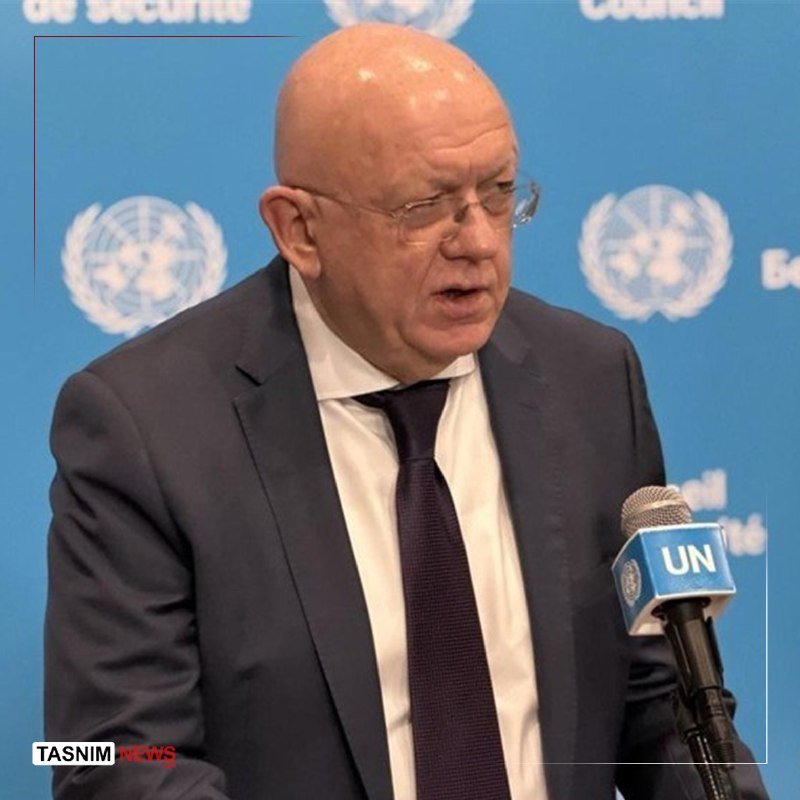
Iran's ambassador to the United Nations, Amir Saeed Iravani, said late on 8 June 2026 (UTC) that Washington and Tehran have "not yet reached the final text" of a draft agreement, even as the two governments continue to exchange positions through a Pakistani channel. The remarks, distributed by Iranian state-linked outlets including Tasnim and Mehr within the same hour, suggest a negotiation that is alive but unresolved, and one in which a third-party broker is doing the logistical work the two principals have so far avoided doing directly.
The framing matters. After roughly two months of episodic talks in 2025 collapsed and reopened, the choreography has shifted to back-channel relays through Islamabad — a country with both the religious-diplomatic ties to Tehran and a working security relationship with Washington that makes it one of the few capitals acceptable to both. Iravani's careful language, recorded by Iranian outlets at 21:35–21:54 UTC, signals a process that the Iranian side wants to keep moving without committing to text it cannot yet defend publicly.
What Iravani actually said
The substance is narrow. Iravani told Iranian outlets on 8 June that "the exchange of opinions continues to reach the final text," and that the final text itself had not been produced. He framed the United States and Iran as "presenting and exchanging" views, with Pakistan as the relay. There is no claim of breakthrough and no claim of breakdown. The statement is calibrated: it preserves the negotiation's public legitimacy in Tehran, where hardliners will read any softening as capitulation, while leaving room for another round of exchanges.
The four Telegram channels that carried the comment — Tasnim, Mehr, the Tasnim English feed, and a third Tasnim-mirroring account — converged on the same wording within a 19-minute window on 8 June, an indicator that the message was distributed from a single source, almost certainly the Iranian mission in New York or its press office in Tehran. That synchronisation is itself a signal: when Iranian diplomacy speaks through one voice across multiple outlets, the line has been pre-cleared.
Why Pakistan, and why now
The Pakistani channel is doing work that the Swiss and Omani intermediaries handled in earlier rounds. Islamabad's value is structural. It is one of the few Muslim-majority nuclear-armed states; it has working relationships with both Iran's Revolutionary Guards Corps-linked actors and the US CENTCOM orbit; and it has domestic political reasons to demonstrate relevance to a Trump-administration Washington that has periodically weaponised aid flows against Pakistan. For Tehran, the channel offers deniability and a buffer against the political cost of direct contact with a US administration that is still formally designated as pursuing "maximum pressure."
The risk for Islamabad is the opposite: being useful enough that Washington asks it to deliver, and being blamed by Tehran if it is seen as a US proxy rather than a neutral messenger. The careful Pakistani public silence on the channel is consistent with that position.
The structural read
What is being negotiated is not, at this stage, a treaty. It is the language of a treaty — a draft in which the United States would seek verifiable constraints on enrichment capacity and on ballistic-missile development, and Iran would seek sanctions relief and a credible guarantee against regime-change rhetoric. The fact that Iravani is publicly denying the existence of a final text is a feature of the process, not a bug. Each side needs the other to be the first to commit text to paper, because the first to commit absorbs the political cost of any subsequent climbdown.
This is the standard endgame pattern of constrained nuclear negotiations, and it is the pattern Iran has used in three previous rounds — the 2015 JCPOA sequence, the 2021–22 Vienna track, and the brief 2025 Muscat talks. Iranian negotiators, like their US counterparts, treat the textual draft as a finite resource: once it exists, it can be leaked, attacked, and used as a cudgel. Better to keep the words private until the political deal is already a fact.
The Pakistani channel is therefore best understood as a leak-control mechanism, not a substantive mediator. Its job is to move words between capitals without producing a written artefact that either side's domestic politics can shred.
Stakes and what is not yet known
If a draft does emerge, three audiences will move first. In Washington, the deal's opponents — including a substantial faction in Congress and the regional lobby — will demand the text be published within 48 hours. In Tehran, the Supreme National Security Council and the office of the Supreme Leader will weigh whether the sanctions-relief arithmetic is large enough to absorb the political price of any enrichment constraint. In Riyadh, Abu Dhabi and Tel Aviv, intelligence services will begin their own parallel assessment, because the regional balance that has held since the 12-day war is implicitly being rewritten.
Several things the sources do not specify. The four Iranian channels give no detail on what the exchanged positions actually contain — no enrichment percentage, no sanctions list, no timeline. There is no Western readout in the thread to corroborate or contest Iravani's framing; the report is, at this hour, an Iranian-sourced description of a process both sides are conducting. The Pakistani foreign ministry has not, on the basis of these items, confirmed or denied the channel's existence. And the question of whether the United States has even accepted Pakistan as a messenger — as opposed to merely tolerating it — is not addressed in the available material.
What is clear is that both governments continue to spend diplomatic capital on the channel. That, more than any single statement, is the operational signal: a negotiation being walked away from does not require an ambassador to deny the existence of a final text. Iravani is denying it because the negotiation is real, and because the text, when it comes, is meant to arrive as a fait accompli rather than as a leaked negotiating document.
How Monexus framed this: the wire cycle on 8 June 2026 ran almost entirely on Iranian state-linked Telegram channels repeating the same quote. We have led with the Iranian primary source, flagged the absence of a Western or Pakistani readout, and resisted the temptation to read substantive policy into a procedural statement. The structural read is grounded in three prior rounds of constrained negotiation, not in speculation about what the current draft contains.
Wire provenance
This editorial synthesis draws on the following public wire/social posts:
- https://t.me/mehrnews/842119
- https://t.me/wfwitness/219874
- https://t.me/tasnimnews_en/412558
- https://t.me/JahanTasnim/300477
- https://en.wikipedia.org/wiki/Iran%E2%80%93United_States_relations
Follow the event.
These dated source records provide context. They do not retrospectively verify this archive article.
Separate what the nuclear watchdog reported from what it could not determine after the June 2025 strikes.