Netanyahu's anniversary framing and Sharif's mediation pitch: where the Israel–Iran track stands on 8 June 2026
As Netanyahu marks a year since the strikes on Iran, Pakistan's Shehbaz Sharif publicly tells both sides to give peace "a little more chance" — a fragile choreography of escalation, mediation and televised reassurance.
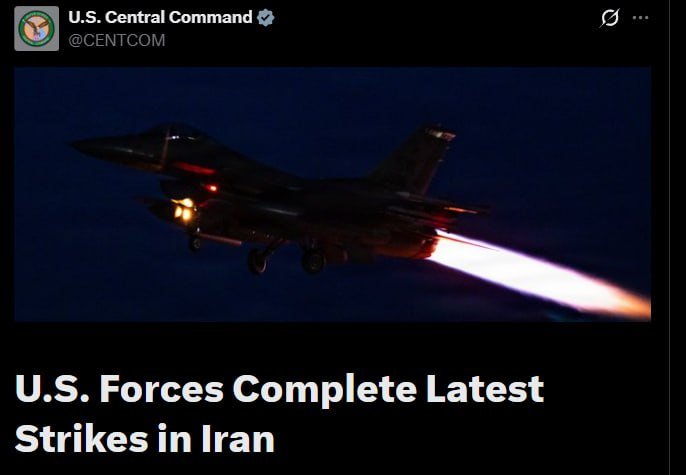
At 18:15 local time on 8 June 2026, Israeli Prime Minister Benjamin Netanyahu took to the country's airwaves for his first public statement since the latest round of strikes against Iran, opening with a year-end frame: "a year ago we launched a historic attack against Iran's intention to destroy us with atomic bombs. We thwarted this," he said, speaking to citizens of Israel from Jerusalem. The address, flagged roughly 25 minutes before broadcast by Israeli and regional monitoring channels, carried the deliberate anniversary weight of a leader defending a strategic decision that has shaped the regional security debate for twelve months.
By mid-afternoon UTC, a second, very different voice had entered the public record. Pakistan's Prime Minister Shehbaz Sharif — currently playing an active mediation role between Washington and Tehran — appealed publicly for restraint. He called "all sides to exercise restraint and give peace a little more chance" following the recent escalation, even as he separately told domestic audiences that the "final objective is just about to be achieved" in the Iran–United States track. The two statements, from two capitals, define the choreography of this moment: a battlefield anniversary on one side, a peace-diplomacy sales pitch on the other.
The anniversary frame, and what it claims
Netanyahu's June 2025 strike campaign against Iranian nuclear and military infrastructure was, in his telling on 8 June 2026, a preventive act that bought Israel a year. The anniversary reading is itself a political artefact: it asserts that the cost of striking was lower than the cost of waiting, and that the absence of a public Iranian nuclear detonation in the intervening twelve months is the relevant measure of success. Critics inside and outside Israel have long argued the opposite — that the strikes accelerated rather than retarded the program, and that the regional fallout (proxy reconstitution, nuclear ambiguity, missile programmes) has if anything widened.
For the prime minister, the timing is also useful. Domestic politics in Israel remain turbulent; the hostage question has not closed; the northern border with Hezbollah has not fully quieted. A national-security address that frames the Iran file as a delivered promise does work that an economic or judicial statement could not. The Israeli press has, in past cycles, treated these televised moments as calibrated to multiple audiences at once — the home front, the security cabinet, and the American and Gulf interlocutors who track Israeli escalation risk in real time.
Sharif's double track
Sharif's two near-simultaneous messages are not contradictory so much as dual-purpose. The first, carried by Middle East Eye's live blog, is the external face of Pakistani mediation: restraint, patience, "a little more chance." The second, surfaced via the Telegram channel Insider Paper citing the prime minister's framing of the Iran–US talks, is the internal sales pitch — that the diplomatic track is approaching resolution. Both are public; both will be read in Tehran, in Washington, and in the Gulf.
Pakistan's positioning is structurally interesting. Islamabad is a nuclear-armed Muslim-majority state, a frequent Iran interlocutor, and a US security partner that has periodically carried messages between Riyadh and Tehran. It is not, in the formal sense, a mediator of record on the nuclear file. That Sharif is publicly performing the mediator role suggests either that the formal channel has widened, or that Islamabad wants the visibility that comes with being seen to widen it. The two statements, taken together, are a classic case of saying different things to different audiences in the same news cycle without quite contradicting them — a craft that requires either confidence in the underlying process or a careful eye on the domestic audience back home.
What the Israeli address leaves out
A close read of Netanyahu's anniversary frame is also a read of what it omits. There is no public reference, in the excerpt captured by regional channels, to a negotiated end-state with Tehran; no reference to the prisoner file; no reference to coordination with Washington on the next phase. That silence is itself information. Anniversary addresses tend to be retrospective, and retrospective addresses tend to claim outcomes the speaker can plausibly own. The forward-looking question — what Israel does if and when Iran reconstitutes — is being left for a different stage.
It is also worth noting what remains contested. The source material surfaced on 8 June 2026 does not specify the operational effects of the June 2025 strikes in independently verifiable terms; it captures the political claim of success, not a technical after-action assessment. Western intelligence agencies have, in past cycles, given partial read-outs; Iranian sources have disputed the framing. The 8 June 2026 record, as captured here, is the Israeli government's own anniversary self-assessment, delivered on its own terms, with its own evidentiary caveats.
Stakes over the next 30 days
If Sharif's "final objective is just about to be achieved" line is taken at face value, the next weeks will test whether the diplomatic track survives the anniversary. The structural risk is familiar: an Israeli political calendar that rewards decisiveness, an Iranian leadership that rewards defiance, and a Gulf and Pakistani intermediary track that depends on neither side using the next provocation to break the table. Netanyahu's address, by leaning on the anniversary rather than the next step, signals that the Israeli side is content for now to let the diplomatic track carry the burden of forward motion. That is itself a position — one that will be tested the first time the public timeline of the Iran–US talks slips, or the first time a new incident forces a domestic Israeli reaction.
The honest reading on 8 June 2026 is that the sources do not specify whether the Pakistan-mediated track has a defined terminus, what the United States has signalled privately, or how Tehran is reading the Israeli anniversary frame. What the record does show is a prime minister defending last year's decision as a delivered outcome, and a prime minister in Islamabad trying to sell peace as if it were just around the corner. Both performances are aimed at their own audiences. The harder question — whether the underlying reality matches either script — is the one neither address can answer on its own.
Desk note: Monexus framed the 8 June 2026 wire around the asymmetry between Netanyahu's retrospective self-assessment and Sharif's prospective mediation pitch — two leaders speaking past each other in the same news cycle, both for domestic effect. The Western wire line on this story is still hardening; we will update as independently verifiable technical and diplomatic read-outs emerge.
Wire provenance
This editorial synthesis draws on the following public wire/social posts:
- https://t.me/wfwitness
- https://t.me/insiderpaper
- https://t.me/GeoPWatch
- https://t.me/rnintel
Follow the event.
These dated source records provide context. They do not retrospectively verify this archive article.
Separate what the nuclear watchdog reported from what it could not determine after the June 2025 strikes.