Israel strikes Mehrabad and Isfahan in overnight operation against Iranian military targets
Israeli airstrikes hit Mehrabad International Airport in Tehran and sites in Isfahan overnight on 8 June 2026. Tehran's fire department, quoted by IRNA, said no urban areas were targeted; the IDF confirmed strikes on Iranian military targets in central and western Iran.
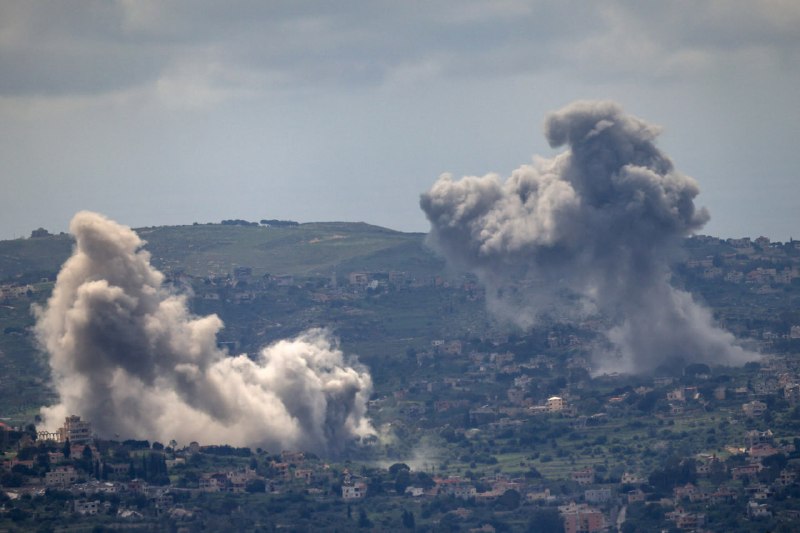
On 8 June 2026, in the early hours between approximately 01:30 and 02:30 UTC, the Israeli Air Force struck multiple targets across central and western Iran. The Israel Defense Forces confirmed the operation in a statement that "a short while ago, the Israeli Air Force struck military targets belonging to the Iranian terror regime in central and western Iran," with additional strikes reported in the hours that followed. The action represents the most direct Israeli military operation against the Iranian mainland in the present phase of the conflict — a notable departure from the years-long pattern of covert operations, cyber-warfare, and proxy confrontations that has shaped the two countries' rivalry.
The geography of the night tells most of the story. Strikes were reported at Mehrabad International Airport in western Tehran and at multiple sites in Isfahan, in central Iran. Open-source accounts pointed to ballistic missile depots and drone-manufacturing facilities among the targets. The conflict-tracker AMK Mapping, citing initial reporting, assessed that "only 1-2 locations in the Tehran area was targeted by Israeli airstrikes, one of which was Mehrabad International Airport, which was evacuated of civilian aircraft by Iran beforehand." The note is significant: the airport's pre-emptive evacuation suggests the Iranian side had received advance indication of the strike window — whether through intelligence, a leak, or the rapid cycling of the regional air-defence picture that has accompanied previous Israeli operations against Iranian-linked territory.
What was hit, and what was not
Reports from the morning of 8 June 2026 converged on a target set that mixed strategic infrastructure with weapons-production facilities. Strikes in Isfahan hit what one channel citing Shiite sources described as a drone-manufacturing facility. A separate account, drawing on geolocated footage, pointed to a ballistic missile depot at the same location. In Tehran, multiple channel accounts described hits on or near Mehrabad International Airport in the western part of the capital. One account described additional strikes in western Tehran as "likely Israeli assassination strikes" — a characterisation that, if accurate, would mark a notable expansion of the strike's intent beyond matériel.
What is not yet in evidence is broader damage to the Iranian capital. Tehran's fire department, quoted by Iranian state outlet IRNA, said that "no urban areas in the capital were targeted" and that at least two explosions were heard around 04:43 and 04:45 local time in western parts of the city. The qualifier matters: even if the strike package was limited — one or two locations in the Tehran area, in AMK's count — the visible impact on a major civilian airport is itself a signal. Airports in past Israeli operations have functioned less as primary targets than as staging, logistics, or dual-use infrastructure; the framing here, from the Iranian side, emphasises the civilian proximity, and from the Israeli side, the military utility.
A second limit applies to the reporting itself. The first hours of any large strike package are dominated by unverified video, conflicting claims, and the confusion of overlapping intercepts and overflights. The channel accounts that form the public spine of the early-morning reporting — RN Intel, GeoConfirmed, OSINTdefender, English Abu Ali, Intel Slava, and AMK Mapping — are not uniform in either their sourcing or their editorial posture. Some have carried sympathetic-to-Moscow framing of Middle East events in the past; others operate closer to a Western-aligned OSINT norm. Read together they triangulate, but no single account is dispositive, and the official Iranian picture, as voiced by IRNA, is several steps behind the open-source one.
Iran's calibrated response
The Iranian response, as recorded in the first hours after the strikes, has been measured in a way that suggests deliberation rather than panic. IRNA's framing — that no urban areas were hit — sets a narrative that protects civilian-population sympathy in the country and abroad, while leaving room for the regime to acknowledge military damage in its own time and on its own terms. There has been no public Iranian threat of immediate escalation, no public closure of the Strait of Hormuz, and no confirmed Iranian missile launch toward Israel in the hours since the strike.
This restraint has a structural explanation. Iran's principal forward-deterrent assets — Hezbollah in Lebanon, Hamas in Gaza, the Houthi movement in Yemen, and a constellation of Iraqi militias — have been substantially degraded through Israeli operations over the past two years. The asymmetric escalation ladder that once made a direct Israeli strike on Iran expensive is shorter than it was. Tehran's calculus, in this context, leans toward controlled retaliation: enough to demonstrate that strikes carry a cost, but not enough to invite a second, deeper Israeli operation that the current regional balance of forces would not favour.
The alternative read is worth naming. Tehran could also conclude that a public non-response is itself a form of capitulation, and that hardliners inside the Islamic Republic's security apparatus have a strong interest in a visible reply — whether through a proxy detonation, a missile launch, or a Gulf shipping incident. The Iranian leadership's domestic legitimacy, in the wake of two years of attritional losses among its regional allies, may not survive the optics of absorbing a direct strike on the capital without response. The next seventy-two hours are the window in which that choice will be made visible.
A pattern, not a one-off
The strikes sit inside a longer arc. Since 2024, Israel has expanded the geography of its operations against Iran-linked targets from Lebanon and Gaza into Yemen, and from there into direct action on Iranian territory itself. The June 2026 strikes extend that trajectory. They are not the first Israeli action on Iranian soil; they may not be the last.
Two things are different this time. First, the target set — what channel accounts describe as drone manufacturing, ballistic-missile depots, and the airport area — points to a continued focus on degrading the production and launch capability of Iran's stand-off arsenal rather than on personnel or command. That is consistent with the Israeli doctrine of attacking the long tail of Iranian power projection, rather than its visible centre. Second, the regional backdrop has changed. Iran's land corridor to the Mediterranean has been substantially constrained; the northern proxy front has been weakened; the Red Sea campaign continues but at a reduced tempo. The strikes of 8 June 2026 are best read as taking advantage of that degraded envelope, not in spite of it.
The forward view, on the available evidence, is for more of the same. Israel has the operational reach and, after two years of attritional regional conflict, the political latitude to continue striking Iranian production and logistics targets. Iran has, in the near term, limited ability to answer symmetrically. The asymmetry cuts the other way on diplomacy: a regime that cannot avenge a direct strike on its capital has weaker leverage at any negotiating table. Whether that leverage gap forces Tehran back to talks or hardens the position of hardliners who argue that negotiations under bombardment are concessions made under duress is the question the next weeks of the conflict will turn on.
What remains uncertain
The public record on the morning of 8 June 2026 is thin in three specific ways. First, the full target list is not yet public: channel accounts reference drone-manufacturing, ballistic-missile, and airport-area strikes, but the IDF has not released a comprehensive post-strike assessment. Second, the casualty and damage picture on the Iranian side is not yet available from any source that can be independently verified; IRNA's claim of no urban-area hits is a starting claim, not a finding. Third, the question of what Iran does next is, at the time of writing, the most consequential unknown — and the one the open-source record will track most closely in the coming days.
— Monexus framed this as a confirmed military escalation while preserving the Iranian state outlet's first-pass framing of damage, on the view that early-conflict reporting should be transparent about what is and is not yet established.
Wire provenance
This editorial synthesis draws on the following public wire/social posts:
- https://t.me/GeoPWatch
- https://t.me/englishabuali
- https://t.me/AMK_Mapping
- https://t.me/wfwitness
- https://t.me/osintlive
- https://t.me/intelslava
- https://t.me/rnintel
Follow the event.
These dated source records provide context. They do not retrospectively verify this archive article.
Separate what the nuclear watchdog reported from what it could not determine after the June 2025 strikes.