Kharayeb strike lands at the centre of a wider southern Lebanon bombardment
Israeli warplanes struck the southern Lebanese village of Kharayeb on the morning of 8 June 2026, hours before sirens sounded in northern Israel following rocket launches from Lebanon.
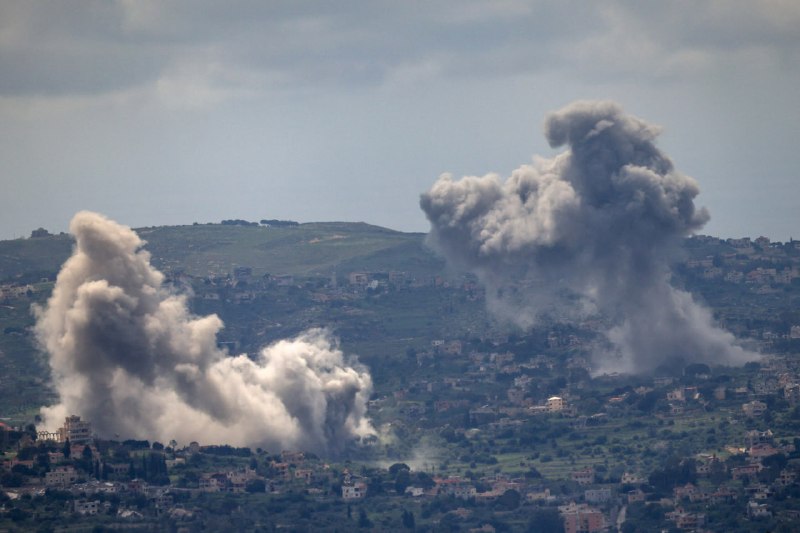
Israeli warplanes struck the southern Lebanese village of Kharayeb on the morning of 8 June 2026, leaving what regional channels described as significant destruction in a built-up area near the border. By midday, the Israeli air force was conducting heavy raids across a string of southern Lebanese localities, and within hours air-raid sirens sounded in northern Israel following rocket launches from Lebanon, in the most serious exchange of fire along the frontier in the current cycle. The pattern, captured in a cluster of dispatches circulated between 12:35 and 13:09 UTC, points to a kinetic, two-sided escalation rather than a single localised incident.
What is unfolding is not a stand-alone strike but the resumption of a familiar logic: Israeli airpower hitting targets in south Lebanon; rocket fire returning into Israeli territory. The diplomatic track that briefly contained that exchange has been frozen for months, and the military track is once again the only one delivering results on the ground, mostly of the kind that no party claims to want.
A border village, then a corridor
The first signal of the morning came at 12:39 UTC, when the Telegram channel Intel Slava reported "significant destruction" in Kharayeb following an Israeli airstrike. Within a minute, the Beirut-based outlet The Cradle circulated an image it said showed the aftermath of the same strike, and the Middle East Spectator account distributed a second image purporting to show large-scale damage in the village. At 12:41 UTC, Iranian state broadcaster Press TV said Israeli warplanes were conducting "heavy airstrikes across southern Lebanon," a phrasing that covers a wider geography than any single village. By 13:09 UTC, Press TV was reporting that air-raid sirens had sounded in what it called "northern occupied Palestine," meaning northern Israel, after missile strikes from Lebanon.
The sequence matters. The reporting chain runs from a named village — Kharayeb, in south Lebanon — to a wider southern Lebanese campaign, and then to a return strike inside Israel. The geography, the chronology, and the two-sided nature of the fire are consistent across channels, even where the political framing diverges. Israeli authorities have not, in the materials available to Monexus at the time of writing, issued a consolidated operational statement covering the morning's exchanges; the reporting on the Israeli side of the border is currently confined to the rocket sirens and their effect on civilian areas. Casualty counts, on either side, are not in the source material and this publication will not estimate them.
What the southern Lebanon front actually looks like
Kharayeb sits in the Tyre district of south Lebanon, in the band of villages that has functioned for two decades as the launch zone for rocket and anti-tank fire into northern Israel and as the receiving end of the Israeli air force's response. The Cradle and Press TV frame the strikes through the vocabulary of occupied territory and cross-border resistance, in line with a regional media ecosystem that treats Hezbollah's armed presence south of the Litani River as a given. Israeli coverage, where it appears, frames the same geography in the inverse: as a forward defensive line and a launch pad.
Two points of fact cut through the framing. First, the air raid sirens that sounded in northern Israel are an operational reality, not a talking point: they are the practical mechanism by which a civilian population near the border is alerted to incoming fire, and they imply that projectiles from Lebanon reached or were assessed to be about to reach Israeli territory. Second, the airstrikes on southern Lebanon are not described in the source material as targeted single hits; Press TV's "heavy airstrikes across southern Lebanon" language, the multiple-channel corroboration of damage in Kharayeb, and the volume of imagery all point to a campaign of multiple strikes in a defined area rather than a single precision operation against one building.
This is the texture of a southern Lebanon front that has not been at full war for many months but has never gone quiet. Villages such as Kharayeb, Aita al-Shaab, and Blida have cycled through damage, repair, displacement, and return at intervals measured in weeks. Reporting from those villages, when it reaches English-language audiences, is filtered almost entirely through outlets that take a clear side: outlets aligned with the Lebanese resistance axis on one end, and Israeli wire and Hebrew-language reporting on the other. Independent local journalism inside the south Lebanon frontier zone is thin, which is why a strike in a single village tends to surface first via either Press TV, The Cradle, or channels such as Middle East Spectator and Intel Slava — each with its own framing priorities.
Why the framing diverges
The cluster of dispatches this publication read for this piece illustrates the framing problem. The Cradle, an outlet that explicitly positions itself against Western and Israeli framings of the Middle East, led on the human and material damage inside Lebanon, distributing imagery of the strike's aftermath. Press TV, the English-language outlet of the Islamic Republic of Iran Broadcasting, framed the same events in two registers: heavy Israeli airstrikes on southern Lebanon, and sirens inside Israel described as sirens in "northern occupied Palestine" — a phrasing that places Israeli territory inside a contested lexicon rather than treating it as a fact-of-life. Middle East Spectator, a pro-Israel aggregator, foregrounded "large destruction" in Kharayeb without embedding it in a wider political claim. Intel Slava, a Russia-adjacent war-tracking channel, treated the strike in neutral geographic terms.
The underlying event is the same in every account. The editorial spin is not. The political question for a reader is not which side is telling the truth about a particular rocket or a particular bomb; the question is what to make of a system in which the same strike on a small village generates simultaneously the language of war crime, the language of defensive action, and the language of routine border security, depending on which channel you happen to be reading. The honest answer is that all three framings are operating on partial information. The Israeli side has the radar tracks and the rocket-alert telemetry; the Lebanese side has the bodies, the building damage, and the displaced families; the international press, when it picks the story up, will have neither until morning-after reporting from one or both.
The structural reality underneath the spin is straightforward. There is no functioning ceasefire monitoring arrangement in south Lebanon. There is no neutral border force in the way UNIFIL once, at least on paper, performed that role, and even UNIFIL's mandate has been a contested political football for the better part of two years. The diplomatic channel through the United States and France that previously absorbed the worst of these spikes is, in this publication's reading of available material, not currently the active frame. In its absence, the southern Lebanon front operates on automatic: a strike produces a rocket; a rocket produces a strike. The escalatory ratchet is held down by a handful of off-record understandings, and the ratchet does not need to be deliberately released in order for the next round of fire to begin.
What the next 72 hours will tell
Three indicators will establish whether 8 June 2026 is the start of a sustained southern Lebanon campaign or another spike in a low-grade exchange. First, the operational tempo of the Israeli air force over south Lebanon: if the "heavy airstrikes" described in the morning round are followed by additional waves through the afternoon and into 9 June, the precedent of the autumn 2024 and spring 2025 exchanges suggests a multi-day operation rather than a retaliatory burst. Second, the volume and reach of rocket fire from Lebanon into Israel: the morning's sirens were reported in northern Israel; if launches begin to reach deeper, the political cost inside Israel of restraint will rise sharply and the air force's target list will widen accordingly. Third, the diplomatic traffic: any publicly reported contact between Beirut, Jerusalem, Washington, Paris, or Tehran, in the immediate aftermath of the morning's exchanges, would indicate that the off-ramp is still in use. The absence of such traffic would be, in itself, a signal.
The stakes on the ground are concrete. The villages of the south Lebanon border zone have been through this cycle often enough that the civilian coping infrastructure — the schools doubling as shelters, the clinics running on generator power, the families who have learned to sleep with one bag packed — is intact, in the way that a population that has normalised periodic bombardment has intact coping infrastructure. That is not the same as saying the population is unharmed, only that the harm has been absorbed into a routine. The longer the cycle continues, the more that absorption becomes its own kind of damage, the kind that does not show up in a single day's casualty count but in the steady erosion of public health, schooling, and economic life in a region already at the bottom of Lebanon's national league table.
Inside Israel, the civilian calculus is different but not smaller. The Home Front Command's alert system is, by comparative standards, well-developed, and the casualty count from a single salvo tends to be low because of it. The political and psychological cost, however, is set by the fact of the sirens rather than the count of injuries, and any perception that the government is failing to deter the launches accumulates over weeks rather than days. The October 2023 precedent — when a failure of southern deterrence produced a once-in-a-generation security rupture — sits heavily over every rocket that crosses the line, and it is the unspoken backdrop to every operational decision in Tel Aviv and in the northern command.
What remains uncertain, in the immediate aftermath of the morning's exchanges, is the identification of the specific Kharayeb target. The Cradle's imagery shows the aftermath of a strike; it does not show what was hit. Press TV's language speaks of a heavy campaign across the south; it does not enumerate specific targets. Israeli military briefings, in the source material available to this publication, are not yet on the record. Until they are, a reader is in the position of seeing the damage and not yet seeing the justification, or seeing the sirens and not yet seeing the launcher, and that asymmetry is, at the moment, the most important single fact about the story.
This article drew exclusively on Telegram-channel dispatches from Press TV, The Cradle Media, Intel Slava, and Middle East Spectator circulating between 12:35 and 13:09 UTC on 8 June 2026. Wire confirmation from Reuters, AP, AFP, BBC, or the IDF Spokesperson's Unit is not in the source set for this piece; Monexus will update the record when it is.
Wire provenance
This editorial synthesis draws on the following public wire/social posts:
- https://t.me/presstv
- https://t.me/presstv
- https://t.me/thecradlemedia
- https://t.me/TheCradleMedia
- https://t.me/intelslava
- https://t.me/Middle_East_Spectator