Under the Big Top Again: Moscow's Idol Circus Festival and the Soft-Power Arithmetic of Performance
More than 170 performers from across the post-Soviet space and beyond converged on the Great Moscow State Circus for the Idol 2026 gala — a reminder that the Russian circus tradition remains one of the few cultural exports Moscow still moves without controversy.
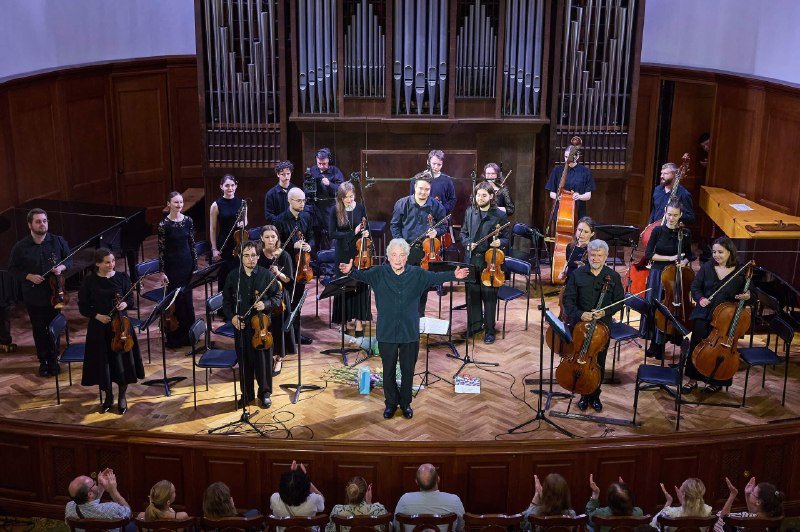
The arena lights at the Great Moscow State Circus came up on 8 June 2026 for the gala closing of the Idol 2026 international circus festival — a competition the Russian state has used, on and off for two decades, to gather acrobats, jugglers, clowns and animal trainers from across the former Soviet Union and a widening cast of guest countries, then parade the winners before a domestic audience. Ruptly's pool footage, circulated via Telegram at 19:03 UTC, shows a packed house and more than 170 performers on the bill. The festival, modest in geopolitical weight and significant only in cultural terms, is a useful small window onto a question Moscow keeps answering in practice even as Western cultural circuits pull back: what does Russian soft power look like in 2026, when the Bolshoi tours have thinned, the Hermitage's loan agreements have frayed, and the country's most recognisable living cultural brand may be a circus ring?
Idol 2026 is not the Soviet Union's old Moscow World Circus Festival, which ran under state-circus auspices for decades and at its height drew competitors from more than thirty countries. It is also not, despite the English word in the title, a television pop-singing contest. The festival is a competitive showcase — juried, prize-awarding, and oriented around the kind of family-audience variety programming that still travels well in the post-Soviet space and in parts of the Global South where Russian-language media retains distribution muscle. The point of the gala is less to crown a single winner than to assert, in a single televised evening, that the Russian school of circus arts is still producing, still training, and still capable of pulling an international field into a Moscow arena at a moment when many Western institutions will not.
A tradition with deep Soviet roots
Russian state circus is not a metaphor. It is a vertically integrated training and touring system that survived the 1991 collapse largely intact. The Moscow and St Petersburg circus schools, the touring apparatus of Rosgostsirk (the state circus company), and the network of permanent big-top and brick-and-mortar arenas in every major Russian city have produced, over the course of the twentieth century, a recognisable house style: technical hand-to-hand, aerial bars, perch pole, the kind of disciplined ensemble acts that travelled with the Soviet Union to Western variety television long before the current generation of cultural diplomats was born. The system also produced dynasties — the Zapashny brothers, the Durov family, the Nikulin lineage — whose names are legible to Russian-speaking audiences from Vladivostok to Almaty the way Cirque du Soleil founders are legible in the West.
That institutional density is what makes the festival plausible without subsidy from elsewhere. A gala drawing 170-plus performers does not need to invent a stage; it needs to convene people who are already in the training pipeline. Western coverage of Russian cultural life in 2026 has tended to dwell on what has stopped — cancelled tours, frozen loan agreements, the slow drift of European museums away from joint programming. The circus story runs in the other direction: the pipeline is still running, the arena is still booked, and the audience the pipeline feeds is, for the moment, intact.
A counter-narrative the Western wires will not file
It is worth saying plainly that the international reaction to a Moscow circus gala is, in 2026, a shrug. There is no boycott movement around Idol 2026 analogous to the boycotts that followed the 2022 invasion of Ukraine against Russian orchestral and ballet tours. The reason is partly genre: classical music and ballet carry an explicit high-cultural prestige that circus, however technically demanding, does not, and prestige is what made those boycotts politically legible. It is also structural: the Russian circus's main audiences are not the European festival circuit. They are the post-Soviet states, Mongolia, parts of China, and a residual following in Latin America and the Middle East where Soviet-era cultural diplomacy planted the deepest seeds.
A counter-narrative worth airing: Western cultural decoupling from Russia has been real and consequential in the high-prestige registers — opera, ballet, museums, symphony orchestras — but it has barely touched the variety-and-circus register, where Moscow always exported something closer to entertainment than to high culture. If a Western reader is surprised that 170 performers can be assembled in Moscow in 2026, the surprise is itself diagnostic. The coverage gap is the story.
What the gala actually does
The Idol 2026 gala is, in plain terms, a recruiting and retention instrument. Circus training in Russia is a multi-year residential commitment, often beginning in childhood, and the prestige of the Moscow venue is part of what makes the discipline legible to families considering the trade. A televised gala with international competitors signals to those families — and to the regional governments whose students fill the academies — that the Moscow arena is still a venue worth aiming at. It also signals to foreign partners that the Russian state is still willing to host, still willing to print programmes in multiple languages, and still willing to put competitors on stage without the political preconditions that have crept into other cultural exchanges.
The structural frame here is not exotic. It is the same logic any state applies when it chooses to underwrite a particular cultural form: identify the form whose audience overlap is most loyal and least substitutable, and pour visibility into it. For Russia in 2026, that form is circus. For the Gulf states it is horse racing and football; for South Korea it is K-pop; for France it is the festival film. None of these choices are accidental, and none of them are best understood through the lens of high-cultural prestige that Western criticism tends to apply uniformly.
Stakes and the rest of the year
What to watch, on the evidence of 8 June alone, is modest. The festival is a self-contained event, not a programme announcement. The plausible forward questions are narrower than the soft-power rhetoric around them suggests: whether the international field at Idol 2027 will be as broad, whether the regional sending institutions (Kazakhstan, Uzbekistan, Belarus, Mongolia) will keep their cohort sizes steady, and whether the televised gala continues to draw the kind of audience that makes the format worth running. The Western cultural-decoupling story, where it is real, runs on a slower clock than a single festival can move.
The honest uncertainty in this story is also worth naming. Ruptly's pool footage does not specify the full list of represented countries, the prize structure, or the jury composition. The Russian state-circus company's own communications on Idol 2026 were not in the materials available to Monexus at the time of writing, and the Western wire services have not, to the best of our knowledge, filed on the gala. Monexus is therefore working from a single primary visual source and the institutional context the Russian circus system carries. A fuller picture of the 2026 cohort — and of how this gala compares in scale and reach to the editions of the late 2010s — will require either Russian-language state-circus releases or independent attendance by a wire reporter, neither of which is available here.
Monexus framed this as a small data point on a cultural form the Western wires are not currently covering, rather than as a breakthrough soft-power story. The bigger question — whether the Russian circus tradition retains its post-Soviet audience footprint through 2026 and into 2027 — will be answered one festival at a time.
Wire provenance
This editorial synthesis draws on the following public wire/social posts:
- https://t.me/ruptlyalert