Nvidia's Huang greets the chip rout with a salesman's shrug — and a new LG bet
Jensen Huang's 'cheaper price' quip frames a chip selloff that is colliding with a softer US labour print and a fresh Nvidia-LG partnership covering humanoid robots and data centres.
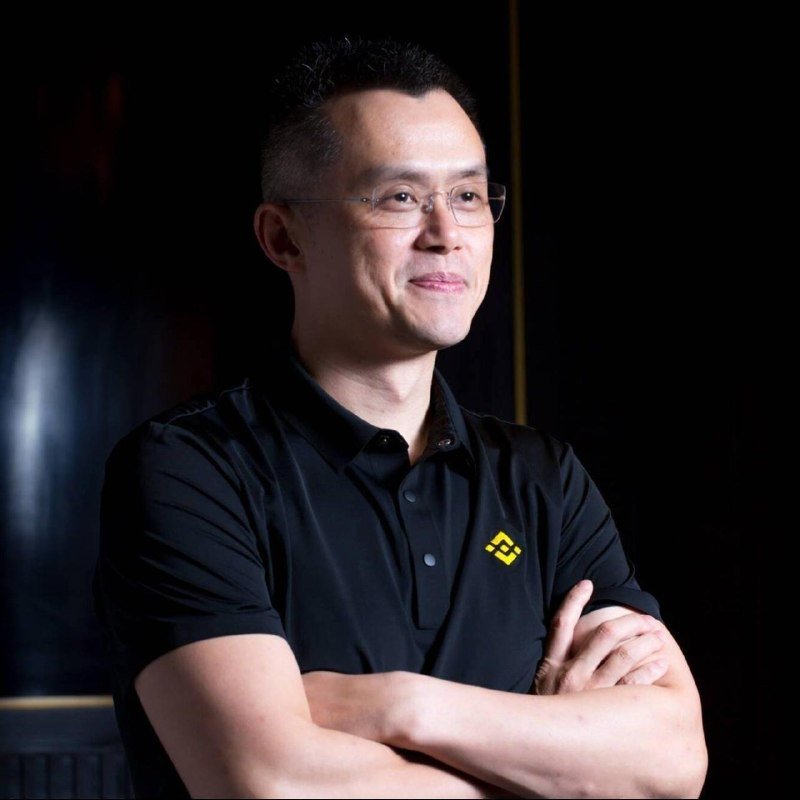
Nvidia's chief executive, Jensen Huang, has a pitch for anyone fretting about the global chip-stock slide: the valuations are friendlier now. "Everybody should be very excited, they can now buy stock at a cheaper price," Huang said at roughly 05:04 UTC on 8 June 2026, brushing off a rout that has wiped billions from semiconductor market capitalisations. The remarks came the same morning that the company confirmed a fresh partnership with LG covering humanoid robots and next-generation data centres — a sign that the AI hardware boom's biggest beneficiary is not pausing to wait for the macro to settle. The juxtaposition is the story: a market in retreat, and a category leader still raising bets.
The chip cycle is hitting turbulence. Nvidia's downstream customers — the hyperscalers, sovereign-AI buyers, and enterprise shops that have been driving the silicon boom — are starting to push back on price, on pace, and on the cost of building the data centres that absorb the next generation of accelerators. The selloff is one symptom. A scattered set of partnerships, capital raises and a softer US labour print is another. Taken together they sketch a market that is no longer pricing the AI build-out as a one-way trade.
Huang's reframing of the rout
Jensen Huang has never been shy about taking victory laps. On the morning of 8 June he told an interviewer that the correction in chip stocks is an opportunity rather than a warning — that buyers who stepped back during the recent AI-infrastructure rally now have a more reasonable entry point. The remark, distributed via Cointelegraph, came as semiconductor names from Taiwan to California have given back gains accumulated during the most concentrated AI-infrastructure rally in modern market history.
Whether one reads the comment as confidence or as a public-relations manoeuvre is partly a question of temperament. Huang has spent the better part of two years telling investors that the demand picture for accelerated computing is structurally under-supplied. The message has not changed. The market's appetite for it has, briefly. The interesting question is what the next quarter's earnings calls reveal: whether supply discipline holds, whether hyperscaler capex guidance softens, or whether the data-centre build pace decelerates more sharply than consensus expects. Nvidia's footprint — the dominant position in accelerators that has reshaped the company's earnings profile since 2023 — leaves it with more leverage to that answer than almost any other listed name.
The LG deal and the pivot into embodied AI
Hours before Huang's remarks, a separate announcement hinted at where Nvidia is steering its next leg of growth. At 03:13 UTC on 8 June the company confirmed a partnership with LG covering humanoid robots and "next-generation data centres," according to a post on Polymarket's X account — a coupling that, on the surface, is at least two bets in one. The humanoid angle extends the platform Nvidia has been building with its Jetson and Isaac product lines into consumer- and industrial-facing robots. The data-centre language suggests a deeper, more strategic alignment with LG's industrial and cloud ambitions, particularly in the Korean and broader Asian markets, where LG has a long-standing presence in display, appliance and battery manufacturing.
The deal also reads as a hedge. If the AI-training boom that has driven GPU demand is plateauing — or at least growing more linearly than exponentially — the inference and robotics economies are the next growth lane. Nvidia's competitors, from Qualcomm to the custom-silicon programmes at Google and Amazon, have all telegraphed similar instincts. The LG partnership, however, is a particular kind of commitment: it ties a US platform leader to a chaebol-controlled Korean conglomerate with its own ambitions in AI infrastructure. That alignment is consequential not just commercially but geopolitically, given the technology-architecture contest between the United States and China over how the next generation of compute is supplied, sited, and exported.
The labour signal — and what it isn't
The previous day, a separate datapoint slipped into the wire. At 01:34 UTC on 7 June, Cointelegraph distributed a brief noting that US small-business hiring is expected to fall to its lowest point since May 2020. The reading lands at a moment when the larger macro story is more mixed than the consensus narrative allows. Headline labour markets remain reasonably tight. Small-business hiring is the canary — it is the most rate-sensitive and consumer-confidence-sensitive cohort in the establishment-survey universe, and a sustained drop there usually presages a broader cooling in domestic demand.
The connection to the chip trade is not direct, but it is structural. The AI-infrastructure capex programme has been, in part, a story about corporate cash flows holding up under higher rates. If small-business hiring is rolling over while large-cap technology capital expenditure remains elevated, the divergence is itself a signal. Either the capex programme is about to meet the macro halfway — in which case the selloff is a rational repricing — or the capex programme is now detached enough from the domestic cycle that it has its own momentum. The latter is the more bullish read on Nvidia; the former is the more cautious one. Investors do not yet have a clean way to discriminate between the two, and the data needed to do so will not arrive before the third-quarter earnings cycle.
Saylor, "the dot," and the structural question
The same window also brought a familiar signal from a very different corner of the market. At 13:42 UTC on 7 June, Michael Saylor, executive chairman of MicroStrategy, used the moment to remind his followers that the company views any pullback in its preferred asset — bitcoin — as an opportunity. "A good time to add more dots," Saylor posted, using the term his company has adopted for incremental bitcoin acquisitions. The remark lands while the broader market is rotating, and it underlines a structural point: in a tape where the AI-infrastructure trade is being questioned, the bitcoin-treasury trade is being reaffirmed.
The juxtaposition is not incidental. Both Nvidia and MicroStrategy are bellwethers of a market regime in which capital is being deployed not on the basis of cash flows in the conventional sense, but on the basis of secular theses — the AI build-out, the digital-asset alternative. Huang's "cheaper price" comment and Saylor's "add more dots" remark are rhetorical mirrors. The question is which underlying thesis still holds, and which one breaks first if the macro cooperates.
The bullish case is that neither does. Demand for accelerated computing, particularly for inference, is still outstripping supply at the unit level, and institutional adoption of bitcoin is, by Saylor's preferred metrics, still early. The cautious case is that both are now mature enough as trades that any incremental capital is more discerning, and that the volatility of the past two weeks is the first instalment of a longer repricing. The small-business hiring print tilts the cautious case — but only marginally. The evidence is too thin for a definitive call, and the next month of tape will reveal how much of the recent surge was structural and how much was liquidity. If hyperscalers reaffirm capex guidance into their late-July earnings, the chip trade stabilises and the rotation away from AI infrastructure is treated as a healthy correction. If small-business hiring continues to roll over and the macro softens through the summer, the rotation becomes a downgrade. The Polymarket-flagged LG partnership suggests Nvidia is preparing for the second scenario even as its chief executive talks in public like the first one is in the bag.
The wires framed this as a series of disconnected headlines — one CEO quip, one partnership, one labour print. Monexus reads them as a single tape: a market repricing the AI-infrastructure trade in real time, with a chief executive using the moment to re-anchor sentiment, and a parallel asset-class thesis being reaffirmed in the same breath.
Wire provenance
This editorial synthesis draws on the following public wire/social posts:
- https://t.me/cointelegraph
- https://t.me/cointelegraph
- https://t.me/cointelegraph
- https://en.wikipedia.org/wiki/Nvidia
- https://en.wikipedia.org/wiki/Jensen_Huang
- https://en.wikipedia.org/wiki/LG_Corporation
- https://en.wikipedia.org/wiki/MicroStrategy