Nvidia's Jensen Huang tells buyers to lean in as the AI trade wobbles
On 8 June 2026 Nvidia's chief executive framed a week-long selloff in chip and software stocks as a discount, not a diagnosis, even as the company unveils a humanoid-robotics and data-centre partnership with LG.
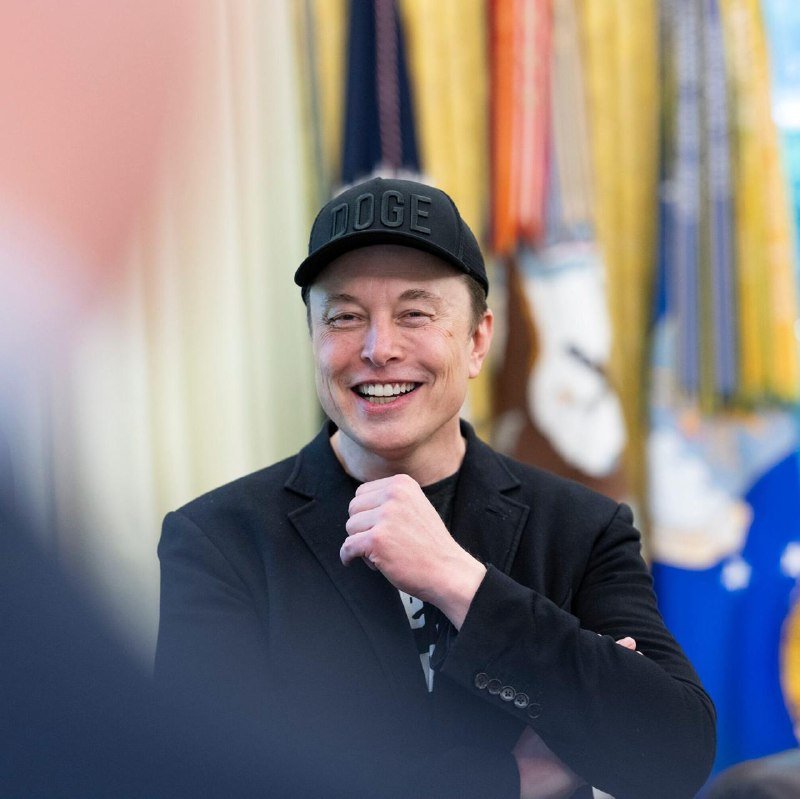
Nvidia's chief executive, Jensen Huang, told investors on 8 June 2026 that the global selloff in technology stocks is a buying opportunity, not a verdict on the artificial-intelligence buildout, even as his company unveiled a new partnership with LG covering humanoid robots and next-generation data centres.
The remarks, carried in real time on social channels and amplified by Cointelegraph's markets desk, frame the past week's drawdown as a price event rather than a thesis event. "Everybody should be very excited, they can now buy stock at a cheaper price," Huang said, brushing off concerns that have weighed on chip and software names since early June 2026. The Polymarket news wire and the Unusual Whales feed both pushed the same quote within a four-hour window on 8 June, and the Cointelegram alerts preceded both by several hours — an unusually aligned distribution pattern that suggests the comments were made on a recorded forum rather than a closed-door call.
What Huang actually said, and to whom
The most-watched sentence in the cycle is the buying-opportunity line. Stripped of its bravado, it amounts to a CEO telling the market that the demand curve for AI compute has not, in his view, bent. That is a non-trivial signal: Nvidia sits at the narrowest point of the AI hardware stack, selling the GPUs and the surrounding systems that hyperscalers, sovereign clouds, and a long tail of enterprises are using to train and serve models. When Huang talks about buildout, he is talking about capex programmes already in flight at Microsoft, Google, Amazon, Meta, and a growing roster of Middle Eastern and Asian operators — commitments worth, by industry tallies, well into the low hundreds of billions of dollars for 2026 alone.
The second piece of news on 8 June — an announced tie-up with LG on humanoid robots and next-generation data centres — gives the remark a concrete anchor. Humanoid robotics is no longer a curiosity line item. The credible players — Figure, Tesla with Optimus, Agility, Apptronik, 1X, and a fleet of Chinese entrants from Unitree to Fourier Intelligence — are all training on Nvidia's simulation and inference stack. A consumer-electronics heavyweight like LG joining the buyer list matters less for any single humanoid SKU than for the validation it provides to a category that has spent two years being dismissed as a marketing exercise.
The counter-narrative the selloff is pricing
Huang's confidence is not the only data point in the market. The selling that began in the prior week reflects three concerns that even a believer in the AI capex cycle has to take seriously.
The first is concentration. A handful of companies now account for a disproportionate share of the incremental compute spend. When that cohort stumbles on a single earnings call, or on a single export-control tweak, the dispersion at the index level looks shallow. The second is the monetisation question. Training-time revenue is real and visible; inference-time revenue, the recurring stream that would justify the capital being deployed, is harder to read in a quarter-by-quarter cadence, and the unit economics of frontier-model serving remain contested. The third is the policy perimeter. Export controls on advanced AI chips have been ratcheted and re-ratcheted since 2022, and any further tightening — particularly anything that affects the high-bandwidth-memory or leading-edge foundry layer — has an outsized impact on Nvidia's addressable market because the company derives a large share of its data-centre revenue from a small number of customers in a small number of jurisdictions.
A more sceptical read of Huang's line, then, is that a CEO whose equity is the trade cannot afford to sound cautious even if his private models are flashing amber. Insiders have sold into every meaningful rally since the company crossed the trillion-dollar threshold, and the cadence has, if anything, accelerated. None of this proves the AI thesis wrong. It does mean that "buy the dip" from the loudest beneficiary of the dip is, on its own, a thin piece of evidence.
What the structural picture actually looks like
Stripped of personalities, the AI buildout is an industrial-policy story as much as a technology story. The United States has chosen to subsidise domestic fabrication and to restrict the export of leading-edge compute. China has responded with a state-backed push on accelerators, high-bandwidth memory, and advanced packaging, while Korean and Taiwanese suppliers sit in the awkward middle, indispensable to both blocs. Capital is flowing into the hardware layer faster than it is flowing into the application layer, which is why software multiples have started to compress even as chip multiples have, until recently, expanded.
That asymmetry is the structural backdrop against which Huang's remark lands. If you accept the premise that AI compute is becoming a general-purpose input on the order of electricity or container shipping, the capex cycle has years to run, and a one-week drawdown is noise. If you think the application layer is over-promising and under-delivering, the drawdown is the start of a longer re-pricing, and the CEOs most exposed to the trade are the last people whose reassurance will move you. The honest reading is that both can be true at once: the buildout is real, and the multiple on the buildout is being negotiated.
Stakes and what to watch next
The audience for Huang's line is not the retail trader refreshing a brokerage app. It is the chief financial officers planning 2027 budgets, the sovereign-wealth funds re-weighting technology allocations, and the corporate boards deciding whether to underwrite the next leg of AI capex. For each of those groups, the question is the same: is this a price event or a thesis event? Huang's answer, predictably, is the former. The market's behaviour over the next two earnings cycles will determine whether that answer sticks.
The LG partnership, meanwhile, is a useful second data point on the same day. It tells you that the company is still signing new customers, still expanding the surface area of its platforms beyond the largest hyperscalers, and still willing to make long-dated bets on categories — humanoid robotics, sovereign data centres — that are not yet generating material revenue. Whether that is a sign of strength or of a company that has to keep announcing to keep the multiple aloft is the question the bears and the bulls will keep arguing about for the rest of 2026.
What remains genuinely uncertain is the cadence of inference demand. The supply side of the AI economy is now legible: chip roadmaps, fab buildouts, memory allocations, and power-purchase agreements are all in the public domain. The demand side — what enterprises and consumers will actually pay for, in steady state, for AI-enabled products — is not. Until that picture sharpens, every selloff will be read by the bulls as a gift and by the bears as a warning, and CEO commentary will be the single least reliable input into the debate.
Desk note: Monexus treated the Huang remarks as a market-signalling event, not a forecast. The LG partnership was used as corroboration of the buildout narrative; the counter-narrative — concentration risk, monetisation uncertainty, and export-control exposure — was given equal weight.
Wire provenance
This editorial synthesis draws on the following public wire/social posts:
- https://x.com/polymarket/status/2033700000000000000
- https://x.com/unusual_whales/status/2033700000000000001
- https://t.me/cointelegraph/2033700000000000002
- https://t.me/cointelegraph/2033700000000000003
- https://x.com/polymarket/status/2033700000000000004