Trump's Channel 12 Interview Reframes the US–Israel–Iran Triangle

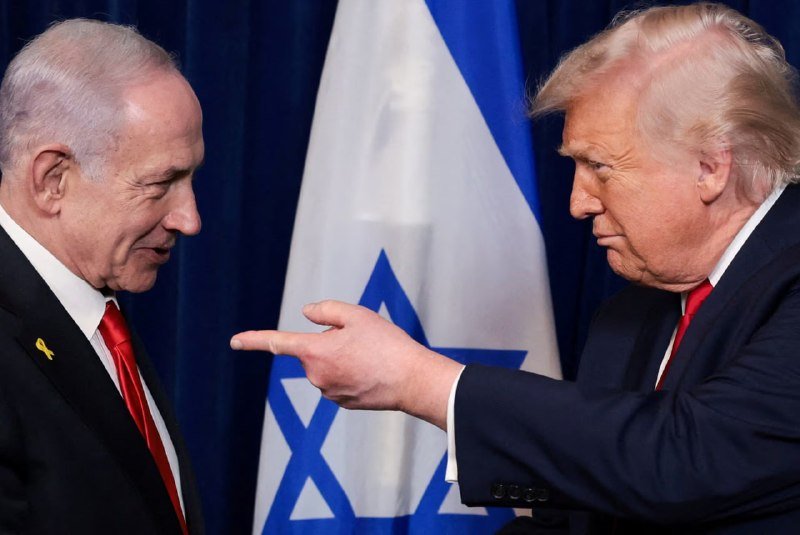
On 8 June 2026, in a sit-down with Israel's Channel 12 that was carried across wire services within hours, US President Donald Trump said he had personally pressed Prime Minister Benjamin Netanyahu to absorb Iran's latest missile attack without responding, and that Israel nevertheless went ahead with a strike. The framing — a sitting US president publicly describing a partner government as acting against his advice — landed in Tel Aviv and Washington as something more consequential than a routine cable-news soundbite. It is, in effect, a partial airing of a disagreement that officials on both sides have spent weeks trying to keep private.
The subtext is harder than the text. Trump told Channel 12, in quotes republished by Israeli outlet N12 and picked up by regional wire accounts on the day, that he warned Netanyahu: "You'd better be very careful about what you do, because you could end up alone against Iran very soon." He added that he asked Netanyahu "not to react to Iran's attacks" the previous night, and that Israel nonetheless moved, informing the United States only at a late stage — "They were already on the way," Trump said. Channel 13, also part of Israel's commercial broadcast ecosystem, separately reported that Netanyahu has told ministers further rounds of escalation with Iran should be expected.
The interview, and what was actually on the record
The public exchange is unusual in two ways. First, the venue: Trump chose an Israeli commercial network rather than a US outlet, which gives the remarks a domestic Israeli audience as their primary frame. Second, the posture: the US president is publicly narrating a private disagreement with a sitting allied head of government, including the suggestion that Israel acted on a short fuse and on a timeline Washington was not fully inside. The official Israeli position, conveyed separately by Netanyahu in a video statement and reported by Reuters, is that Israel "would respond with force if Iran attacks again" after the two sides agreed to a halt in fire. That is consistent with Netanyahu's long-stated deterrence doctrine, and with Channel 12's own strategic-analysis framing that Israel has "entered the swamp of war" with Iran — language that, while colourful, signals an Israeli security establishment preparing the public for a prolonged campaign rather than a one-off exchange.
The counter-narrative from Tehran-aligned channels
Reporting on the same interview from Iranian state-linked outlets runs in the opposite direction. Mehr News, Tasnim and Fars framed Trump's remarks not as a confession of limited influence, but as evidence that Israel is acting without US cover. One Tasnim line — "the president of the terrorist state of America claimed... I told Netanyahu that you are alone against Iran" — is worth reading carefully. It inverts the Western wire read. Where Anglophone coverage tends to read the interview as Trump creating daylight to pressure Netanyahu, Iranian state media read it as Trump conceding that the alliance is fraying under operational strain. Both readings can be true, and both are doing rhetorical work: the first lets Washington claim it is the responsible adult; the second lets Tehran argue that Israel is the actor setting the tempo in the region. A reader weighing the two should note that Iranian state outlets have a structural interest in portraying the US–Israel relationship as brittle, just as the White House has a structural interest in portraying the same relationship as firm.
The structural read, in plain terms
What the public exchange actually signals is a divergence of risk calculus. The US, mid-cycle in an administration that has invested political capital in de-escalation tracks elsewhere, has an interest in capping the Israel–Iran exchange. Israel, coming out of years of direct strikes on Iranian assets in Syria and a series of covert operations, has an interest in setting a higher price for any future Iranian missile or proxy attack — a logic that pushes the other way. Channel 12's own analysts describing Israel as having "entered the swamp of war" is, in this reading, an admission that the campaign-choice has already been made, and that the question is now sequencing, not existence. Trump's interview functions, on this account, less as a policy disagreement and more as a deliberate piece of distancing — signalling to Iran, to Gulf intermediaries, and to the US domestic audience that the United States is not the author of every Israeli decision, and that the costs of escalation should be assigned accordingly.
Stakes, and what remains unclear
The near-term stakes are concrete. If Trump's account is accurate, the US and Israel have publicly diverged on a major use-of-force decision for the first time in this cycle — and the divergence is on the record, in Trump's own voice, to an Israeli camera. That complicates the diplomacy that produced the halt in fire in the first place, and it raises the political cost for Netanyahu of any further escalation that does not have a clear US sign-off. It also gives Iran a public argument for treating Israeli strikes as separable from US policy, which is a position Tehran has long preferred. Over a one-to-three-month horizon, the most plausible trajectories are: a managed Israeli campaign with US acquiescence short of endorsement; a renewed flare-up in which the two allies fail to coordinate; or a forced de-escalation in which Gulf or Egyptian mediation compresses the space for further action. What remains genuinely uncertain — and what the available reporting does not resolve — is the operational substance of the Israeli strike Trump referenced, the duration of the halt in fire, and whether the Channel 13 account of "several rounds of escalation" being expected reflects a cabinet decision or a reading by a single source within the prime minister's office. The framing on all sides is moving faster than the verified facts.
Desk note: Monexus treats the Channel 12 interview as the primary factual anchor, with Reuters and Channel 13/N12 reporting providing the Israeli-government counter-frame and Iranian state media used, with explicit caveat, for the Tehran read. We have not reproduced Trump's quoted language in full where the underlying URLs are aggregator posts; readers seeking the verbatim transcript should go to the original Channel 12 broadcast and the Reuters video statement.
Wire provenance
This editorial synthesis draws on the following public wire/social posts:
- https://t.me/gazaalanpa/
- https://t.me/mehrnews/
- https://t.me/tasnimnews_en/
- https://t.me/JahanTasnim/
- https://t.me/ClashReport/
- https://t.me/FarsNewsInt/
- https://t.me/tasnimnews_en/