Trump's Iran calculus: pressure, escalation, and the Netanyahu variable
Two interviews on 8 June 2026 put a public split on the record: Trump telling Axios that five regional states asked him to press Tehran, and Trump telling Channel 12 that he told Netanyahu he would step aside for a full-scale war on Iran.
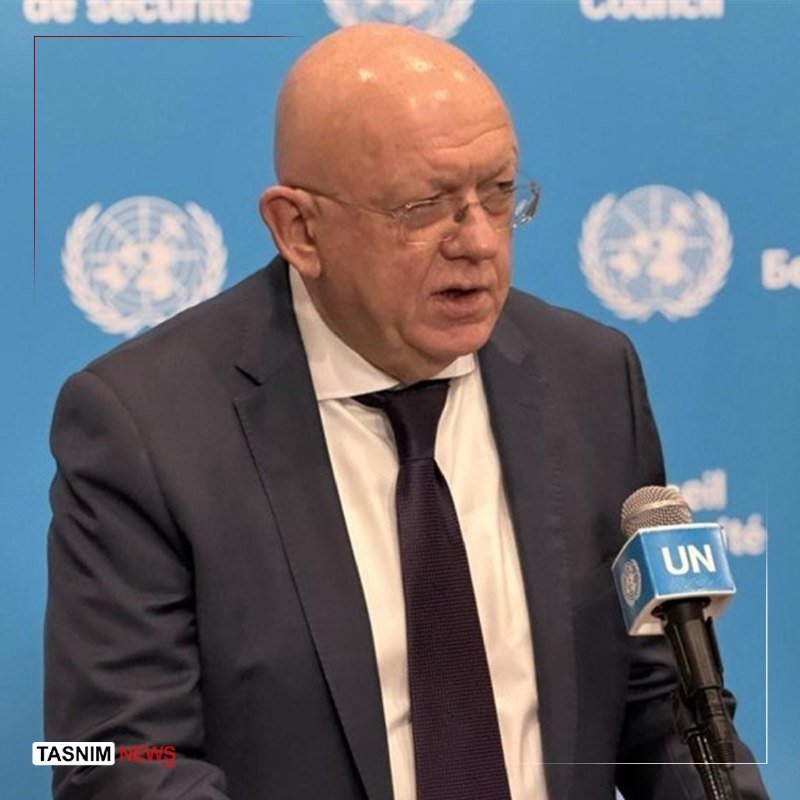
On 8 June 2026, two interviews placed the same US president on the record with two distinct messages about Iran. To Axios, Donald Trump said five regional states had contacted him asking Washington to pressure Tehran. To Israel's Channel 12, he said he had told prime minister Benjamin Netanyahu that he would "leave him alone" if Israel launched a full-scale war on Iran. The juxtaposition, drawn from outlets operating on opposite sides of the diplomatic ledger, captures the contradiction US Middle East policy has run on for months: a president publicly selling a deal, privately granting a green light to the alternative.
The pattern matters because the gap between the two statements is not rhetorical. It is operational. A negotiation requires time, predictability, and a partner that believes the other side is bargaining in good faith. A green light to escalate forecloses all three. The 8 June remarks suggest Washington is now running both tracks at once — and that Israel, not the United States, will decide which track becomes binding.
What the two interviews actually said
The Axios interview, summarised in Persian-language coverage of Trump's remarks published on 8 June 2026 at 19:44 UTC, framed Trump's claim of five regional intermediaries as evidence of an active diplomatic choreography around Iran. The headline framing of the United States as a "terrorist state" comes from the outlet's editorial line, not from Trump's remarks themselves. The substantive content is the five-state claim and the suggestion that Washington is the convener rather than a partisan in the dispute.
The Channel 12 interview, summarised in Arabic-language coverage published the same day at 18:16 UTC, places the opposite weight on the scale. According to that account, Trump told prime minister Netanyahu that he would "leave him alone" if Israel launched a full-scale war on Iran. The phrase, if accurate and if it reflects what was said in the room, is not a conditional warning. It is a permissive frame — Washington declining to constrain an ally whose calculus on Iran has historically run hotter than Washington's own.
Read together, the two statements describe a policy that wants a deal but has organised itself so that the deal is optional. That is the part of the picture that the headline-by-headline coverage tends to flatten.
Why the diplomatic choreography keeps failing
France 24's 8 June 2026 analysis, published at 18:10 UTC, makes the structural point without needing to name it. The president "believed those who insisted he could wrap it all up by end of March, long before the November midterms." The off-ramp, the report notes, was supposed to be easy to find. It was not. The question France 24 puts at the centre of its piece — "Who calls the shots?" — is the right one, and the two Trump interviews answer it differently depending on which side of the ledger the question is asked.
The pattern here is familiar. Each round of US-Iran diplomacy since 2018 has begun with a White House claim of a near-term breakthrough, run into the Israeli government's deeper scepticism of any arrangement that leaves the Iranian state intact, and ended with the Israeli timeline becoming the operative one. The 8 June remarks do not break that pattern. They confirm it on the record. When the US president tells an interviewer he would not stand in the way of an Israeli strike, the bargaining position of Iran's negotiators narrows in real time, because the cost of waiting has just gone up.
This is also why the "five regional states" claim matters. In a deal scenario, those five are the pressure Trump can bring to bear on Tehran, the diplomatic scaffolding that gives the US something to trade. In an escalation scenario, the same five are the regional cover for an Israeli operation that the US does not want to own publicly. The claim works for both tracks, which is precisely why it is so hard to verify from the outside.
The Netanyahu variable, plainly stated
Coverage of the Israeli government's position has, for the better part of two years, treated prime minister Netanyahu as the senior partner in the US-Israel decision loop on Iran. The 8 June Channel 12 account makes that asymmetry explicit from the US side. A US president describing a posture of "leaving Israel alone" in the event of a major war is, in plain terms, an acknowledgment that the decision has already moved.
This publication reads the 8 June reporting as evidence of a US strategy that is trying to keep both options open at once — the diplomatic track for the cameras, the permissive frame for the ally. The cost of that posture is that neither Tehran nor Washington's regional partners can price the US commitment accurately. A signal that is meant to reassure domestic audiences in the United States, regional partners in the Gulf, and a hardline constituency in Israel simultaneously will, by construction, read as ambiguous to the Iranian side. Ambiguity, in a nuclear negotiation, is not neutral. It shifts the burden of risk onto the party with less margin for error, and that is not the United States.
The honest reading of the day's reporting is that the gap between Trump's public framing and his reported private framing is no longer containable inside the usual "tough negotiating" narrative. The two statements are not points on a spectrum. They are operating in different registers. One is diplomacy. The other is permission.
What remains uncertain, and what the next 72 hours test
Three things are not yet known. First, whether the Channel 12 quote is a faithful rendition of Trump's actual words, or a paraphrase that compresses a more conditional remark into a cleaner headline. Israeli television has historically used selective translation of US presidential remarks to harden its own framing; the burden of verification sits with the original English audio, which the wire services had not posted in full at the time of writing. Second, the identity of the five regional states. Trump named a number, not a list. Until the list is on the record, the claim is unfalsifiable. Third, the Iranian response. Tehran's negotiating team has, in past cycles, walked away from talks when the US-Israel coordination signalled that Washington was not the binding constraint. The 8 June reporting, if taken at face value, gives them the same signal again.
The next 72 hours are the test. If the US-Iran track produces a confirmed meeting, a venue, or a date, the "five states" claim has done its work and the diplomatic register is the operative one. If no meeting materialises and Israeli strike preparations move forward, the Channel 12 account is the one that will age better. The two tracks are now visibly in competition, and the day's reporting is the first time both have been on the same page on the same day.
Monexus is a mainstream democratic publication; coverage of Middle East security proceeds from the premise that Israeli and Palestinian civilian life carry equal weight, that Iranian state actions are reported without endorsement or sanitisation, and that the regional powers named in any given report are treated as actors with their own agency rather than as scenery for a Washington story. Where a Western wire frame and a regional or Global-South frame diverge, both are given airtime before a judgment is rendered.
Wire provenance
This editorial synthesis draws on the following public wire/social posts:
- https://t.me/JahanTasnim
- https://t.me/gazaalanpa
- https://en.wikipedia.org/wiki/Donald_Trump
- https://en.wikipedia.org/wiki/Iran%E2%80%93United_States_relations
Follow the event.
These dated source records provide context. They do not retrospectively verify this archive article.
Separate what the nuclear watchdog reported from what it could not determine after the June 2025 strikes.