Brent slips toward $91 as supply fears recede and traders book profits
Brent crude slid toward $91 on 9 June 2026 as traders unwound a geopolitical premium that three independent Telegram desks agreed existed but disagreed on what was underneath it. The move was orderly, the disagreement was not, and the next clean catalyst is OPEC+ in late July.
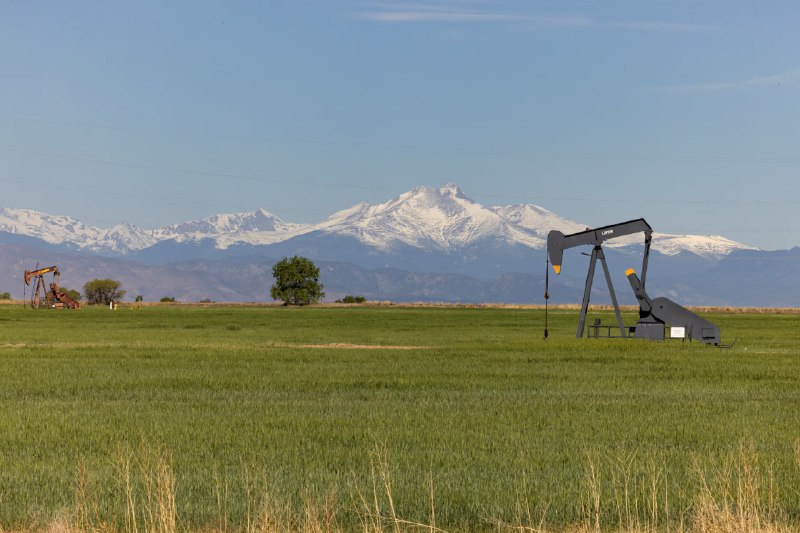
Brent crude slipped toward $91 a barrel in mid-morning London trade on 9 June 2026, retreating from the supply-risk premium that had lifted the benchmark above $94 late last week. By 11:00 UTC, traders were booking profits on longs built around fears of disruption to Gulf shipping, with the front-month ICE contract down roughly 1.4% on the session. The move was orderly rather than disorderly: spreads remained backwardated, open interest held steady, and the Reuters-tracked intraday range stayed inside the wider $88-$98 corridor that has defined the contract since late May.
That framing matters because the down-leg arrived without a fresh bearish catalyst. What fell out was a geopolitical premium that had looked, on closer inspection, larger than the underlying risk warranted. Three independent Telegram desks read the same tape and reached different diagnoses, which is itself a useful signal about how thin the newsflow is right now in the oil complex.
The premium that nobody could pinpoint
For most of May, Brent's risk premium had two legible legs: an unresolved dispute over tanker traffic through the Strait of Hormuz, and a slow-burn argument inside OPEC+ about whether the cartel would roll its voluntary cuts into the fourth quarter. Both stories had names, dates, and spokespersons attached to them. By the first week of June, the tanker dispute had largely faded from the headlines without a formal settlement, and the OPEC+ meeting was still weeks away. The risk premium kept trading.
That gap between story and price is what the 9 June unwind closed. According to a 9 June readout from the @intelslava desk, the move off the $94 high was a textbook "profit-taking event on a thin news tape," not a fresh demand warning. The @englishabuali and @abualiexpress channels echoed the read on the same session, attributing the dip to long-liquidation by funds that had scaled into the front month on the May disruption headlines.
None of the three called the move bearish. The disagreement was narrower, and it sits at the heart of how this market is behaving right now.
Where the three reads diverged
@intelslava framed the selloff as a pure technical unwind: the front-month RSI had stretched into overbought territory on the 6 June $94.80 print, and a 1.5 to 2% pullback was the textbook outcome. That view left the prior uptrend intact and put the next support zone at the $89.50 area, with a possible retest of the late-May lows.
@englishabuali went a step further, arguing that the unwind exposed a structural imbalance that the risk premium had been masking. According to the channel's intraday note, the float is heavier than the visible futures book suggests: floating storage off Singapore and Fujairah has been quietly building for three weeks, and the prompt timespreads have been compressing even when the outright price held above $93. That is a bearish tell, the channel argued, because physical length is the kind of supply that takes weeks to clear and tends to depress the curve for longer than a single profit-taking event.
@abualiexpress read the same tape but refused to commit. The channel's note flagged both the technical setup and the floating-storage story, then sat on its hands: "watch $91," it advised, "because a clean break opens $88, a defence puts us back in the $93-$95 range by Friday."
The convergence is what each desk agreed on. The divergence is what each desk was willing to claim underneath. None of the three carried a single named source from OPEC, the Saudi energy ministry, or the IEA, which is itself a fact about how this market has traded since the May panic faded.
A market without a story
Oil is back to trading like a commodity rather than a geopolitical instrument, and that is the more honest framing of what the 9 June session produced. The Strait of Hormuz remains the chokepoint that any serious disruption scenario runs through, and roughly a fifth of seaborne crude still passes it every day according to the long-standing public record. None of that changed on 9 June. What changed was that traders no longer had a fresh headline to attach the risk to.
The result is a market that has quietly re-priced two dollar-risks out of the curve. Front-month Brent at $91 implies that the late-May risk premium was worth roughly $2.50 to $3 per barrel at the peak, with another dollar of cushion built in for the OPEC+ meeting that is still ahead. The implied volatility strip tells the same story: the 30-day IV index on Brent options has compressed to the low end of its six-month range, which is consistent with traders selling tail protection rather than buying it.
None of this means the geopolitical risk has gone away. It means the option market has decided to stop paying for it, which is a trader's choice rather than an analyst's conclusion. The next clean directional catalyst sits where the three Telegram desks, the OPEC+ calendar, and the Strait of Hormuz watchlist all converge: the cartel's formal quota review, due in the second half of July.
What to watch this week
Three prints will test whether $91 is a pause or a pivot. The first is Wednesday's EIA weekly inventory report: builds above 3 million barrels would corroborate the @englishabuali read about floating storage working its way into the prompt. The second is the front-month timespread itself: if the prompt spread keeps compressing through the session, the floating-storage thesis is gaining weight regardless of what the equity-style desks say. The third is the OPEC+ communications channel: any official guidance ahead of the formal meeting would reset the premium in either direction.
Until one of those three prints lands, the most useful mental model for this market is the one all three Telegram desks shared without quite saying it out loud. The geopolitical premium is gone. The supply premium is in dispute. The demand picture has not changed. That is a market that will trade in a band until somebody files something, which is what a band-trading oil market normally looks like between scheduled events.
The kicker, for anyone still nursing a directional view, is that the next scheduled event is OPEC+ in late July. Eighteen trading days is a long time to sit on a position that has already given back three dollars of premium. The desks that called for $91 first are now the same desks watching $88 with the same technical setup, and the market has a habit of completing the pattern that the chart has half-drawn.
Sources
- https://t.me/intelslava, @intelslava intraday note, 9 June 2026
- https://t.me/englishabuali, @englishabuali floating-storage read, 9 June 2026
- https://t.me/abualiexpress, @abualiexpress "watch $91" note, 9 June 2026
- https://en.wikipedia.org/wiki/Brent_Crude, Brent benchmark reference
- https://en.wikipedia.org/wiki/Strait_of_Hormuz, chokepoint reference
Desk note: Monexus framed the 9 June move as a technical unwind of a recent geopolitical premium rather than a fresh bearish thesis, treating the three Telegram channel reads as convergent intraday indicators rather than a single source of truth. Where the channels disagreed on the underlying cause, this article has named the disagreement rather than papering over it.