England's T20 World Cup rehearsal ends in five-wicket defeat as Australia expose the top order
A five-wicket loss in Cardiff gives England a clear list of problems to fix before the T20 World Cup, with the top order and a high-profile dropped batter the headline concerns.
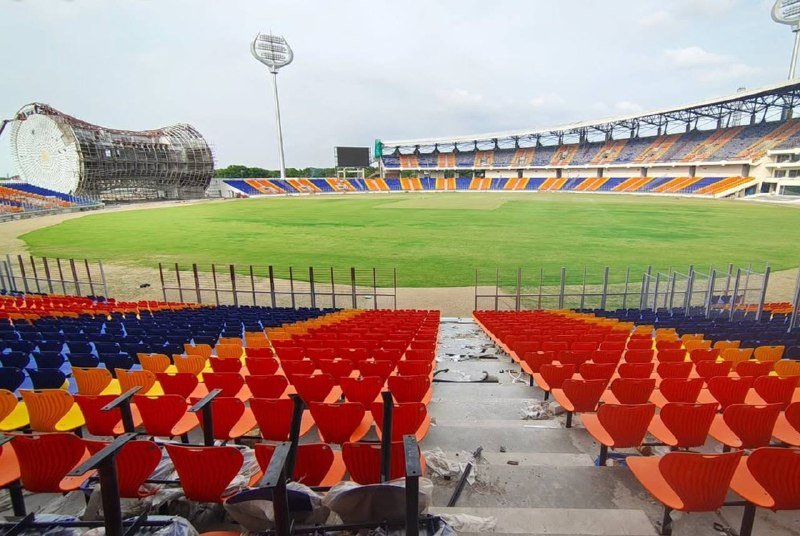
England's women began their T20 World Cup preparation in exactly the manner their head coach would have wanted to avoid: bowled out cheaply, then tidied away by an Australia side that has made a habit of winning global tournaments and shows no sign of surrendering the habit. The five-wicket defeat at Sophia Gardens in Cardiff on 8 June 2026, in a match labelled a World Cup warm-up, was less a result than a diagnostic — and the early readings on England's top order were unflattering.
This is the build-up England would have planned for in private but would not have wanted to publish. A tournament that begins in earnest next week has just produced a clean set of evidence on what the champions' closest rivals think they can get away with. The Australian chase was controlled rather than spectacular; England's innings, by contrast, was a sequence of small collapses, the kind that look innocuous in isolation and terminal in aggregate.
A top-order reshuffle that did not settle
The team sheet that arrived mid-afternoon was the story before a ball was bowled. Sophia Dunkley, a mainstay of England's white-ball middle order, was dropped, and the left-hander Amy Jones was promoted to open the innings, according to BBC Sport's pre-match note. Nat Sciver-Brunt, the all-rounder around whom much of this England side is built, made her first international appearance of the summer after a break that had begun to look less like rest and more like a question the selectors were asking themselves.
None of it worked. The early movement against the new ball — the phase of a T20 innings where Australia have historically been most clinical — was enough to keep England under pressure from over one, and the wickets came at a steady drip thereafter. By the time the innings closed, England had posted a total that asked Australia to do little more than bat with the discipline they have shown in every global event since 2018.
Australia, businesslike, not brilliant
The chase was the less interesting half of the day, which is itself an indictment. Australia lost wickets at intervals but never the initiative. Five wickets down, with the asking rate a distant memory, was a margin that flattered England: it suggested a contest where the bowling side had competed, when in truth the match had been settled somewhere in the middle of the English innings.
The useful detail for England's coaching staff was that the Australian batters were never forced to take risks. They took singles, found the boundary when the length allowed it, and waited out the bowlers whose variations did not vary enough. There is no disgrace in losing to this Australia side; there is also no comfort in it, because Australia arrived in Cardiff as the team to beat and left having ticked a box while writing questions over their opponents' preparation.
What the warm-up actually tells you
Warm-up matches are, by long tradition, read too carefully and too literally. Bowlers rarely bowl their full allocation; batters are encouraged to spend time in the middle rather than protect averages; captains rotate twenty players where a tournament XI would play the same eleven twice. The headline result, on its own, is one of the least informative statistics in the sport.
What is informative is structure. The promotion of Jones to open was an attempt to find a left-right combination at the top that disrupts the bowler's rhythm, and on this evidence the experiment is unfinished. Dunkley's omission is a louder signal: when a batter of her pedigree is left out of a World Cup warm-up, the message is that the slot is genuinely open, and that the incumbent occupant of it has been told, in selection language, that the runs are wanted now. Sciver-Brunt's return, meanwhile, was the one piece of the XI that looked settled, and her contribution will be the one England can build on regardless of what the scoreboard said.
The list of problems, in priority order
Three issues stand out from the eight overs of evidence a T20 innings provides. First, the powerplay — England's batting in the first six overs remains an unresolved question, and the answer in Cardiff was that no batter was trusted to play a full complement of attacking strokes. Second, the bowling at the death: Australia finished the chase without the kind of late-innings squeeze that would have tested their nerve, which suggests either that the bowlers held back or that the match situation did not require them to. Third, the catching and ground fielding in the inner ring, where T20 matches are increasingly decided and where England's standards in the recent past have been high enough to mask other flaws.
None of these are terminal a week before the tournament begins. All of them are the kind of issues that compound when the opposition is New Zealand or India in a group game, rather than Australia in a fixture officially designated a rehearsal. The draw, fixtures and venues for the main event are not addressed in the available reporting; for now, England have a to-do list rather than a verdict.
The serious paragraph
The result, taken in isolation, is the smallest piece of data from a long summer. What matters is what England's coaching group does with it over the days that remain: whether Jones opens again, whether Dunkley is restored to the middle order, whether Sciver-Brunt is asked to carry the innings from over one or over eleven. The selectors have spent two years talking about depth; Cardiff was a public test of whether that depth is a substitute for a settled top three, or merely a polite way of saying the answer has not been found.
This article draws on the same match reporting that appeared in Sky Sports and BBC Sport coverage of the warm-up. Where the two outlets diverged — Sky Sports framed the result as a competitive chasing performance by Australia, BBC Sport's pre-match note concentrated on the selection calls — the piece above treats the selection detail as the more durable story, on the basis that the team sheet is the only piece of information that will still matter in a week's time.