England arrive at the World Cup as third favourites — and a fan with 48 beers to keep
Sky Sports puts England third in the betting, BBC finds a supporter working through a 48-nation tasting list — the tournament opens with the Three Lions once again tipped, and once again under scrutiny.
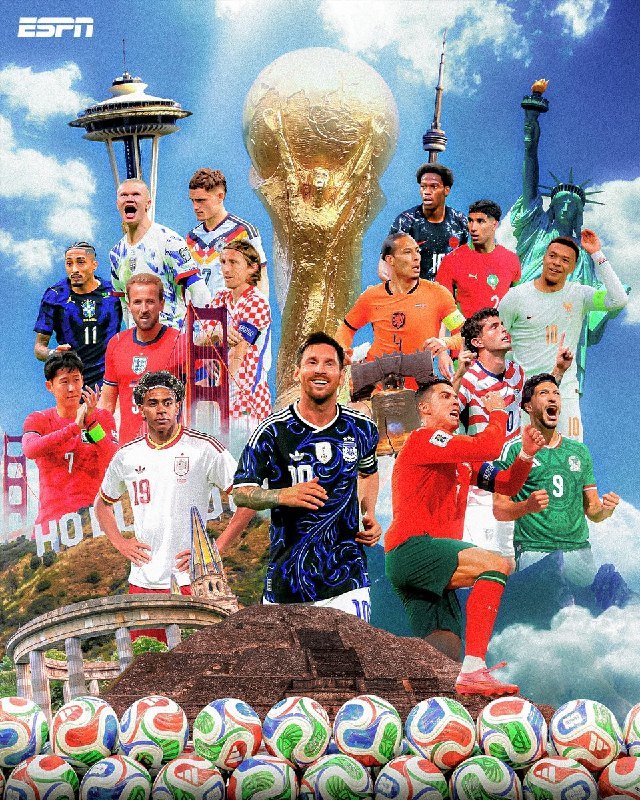
The 2026 World Cup finally began on 9 June 2026, and England arrived as a team the bookmakers trust and a nation the headlines keep doubting. Sky Sports' pre-tournament assessment placed the Three Lions third in the outright market, behind the usual suspects and a step ahead of a chasing pack that no one can quite agree on. Three days into the tournament's social calendar, the gap between the betting board and the editorial mood is the most English thing about this England side.
Sky's framing is straightforward: a deep squad, a manager who has won at youth level and is now judged at senior level, and a draw that punishes complacency rather than rewarding it. BBC Sport's contribution to the same news cycle is a different kind of preview — a profile of Gus Hully, the supporter who has set himself the task of drinking one beer from each of the 48 competing nations. It is light material, but it lands at the right moment, because the question hanging over England has never really been about talent. It is about temperament, the weight of a nation that expects, and the management of a tournament that lasts longer than any league campaign.
What the odds actually say
Third favourites is a precise claim, and Sky Sports is explicit about it: the World Cup is the tournament, and England are in the conversation, but the book is not on them. The market sets the hierarchy, the press reads the market, and the squad reads the press. None of those steps is the same as winning in July. The honest version of the story is that England have a squad good enough to reach the latter stages and a history instructive enough to know that the two facts do not guarantee each other.
The fan economy of a 48-team World Cup
The expanded tournament is the structural change underneath every preview this summer. Forty-eight nations means more flights, more time zones, more visa queues, and a longer road for the underdogs. It also means more branding slots, more sponsor activations, and a fan culture that has to stretch across a host map rather than a single host country. Hully's beer list — one per nation — is a small, gentle piece of consumer behaviour that captures the scale. The same number, 48, that will appear in the group-stage draw, in the broadcasting schedules, and in the early rounds where a European side meets a Concacaf side for the first time in a generation.
Where the framing holds — and where it slips
The dominant read is that England are a credible third favourite, a side whose ceiling is the final and whose floor is a brutal knockout draw. The alternate read is simpler: third favourites is where England have lived for two tournaments, and the gap between third and first is not closed by squad depth alone. Sky Sports' assessment leans on the former; the long English habit leans on the latter. The structural frame, in plain terms, is a football economy that rewards depth, sports science, and squad rotation more than ever before — and an England set-up that has those things in abundance, but has not yet converted them into a trophy since 1966.
Stakes for a tournament that runs through July
If England go deep, the narrative closes: the squad, the cycle, the manager vindicated. If they go out early, the same statistics will be reread as evidence of a ceiling, and the third-favourite line will be remembered as the polite version of what the tabloids will say the morning after. Hully, for his part, has a more tractable challenge. Forty-eight beers, forty-eight nations, one tournament. He will know whether the project worked before the FA does.
How this publication framed it: the wire cycle on 9 June was half oddsboard, half colour. We folded both into the same piece because the gap between the two is the actual story.
Wire provenance
This editorial synthesis draws on the following public wire/social posts:
- https://en.wikipedia.org/wiki/2026_FIFA_World_Cup
- https://en.wikipedia.org/wiki/England_at_the_FIFA_World_Cup