FIFA opens World Cup 2026 fan-name programme: the small print, and the bigger question
World football's governing body has invited supporters to put their name in lights at next summer's tournament. The move is small, the commercial logic behind it is not.
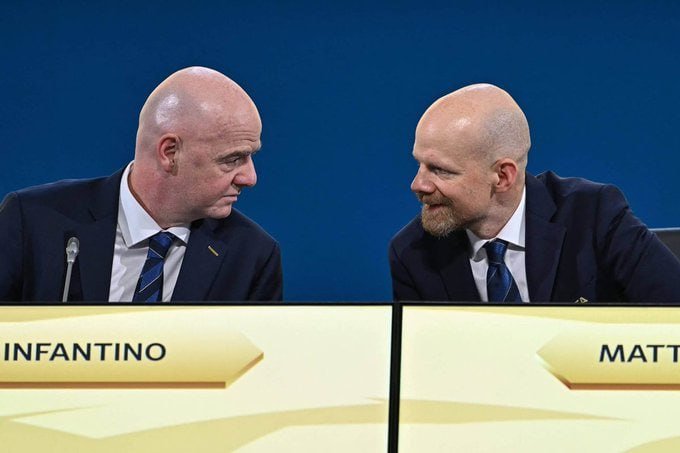
On 8 June 2026, FIFA's official Telegram channel published a short, glossy pitch: football's biggest stage, it said, would carry the names of ordinary fans. The "Super Shoutout" programme, the post announced, would let supporters submit a name and country of origin to be displayed live, in-stadium, during the 2026 World Cup in the United States, Canada and Mexico. The Athletic re-posted the same promotional material on its own channel the same day, a small signal of how tightly the tournament's commercial scaffolding is now wired into the wider sports-media grid.
The pitch is cheerful. The economics behind it are the actual story. FIFA has spent four years building a tournament whose balance sheet depends on selling not just tickets and broadcast rights, but the feeling of being in the stadium to a global audience that, for the most part, will not be. A personalised in-stadium ribbon of light, broadcast on the stadium screens and therefore on television, is a low-cost way to manufacture that feeling at scale, and to charge for the privilege of having it manufactured on your behalf.
What the programme actually does
The mechanics are simple. Fans submit a name and a country of origin. During matches at the World Cup, those submissions appear in-stadium, on the giant screens and LED ribbons that already run partner creative, public-service announcements and replay prompts. The point of the exercise is the camera cut: a name appears, the broadcaster cuts to it, the fan — somewhere in Jakarta, Lagos, São Paulo or Dublin — sees themselves inside a stadium they have no other way of entering.
It is a marketing product built for the age of the second screen. The tournament's rights-holders, including Fox in the United States and the BBC in the United Kingdom, have spent the last cycle training viewers to expect on-screen stadium identity as part of the broadcast grammar: crowd graphics, supporter tifos, the running ticker of attendance. A name slot extends that grammar one step further, into personalised territory that the broadcaster did not have to acquire.
The commercial scaffolding behind the cheer
FIFA's 2026 model is the most commercially aggressive World Cup ever staged. The tournament has expanded to 48 teams, to 104 matches, across 11 host cities in three countries. The host-city agreements were signed on the basis of record guarantees, and FIFA's own financial reporting, restated through the 2025 budget cycle, has assumed a step-change in non-broadcast revenue — sponsorship, licensing, hospitality, and a new generation of fan-paid products.
The Super Shoutout fits inside that revenue line. Personalised in-stadium inventory has been tested in smaller forms before: Premier League clubs have sold message-board slots, Major League Baseball has long sold in-stadium birthday greetings, and several European national-team federations run dedicated supporter-registration platforms. FIFA's move is the same product, scaled to the largest single-sport event on earth and sold on a global ticketing list. The unit economics are attractive because the marginal cost of displaying an extra name on a screen already running is effectively zero.
The push also tells a secondary story about where FIFA believes its revenue growth now lives. Broadcast rights for the men's World Cup were locked in through 2030 on long-cycle deals; ticket revenue is constrained by stadium capacity; hospitality has a ceiling. The remaining lever is direct-to-fan monetisation, of which a paid name-slot is a particularly soft entry point. A fan who pays to put their name on the screen in 2026 is a fan who has crossed a small but real threshold, and who can be invited across the next one.
The framing question
The official framing is unambiguous: this is fan engagement, a way for a global audience that will be overwhelmingly watching from home to feel present at the tournament. That framing deserves to be taken seriously. Personalised on-screen moments are a genuine innovation in an industry that has historically treated broadcast viewers as a passive mass.
The counter-framing is also worth saying out loud. The product being sold is the appearance of presence, and the price is paid to the body that owns the stadium screens, which is to say, the same body that has spent the cycle negotiating record commercial returns out of every other corner of the tournament. Every personalised slot is, in effect, a tiny piece of broadcast inventory that the fan has been invited to subsidise on top of the broadcast rights they have already paid for, directly or indirectly, through their pay-TV subscription.
Neither reading cancels the other. The product is real engagement and real extraction at the same time. The question is which one compounds faster as the tournament cycle goes on.
What it sets up for 2027 and beyond
The 2026 men's World Cup is the largest live-spectacle platform FIFA will operate in the decade, and the federation is treating it as a laboratory. Personalisation of in-stadium inventory is the kind of product that, once shipped, does not get rolled back. If the Super Shoutout clears its internal targets over the summer, expect a paid upgrade tier for 2027 — longer dwell-time on screen, animated graphics, perhaps a club-tier package for federations and sponsors who want to bundle fan names into their own broadcast activations.
There is also a 2027 Women's World Cup, in Brazil, to consider. The women's tournament has historically operated on a tighter commercial base than the men's, and FIFA has publicly committed to closing the structural gap. Personalised fan products, with their near-zero marginal cost, are one of the few tools that can add a revenue line without asking host cities for more guarantees.
For now, the product is small. A name on a screen, a moment of recognition, a country tag. The signal is bigger than the slot: world football's governing body has decided that the next frontier of tournament revenue is not the seat, the broadcast or the sponsor — it is the fan's name, sold back to them as presence.
— Monexus framed this as a commercial product launch with a fan-engagement surface, rather than the pure feel-good pitch the wire pushed. The 2026 tournament's economics only make sense when the personalisation layer is read as a revenue lever, not a courtesy.
Wire provenance
This editorial synthesis draws on the following public wire/social posts:
- https://t.me/FIFAcom
- https://t.me/TheAthletic