Tehran's Snapback Theatre: How a Single UN Vote Reshapes the Iran File
A failed Security Council extension on 9 June has not killed snapback. It has started the 30-day clock that will determine whether Iran faces restored UN sanctions, and whether the E3 and Washington can hold a single line.
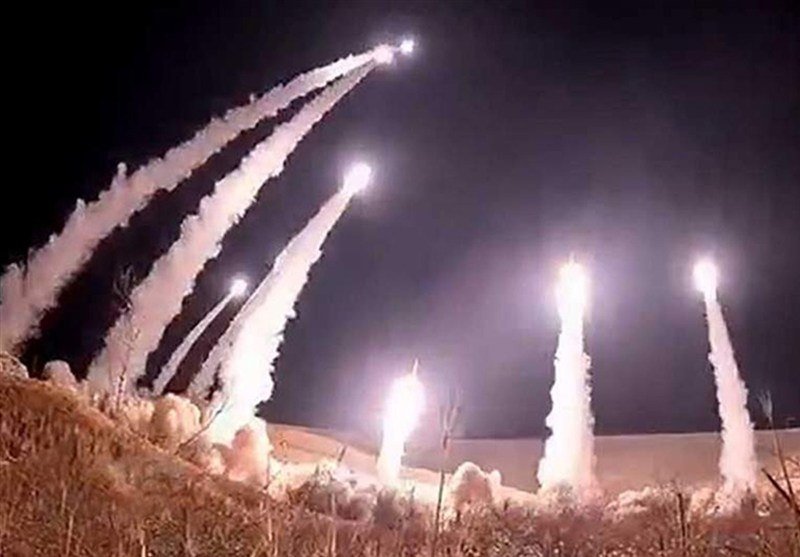
On 9 June 2026, the UN Security Council declined to renew the sanctions architecture that had capped Iran's nuclear programme for nearly two decades, and the procedural clock started ticking. Under the terms of the Joint Comprehensive Plan of Action, the lapse triggered a 30-day "snapback" window during which any original JCPOA participant can lodge a complaint that automatically restores the pre-2015 UN sanctions regime. The vote itself was procedural rather than substantive, but its downstream effect is anything but: a single filing by France, the United Kingdom, or Germany would now freeze Iranian banking channels and arms transfers without a second Council vote. Iran read the result as vindication; the European trio read it as the opening of a 30-day trap.
What the Council actually did
The 9 June vote was on a draft resolution that would have extended the lifting of restrictions for another nine months, the same mechanism that had been renewed annually since 2015. The draft failed to attract the minimum nine affirmative votes, leaving the previous restrictions on the cusp of expiry and, critically, leaving the snapback trigger alive. Iran framed the outcome in Tehran as proof that the file had moved beyond the Western powers; Iranian state outlets Tasnim, Mehr, and Al-Alam led their English coverage on the sanctions lapse itself, presenting the Council as a stage on which the United States and Europe had run out of options. The European reading is less cinematic and more procedural: the vote was not a verdict against snapback, it was the absence of a new authorisation, and snapback remains live.
Why the European trio is not the same as Washington
For most of the last decade, "the West" on Iran has functioned as a single diplomatic actor, with London, Paris, and Berlin supplying the technical expertise and Washington supplying the leverage. That alignment has frayed visibly since January. American messaging out of the White House has oscillated between ultimatum and deal, while European negotiators have tried to keep the sanctions track and the nuclear track on parallel rails. The snapback countdown exposes the gap: any E3 filing binds the United States, Russia, and China, none of whom currently want a return to full pre-2015 sanctions. Tehran's allies on the Council therefore face a choice between defending the existing architecture, which they publicly back, and blocking the E3, which the JCPOA itself empowers.
The counting problem in plain language
Snapback is built on a counting trick. The JCPOA's Annex B specifies that any original participant state can trigger reimposition through the Security Council, and the resolution is automatically adopted unless a substantive draft resolution to continue sanctions-lifting is passed. That inversion is the point: under snapback, blocking a deal is easier than passing one, which is precisely why Tehran spent the spring trying to peel the E3 off Washington and why the Council vote on 9 June was structured as an extension, not as a snapback trigger. The extension failed, which means the underlying instrument has now lapsed; the snapback channel is therefore open by default, not by act. None of this is being argued publicly in those terms, because all sides prefer the ambiguity of a countdown to the clarity of a filing.
What Iran is signalling, and what it isn't
Iranian messaging in the days around the vote has been deliberately bifurcated. Officials in Tehran have publicly rejected any extension of the deal as a non-starter; Tasnim, Mehr, and Al-Alam have framed the Council result as a sanctions event in itself, an Iranian win earned by patience. The same outlets have also spent the late spring arguing that the snapback channel is legally spent, a position that has no traction with the E3 but that builds domestic political cover for a negotiating posture that is prepared, in extremis, to accept a new arrangement with Washington. The point of running both lines at once is to keep the European deadline from functioning as an external constraint on Iranian decision-making; the cost of the strategy is that Iran's own audience hears the Council vote as a victory and reads any subsequent climbdown as betrayal.
The 30-day window
The next four weeks will be run in three distinct clocks. The first is legal: the E3 can file at any moment before 9 July, and once filed, the sanctions reimposition becomes effective after a further 30 days. The second is diplomatic: Iran's negotiating partners, including Russia and China, will work to deliver either a face-saving extension or a substantive alternative that makes filing politically toxic for the E3. The third is military: a snapback decision taken against the backdrop of a live regional escalation is not the same snapback decision taken in a quiet news cycle, and Iran's regional posture over the coming weeks will be read as either a signal of intent or a signal of restraint. The Council's 9 June vote was a procedural moment. The snapback countdown, which has now begun, is the substantive one.
Follow the event.
These dated source records provide context. They do not retrospectively verify this archive article.
Separate what the nuclear watchdog reported from what it could not determine after the June 2025 strikes.