Tehran's Escalation Ladder: Reading Iran's June 9 Warning to Washington
On 9 June 2026, Iran's foreign ministry told Washington to leave the region and warned of a 'heavy response' to any attack. The wire is reading the choreography wrong.
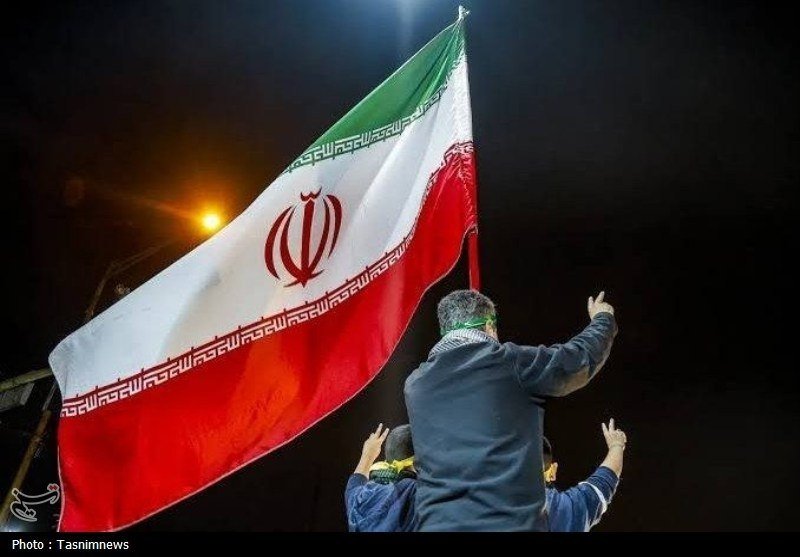
On the evening of 9 June 2026, Iran's foreign ministry did something more interesting than issue a threat. It issued a sequence. In remarks carried by Open Source Intel at 22:43 UTC, the foreign minister told the United States that if Washington wants safety it should leave the region, and added that Iran's armed forces would not ignore any attack or threat. Hours earlier, at 22:12 UTC, the same channel logged the operational tell: Gulf state airspace was about to close, paired with the line that the U.S. should expect a "heavy response."
Western headlines will read this as saber-rattling. They will be partly right, and partly wrong in a way that matters. The choreography is the message. Tehran is signalling that any kinetic move against Iranian territory, assets, or personnel will be answered, and that the answer will be timed to constrain Washington's freedom of movement over the very Gulf corridors U.S. Central Command depends on. The threat to close the sky is the threat to close the chessboard.
What Tehran actually said
Strip the rhetoric and three claims stand out. First, that U.S. forces in the region are a source of insecurity rather than stability, and that their withdrawal is the precondition for safety. Second, that Iran's armed forces retain a credible second-strike capability that will activate on a short fuse. Third, that the diplomatic register and the military register are being run in parallel — not as a bluff, but as a deliberate de-escalation and escalation package aimed at different audiences.
The airspace-closure warning is the part Western desks tend to under-weight. Civil aviation authorities in Gulf monarchies do not restrict overflight on a politician's whim. When notices begin to circulate in a compressed window, it usually means radar tracks have changed, civil aviation authorities have been pre-briefed, and a state actor is preparing to demonstrate that it can, for a defined period, make the corridor unusable to everyone — including the United States.
The framing trap
The standard Western framing treats Iranian warnings as performance, on the theory that Tehran talks loudly because it cannot act. That framing has been wrong often enough to be a tell in itself. Iran's partners and proxies have repeatedly demonstrated the ability to translate rhetoric into disrupted shipping, downed platforms, and recalibrated deterrence. Reading the 9 June statement as empty posturing is a luxury the U.S. military, with forces spread across a half-dozen Gulf bases, cannot afford.
The opposite framing — that Tehran is on the brink of war and is begging to be deterred — is equally thin. The foreign ministry's language is calibrated, not frantic. It is aimed at a specific U.S. audience that is being told, in effect, that the cost-benefit ledger of a strike has shifted. That is a negotiating posture, not a launch posture.
What the structural pattern looks like
Zoom out. For two decades, the U.S. security architecture in the Gulf has rested on three quiet assumptions: that regional air superiority is uncontested, that Gulf airspace remains freely usable in a crisis, and that Iranian retaliation, while painful, is finite and containable. The 9 June sequence pokes at all three. If Gulf monarchies are coordinating on temporary airspace restrictions at Iran's signal, the first assumption is already eroding. If the corridor can be closed for hours, the second is in play. If Iranian messaging is now explicit about a "heavy response" rather than calibrated tit-for-tat, the third has been formally retired.
None of this requires a shooting war to matter. The market effect alone — insurance, freight rates, energy risk premia — is a lever. So is the signalling effect on every Gulf capital that has been quietly hedging its exposure to a U.S. security guarantee.
Stakes and the next 72 hours
The U.S. faces an unattractive menu. Retaliate and validate the Iranian framing that U.S. presence is the problem. Ignore the warnings and watch Gulf partners absorb the cost of an airspace closure they did not author. Negotiate from a position that Tehran has just publicly defined as weaker than it was a week ago. The window for a diplomatic off-ramp — a face-saving exchange, a confidence-building measure around the Strait of Hormuz, a release-and-sanctions package — is narrower on 10 June than it was on 8 June.
What remains genuinely uncertain is the audience inside the Iranian system for the 9 June messaging. The foreign ministry and the Islamic Revolutionary Guard Corps do not always read from the same page, and Open Source Intel's relay of the foreign minister's language does not, on its own, establish that the operational chain has been told to stand down — or to stand up. That ambiguity is itself part of the message.
Desk note: Monexus treats Iranian state-adjacent messaging as a primary source for Iranian intent, weighted against U.S. and Gulf government readouts. This piece reads the 9 June sequence as a deliberate, dual-register signal rather than as either performance or prelude — a framing the wire packages have so far flattened.
Wire provenance
This editorial synthesis draws on the following public wire/social posts:
- https://t.me/s/osintlive
- https://t.me/s/osintlive
- https://t.me/s/osintlive
- https://t.me/s/osintlive