Brief, sharp and over: how a single night of Israel–Iran blows reset the Trump ceasefire
An exchange of strikes on 7 June 2026 punctured a US-brokered ceasefire that had held for two months. Both sides have stepped back, but the political cost — and the leverage — now sit in Jerusalem and Tehran, not Washington.
For roughly twelve hours on Sunday and into Monday, the long-held assumption that a US-brokered ceasefire had frozen the Israel–Iran front collapsed into the open air. Iran struck Israel on 7 June 2026, and Israel answered, ending a two-month pause in direct fire and dragging the region back to the edge of a wider war. By Monday evening the two sides had visibly stepped back from escalation, but the episode had already done its political work: the most consequential decision-making on the Iranian file is no longer sitting in the White House situation room. It has migrated to Jerusalem and Tehran.
The pattern is familiar, and that is the point. A ceasefire holds long enough to be declared a success; a single, calibrated breach then redraws the bargaining map. This time, the breach came from Iran; the calibrated reply came from Israel; and the guarantor of the deal — the United States — was put in the position of publicly pleading with both sides to stop. The structural lesson is older than the JCPOA: a security architecture that depends on a single external backer is only as durable as that backer's patience, and patience in Washington is, by design, finite.
The night the ceasefire broke
According to France 24's reporting on the overnight exchange, Israel and Iran exchanged fire on Sunday into Monday, the first direct strikes since the US-brokered ceasefire of two months earlier. Both governments, the network reported, warned publicly that they retained the option to retaliate further, but by Monday afternoon neither appeared to be moving additional forces or ordnance toward the front. The framing from the wire was deliberately cautious: an exchange that has paused, not a war that has resumed. Reuters characterised the same episode differently. In a Monday-morning analysis under the headline "Defying Trump with brief Iran fight, Israel seeks sway over peace talks," the wire's correspondents argued that the decision to absorb a strike, hit back, and then de-escalate was itself a negotiating posture — a way for Jerusalem to shape the diplomatic conversation in Washington and the Gulf capitals, rather than a tactical spasm on the missile front. The same Reuters piece linked the timing to a wider set of talks in which Israeli officials are seeking to harden terms that the Trump administration had been hoping to soften.
What both readings agree on is the sequence: Iran struck first on 7 June; Israel answered, on a scale and within a window that signalled resolve without re-opening the wider war; and the United States, in the words carried by Iran's Tasnim news agency and the Beirut-based Al Alam channel, was reduced to claiming that Israel "will not go back to war with Iran." That phrasing — not a denial of what had just happened, but a prediction about what would not happen next — is itself the most telling line of the entire exchange.
The American guarantor, on the back foot
For most of the past two months, the White House's working assumption on Iran was that direct fire had been removed from the menu. The brief, sharp, and now-paused exchange on 7–8 June punctures that assumption, and the political price is being paid in Washington rather than in Jerusalem or Tehran. Reuters's read of the episode is that Israel is using the breach to insert itself more aggressively into the diplomatic text of any settlement — including, by implication, the sequencing of sanctions relief, the disposition of Iranian missile and proxy assets, and the guarantees on which the next pause will rest.
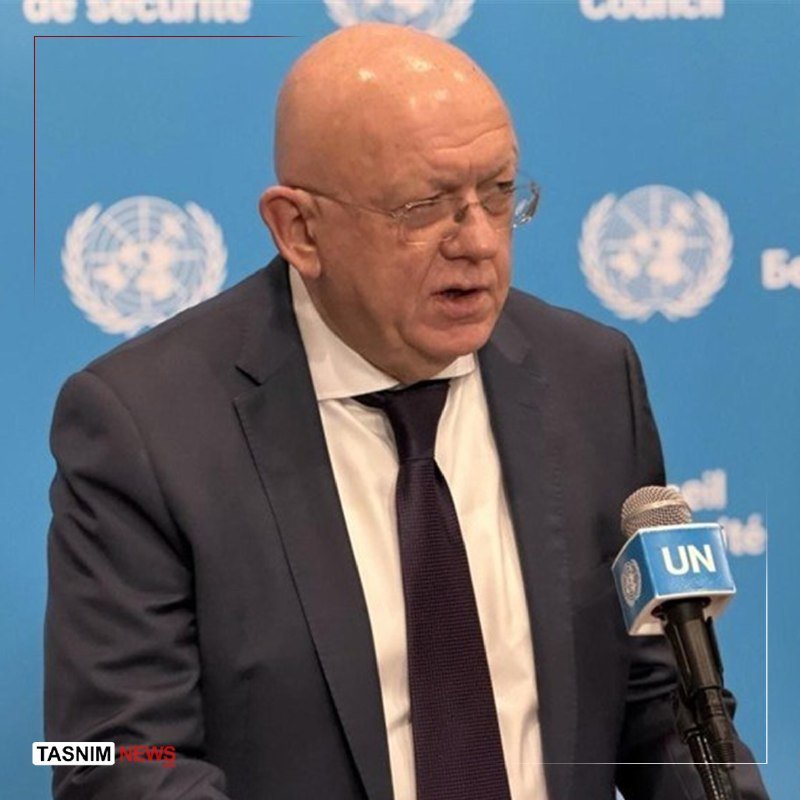
From the Iranian side, the messaging has been more layered. Reporting carried by the Tasnim English channel and by Al Alam (the Iranian Arabic-language outlet that has served as a high-velocity feed for Iranian diplomatic framing in past cycles) has emphasised the US reaction — Trump's prediction of restraint, and Russian negotiator Mikhail Ulyanov's widely-shared line that pressing the existing draft resolution to a vote at this moment would be "absurd in light of the exchange of blows." That formulation is doing quiet work. It positions Moscow as the diplomatic adult in the room, places the United States on the defensive about its own chosen instrument, and reframes the Russian role from spoiler to senior mediator. Whether or not that framing survives contact with the actual negotiating text is a separate question; for now, it is the line Tehran is amplifying.
The competing reads are visible, and they are not symmetrical. Western wire coverage is read here in its strongest form: Israel, with intelligence superiority and an air corridor, struck back fast and small, demonstrating that any future breach will be answered, and used the moment to bind Washington tighter. The Iranian-state read, taken in its strongest form, is that Iran broke the freeze deliberately, demonstrated that the ceasefire could not be enforced without Tehran's consent, and forced the US to publicly predict Israeli behaviour — itself a tell. Both can be true, and the evidence of the past forty-eight hours is consistent with both. The dominant read, in this publication's view, is that the breach was a coordination failure that both sides have now turned into leverage.
What the architecture looks like now
A ceasefire, in the technical sense, is a contract among three parties: the two combatants and the guarantor. The guarantor does not just witness; the guarantor enforces, or at minimum threatens to withhold cover when the contract is broken. Over the past two months, the guarantor was Washington, and the contract was sold to American audiences as a Trump-brokered success. The 7–8 June exchange is the first serious test of whether Washington can, or will, enforce. The public answer so far has been the unusually modest claim that Israel will not return to war with Iran — a forecast, not a deterrent.
That tells a wider story. The diplomatic energy around the Iranian file has, for the better part of a decade, been organised around a single great-power backer and a single great-power opponent. The ceiling of that arrangement was visible in June 2025, when US strikes on Iranian nuclear infrastructure failed to produce a political outcome; the floor has been visible in the months since, in the slow grinding of the negotiating text. What the brief Israel–Iran exchange of 7–8 June 2026 demonstrates is that the architecture has become a permission structure. Iran can break the freeze, Israel can reply, and the United States will end up publicly forecasting behaviour it does not directly control. The most consequential decisions in this file are now being made in Jerusalem and Tehran, with Washington in the role of a louder and louder commentator.
Stakes, and what remains contested
The immediate stakes are concrete. Any deal that emerges from the current round of talks will now bear an Israeli signature on the operational clauses — the inspections, the missile constraints, the proxy-organisation provisions — at a higher level of detail than was on the table a week ago. Iran's leverage is the inverse: by demonstrating that the freeze can be broken at will, Tehran has reduced the credibility of the US-brokered framework and raised the price of any future pause. Both sides now own an asset they did not fully own a week ago. The risk is that the same logic, applied once more, does not pause but escalates.
The unresolved questions are also concrete. The sources do not specify the precise scale of the Iranian strike on 7 June, the targets hit on either side, or the casualty footprint, and early Telegram and wire framing on those details diverges. Reuters's analytical piece frames the exchange as deliberate and brief; the Iranian state channels frame it as a defensive action that proved a point. The truth, on the available evidence, sits between the two, and a fuller accounting will come from the next 48 to 72 hours of wire reporting. For now, the most defensible read is that the ceasefire has not collapsed but has been visibly re-priced, and that the re-pricing is the point.
This publication reads the 7–8 June exchange as a leverage event more than a strategic one. The wire framing has emphasised Israeli defiance of Washington; the Iranian-state framing has emphasised US loss of control. The honest synthesis is that both are partially right, and that the structural loser of the night is the guarantor model itself — which is precisely the read Tehran and Moscow are now amplifying.
Wire provenance
This editorial synthesis draws on the following public wire/social posts:
- https://t.me/Middle_East_Spectator
- https://t.me/tasnimnews_en
- https://t.me/JahanTasnim
- https://t.me/alalamarabic
- https://t.me/alalamarabic
Follow the event.
These dated source records provide context. They do not retrospectively verify this archive article.
Separate what the nuclear watchdog reported from what it could not determine after the June 2025 strikes.