Israel and Iran trade strikes, then pull back: a 24-hour test of the US-brokered ceasefire
After the first direct exchange of fire since a US-brokered ceasefire in April 2026, both sides signalled restraint — exposing how narrow the de-escalation margin really is.
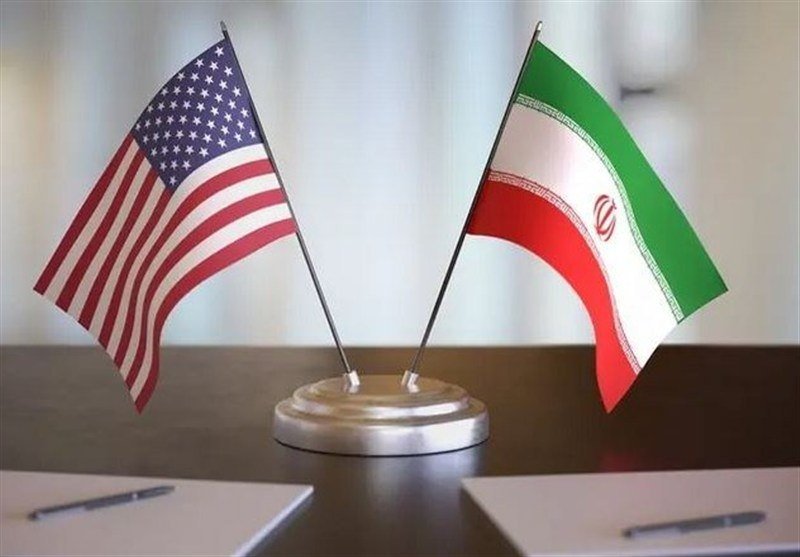
On 8 June 2026, Israel and Iran exchanged missile strikes for the first time in roughly two months — then both governments signalled, within hours, that they intended to stop. The exchange punctured a US-brokered ceasefire that had held since April, and briefly raised the question of whether Washington still controls the tempo of the confrontation. By the evening UTC, however, the two sides had stepped back from the brink, and a claim attributed to Donald Trump — that Israel "will not go back to war with Iran" — was circulating via Iranian state-aligned channels.
The pattern is familiar: a short, sharp round of fire, calibrated retaliation, and an off-ramp negotiated in capitals far from the launch sites. What is different this time is the political context on both sides, the uneven mediation, and the sense that the ceasefire has become a pause between rounds rather than a settlement.
What happened on 8 June
France 24 reported at 22:36 UTC on 8 June 2026 that Israel and Iran "appeared to pull back from further military action on Monday after exchanging fire for the first time since a US-brokered ceasefire two months ago." The outlet noted that both sides had publicly warned they would retaliate, but had not followed through with a second round as of its filing. A BBC World Service item published at 21:38 UTC the same day framed the episode more bluntly, asking whether Trump had "lost control of the Iran war," and describing the exchange as the first breach of "a precarious ceasefire two months ago."
A Reuters dispatch, indexed at 22:05 UTC on 8 June, characterised the Israeli move as a deliberate bid for leverage: "Defying Trump with brief Iran fight, Israel seeks sway over peace talks." The framing matters. Reuters is not describing a miscalculation or an accidental escalation. The Israeli decision to strike — and to limit the strike — is being read in the wire as a tactical move inside the diplomacy, not outside it.
The Iranian state-aligned news agency Tasnim, via its English channel at 21:49 UTC, gave prominence to a competing claim from Trump that Israel "will not go back to war with Iran." The same claim appeared in a near-duplicate post from JahanTasnim at 21:50 UTC. The two posts, run by an outlet that is itself part of the Iranian state media ecosystem, are reporting on a US statement — a useful tell about how Tehran is choosing to amplify Washington's restraint line in its own messaging.
The competing framings
The Western wire line and the Iranian state line are not, in this case, telling the reader opposite stories. Both acknowledge that strikes happened. They diverge on three things: who is in control of the de-escalation, who benefits from the brief round of fire, and whether the ceasefire is intact.
The BBC's framing — "has Trump lost control" — implies that the United States is the guarantor whose authority has now been tested. Reuters's framing implies the opposite: that Israel is acting with a degree of autonomy and is using the strike to extract concessions at the negotiating table. The Tasnim / JahanTasnim framing presents Trump as the actor pulling Israel back, which serves an Iranian interest in depicting the Israeli government as a junior partner of Washington rather than an independent military actor.
All three can be partly true. The honest reading is that the 8 June exchange was short enough, and the rhetoric measured enough on both sides, to suggest the strikes were bounded on purpose. Israel demonstrated that it can reach Iranian territory at will. Iran demonstrated that it can respond. The ceasefire held in the sense that no second round followed before the end of the UTC day. It did not hold in the sense that the underlying prohibition on direct strikes lasted the full two months.
The structural picture
A ceasefire that is honoured for weeks and then deliberately punctured is, in plain terms, a pause between rounds — useful for negotiation, useful for signalling, and useful for letting oil markets and shipping routes settle down. It is not yet a settlement. The structural fact is that Israel and Iran have no diplomatic relationship, no shared arbiter, and no agreed mechanism for managing the kind of miscommunication that produced the 8 June round. The United States is the closest thing to an arbiter, and Washington's leverage is real but partial: it can shape Israeli choices, it can shape Iranian choices through sanctions relief, and it can use the gap between those two levers to keep both sides talking.
What the 8 June episode shows is that the leverage is uneven. Israel can act on a short timeline, accept a short round of fire, and trust that the United States will absorb the diplomatic cost. Iran can absorb a strike, retaliate in kind, and rely on a US president who wants a deal to restrain Israel from a second round. Each side has a viable strategy for the next incident. That is why the pattern recurs.
The Reuters framing of Israel "seeking sway over peace talks" points to a specific incentive: the Israeli government has an interest in demonstrating that it can escalate and de-escalate on its own terms, because that capability is itself a bargaining chip. If the United States is the broker, the broker's job is harder when the principal client can launch a strike, accept retaliation, and then come back to the table from a position of proven reach.
Stakes and what to watch next
If the trajectory continues, the most likely outcome is not a sudden wider war and not a clean settlement. It is a sequence of bounded rounds, each one shorter than the last until the political cost of any round — in shipping insurance, in oil prices, in coalition management in Washington — forces a real negotiation. The losers in that sequence are predictable: shipping and energy markets, Iranian civilians in range of any future strike, and any diplomatic process that treats the ceasefire as already-achieved rather than as something still being constructed round by round.
The winners are also predictable in the short term. A government in Jerusalem that can demonstrate reach gets more leverage at the table. A US administration that can claim it ended a war gets a political asset. An Iranian government that can frame Trump as restraining Israel gets a domestic messaging line. The cost of those wins is paid in the next round, by the people who happen to be near the impact sites.
What remains genuinely uncertain is the durability of the US role. The BBC's question — has Trump lost control — is unanswered by the 8 June episode. The strikes were brief and the rhetoric was restrained, which suggests that the US role is real but contested. The honest reading is that the 8 June round was a stress test, and the ceasefire passed it the way a cracked wall passes an inspection: by holding, this time, with visible strain.
This publication framed the 8 June exchange as a bounded test of an already-strained ceasefire, rather than as a collapse of one. The wire consensus at filing time was that both sides had pulled back within the same UTC day; whether that holds through the next diplomatic cycle is a question the sources do not yet answer.
Wire provenance
This editorial synthesis draws on the following public wire/social posts:
- https://t.me/france24_en
- http://reut.rs/4uUIdwn
- https://t.me/tasnimnews_en
- https://t.me/JahanTasnim
- https://t.me/BBCWorldoffl
Follow the event.
These dated source records provide context. They do not retrospectively verify this archive article.
Separate what the nuclear watchdog reported from what it could not determine after the June 2025 strikes.