Israel and Iran trade equations: IDF chief says strike on Iran was preparation for a heavier blow
IDF Chief of Staff Eyal Zamir frames Israel's recent strike on Iran as the opening move of a wider campaign, while Tehran signals that any Israeli action anywhere in Lebanon will draw an Iranian response.
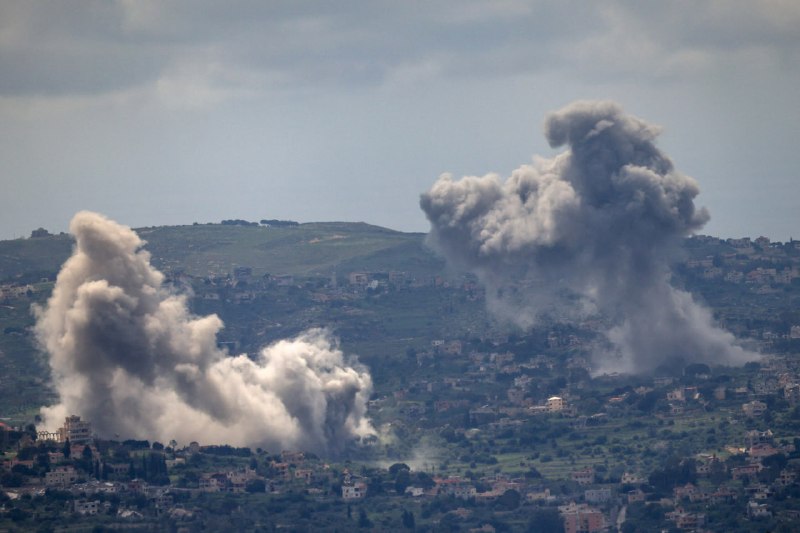
The equation came down to a single sentence, repeated across the Iranian-aligned information space in the early afternoon of 9 June 2026: any Israeli attack anywhere on Lebanese territory — the south, the Bekaa, Beirut — would be answered by Iran. Within minutes, the counter-equation came from the other end of the Mediterranean. Speaking to troops at a military drill, IDF Chief of Staff Lt. Gen. Eyal Zamir declared that "the Iranian attempt to dictate equations and change reality will fail," and added that the strike Israel had already carried out inside Iran was "preparation for a much more significant and heavier blow." Two doctrine statements, issued within the same hour, in a Middle East that has spent the last twenty months learning to read doctrine statements as operational orders.
This is the geometry of the present escalation: a frontier war in the Levant has now produced a direct exchange of threats between Jerusalem and Tehran, with Lebanon positioned as the tripwire. The pattern is familiar from the spring of 2024, when the Iranian-Israeli confrontation first crossed from the proxy layer into the open, but the signalling this week is sharper and the room for miscalculation tighter. Understanding what is being said, and what is not being said, is the only way to read what comes next.
A new equation, posted in the open
The Iranian equation was first surfaced by the Telegram channel run by the Beirut-based analyst Elijah J. Magnier and was then amplified across the network of Iran-aligned channels. Its content is unambiguous: the geographic scope of the Iranian commitment to Lebanon is being widened. Historically, Iran's deterrent signalling in Lebanon has been calibrated to a narrow set of Israeli actions — a strike on a senior Hezbollah figure, an assassination in the southern suburbs of Beirut, a deep penetration into the Litani area. The 9 June formulation, by contrast, extends the trigger to "any Israeli attack anywhere on Lebanon." It is, in other words, a doctrine of automaticity: the question of whether a given Israeli action warrants an Iranian response is removed from the political chain of command and pre-committed.
That kind of pre-commitment is the classic move of a side that wants to constrain the other side's freedom of action. The cost is real: an automatic doctrine has to be honoured if it is to be believed, even when honouring it is costly. The benefit is the deterrent credibility that comes from removing the very ambiguity an adversary might want to exploit. Israel has historically been the side that has used the threat of escalation most deliberately; the new formulation, on paper, makes Iran the side with the more rigid rule.
The second half of the equation, as the same channel notes, is the implicit promise that the Iranian response itself will be governed by Tehran's choice of instrument, target, and timing. That is the standard ambiguity that an automaticity doctrine still leaves itself: when the trigger is pulled, the response is no longer contingent — but its form remains discretionary.
Zamir's reply, and what the drill visit signals
Zamir's answer came within minutes and was distributed by Israeli-linked channels including Open Source Intel, English-language accounts of Israeli security spokespeople, and the geopolitics channel GeoPWatch. The choice of venue matters. Israeli chiefs of staff typically reserve their sharpest language for operational briefings or for media appearances; choosing to deliver this statement in front of troops at an active drill is the IDF's way of signalling that the rhetoric is matched by what is being trained for. The drill itself is the substantive payload of the message.
The content of the message has three components. First, the denial of Iranian agency: "the Iranian attempt to dictate equations and change reality will fail." This is the IDF's way of telling the Lebanese and Iranian audiences that Israeli freedom of manoeuvre is not a variable Tehran can pin down. Second, the affirmation of the strike already conducted: a public confirmation that Israel has, in fact, struck Iran — not as a one-off retaliation, but as a discrete action inside a longer campaign. Third, and most consequentially, the forward-leaning formulation that the past strike was "preparation for a much more significant and heavier blow." The past tense is the news. The future tense is the threat.
Zamir is not the first IDF chief of staff to talk in this register, but the cadence of his statement is closer to that of his predecessor Herzi Halevi in late 2023 than to the more measured language of the 2025 period, when Israel and the United States were negotiating a corridor arrangement around Hezbollah's north-of-Litani posture. The negotiation window, to the extent it is still open, narrowed on the morning of 9 June.
What Iran is actually buying, and what it is spending
It is worth taking seriously the structural logic that an Iranian automaticity doctrine is trying to buy, rather than dismissing it as posturing. A doctrine that says "any Israeli action in Lebanon draws an Iranian response" is a doctrine that tries to do three things at once: lock in Hezbollah's continued operational role in the south by raising the cost of any further Israeli action against it, signal to Arab capitals in the Gulf that the Iranian deterrent umbrella is being widened, not narrowed, and demonstrate to the Iranian domestic audience that the regime has not been subdued by the Israeli strike acknowledged by Zamir.
Each of those objectives is structurally sensible from Tehran's point of view. Hezbollah is the keystone of the forward-deterrent architecture that Iran has spent four decades building; the open discussion inside Israel during 2025 about accepting a degraded Hezbollah suggests that Israel is not unaware that degrading Hezbollah is one of the few levers it can pull to make the northern Galilee reliably habitable. A wider Iranian trigger is therefore a wider Iranian shield over a Hezbollah whose survival is now an open policy debate in Jerusalem.
The cost of the doctrine is the cost of any pre-commitment: it has to be honoured, or it ceases to be a doctrine. There is a long history of Middle Eastern states issuing red lines that they later declined to enforce. The 9 June formulation is the Iranian answer to that history. The question that the next weeks will answer is whether the same Iranian leadership, in the same economic and political straits it has been in for the last two years, will be prepared to pay the price of honouring the line the moment it is crossed.
Why the strike Zamir is referencing is the operative fact
The most consequential part of Zamir's statement is the part that is not a threat: the public confirmation that Israel has already struck Iran. The strike was reported across Israeli, Western, and Iranian-aligned channels over the previous days, but the public Israeli confirmation of it, in a setting of troops at a drill and the words "the strike we carried out in Iran," gives it a different status. It moves the strike from the category of unverified regional reporting to the category of acknowledged Israeli operational fact.
This matters because the strike, by the IDF's own framing, is a sub-set of a wider campaign rather than a discrete retaliation. The choice to characterise it as "preparation for a much more significant and heavier blow" is also the choice to make the next strike legible in advance. Israel is doing something that Iran did a year and a half ago when it launched its first direct strike on Israeli territory: it is putting the opponent on notice that the next round is being planned, in the open, as a deliberate piece of strategic signalling rather than a covert escalation.
That choice has a downside. Putting the next round on the public ledger raises the political cost inside Israel of failing to deliver the heavier blow, and it raises the political cost inside Iran of failing to answer it. It is the kind of signalling that can discipline a government into a fight it might, in a quieter setting, have preferred to avoid.
The Lebanese middle, and the frame that is not being filled
The most under-discussed element of the 9 June exchanges is the position of the Lebanese state itself. Beirut's central government has spent the last twenty months trying to negotiate a ceasefire architecture that preserves a residual Lebanese state monopoly on decisions of war and peace. The Iranian equation, by binding the Iranian response to Israeli actions on Lebanese soil, makes that monopoly harder to defend: any Israeli action in Lebanon now produces an Iranian response, regardless of whether Lebanon asked for it or wanted it. Lebanon, in other words, has become a venue in which a third party will exercise a response, even when the venue's nominal sovereign does not consent.
This is the frame that the dominant Western reporting on the morning of 9 June did not fill. The story is being told as a bilateral Israeli-Iranian escalation, with Lebanon as the stage. The structural fact is closer to the inverse: Lebanon is the territory in which Israeli action and Iranian response are now pre-committed to meet, and the Lebanese state is the actor being squeezed between them. Whether Beirut can recover a margin of manoeuvre in the weeks ahead is, in practice, one of the more important questions in the wider crisis — and one of the least discussed in the wire coverage of the morning.
What the next days will look like
The structural pattern that the 9 June exchanges are inside is the pattern that has governed the Israel-Iran confrontation since the spring of 2024. Each round has produced a wider geographic scope, a more public signalling apparatus, and a tighter pre-commitment by both sides. The morning's equation is the widest scope so far; the morning's strike acknowledgement is the most public Israeli acknowledgement so far. The next inflection point is operational rather than rhetorical: the question is whether the drill Zamir was visiting is the drill of a force being readied for a specific action, or the drill of a force being kept at a heightened state of readiness for a contingent one. That distinction will not be visible in the Telegram traffic. It will be visible, if at all, in the movement of Israeli air assets and the messaging of United States Central Command over the coming days.
The uncertainty that the morning's exchanges have not resolved is the uncertainty that the wider Middle East has been living with for two years: whether the next round, when it comes, will be contained inside the existing escalation ladder, or whether it will step off the ladder entirely. The Israeli and Iranian statements of 9 June 2026 are, in their different ways, statements that each side believes it can keep the next round on the ladder. The morning's job is to make the case to the other side that it cannot.
This article sits closer to the wire and further from the editorial line than most Monexus long-reads: the source material is Telegram-channel reporting carried forward by Israeli and Iran-aligned channels, and the analytical claims are anchored in the words of a single named official, IDF Chief of Staff Lt. Gen. Eyal Zamir, plus the published Iranian equation. Readers looking for the full operational picture should pair this piece with the Western-wire follow-up reporting that will follow once the strike's target set and the drill's location are confirmed.
Wire provenance
This editorial synthesis draws on the following public wire/social posts:
- https://t.me/rnintel
- https://t.me/osintlive
- https://t.me/englishabuali
- https://t.me/GeoPWatch
- https://t.me/ClashReport
- https://t.me/GeoPWatch
- https://en.wikipedia.org/wiki/Israel%E2%80%93Iran_proxy_conflict
Follow the event.
These dated source records provide context. They do not retrospectively verify this archive article.
Separate what the nuclear watchdog reported from what it could not determine after the June 2025 strikes.