Olise's hat-trick lands France a final rehearsal — and a Ballon d'Or question
A first international hat-trick for Michael Olise closed France's World Cup warm-up programme in Lille. The conversation has already moved to a different question: how high is his ceiling?
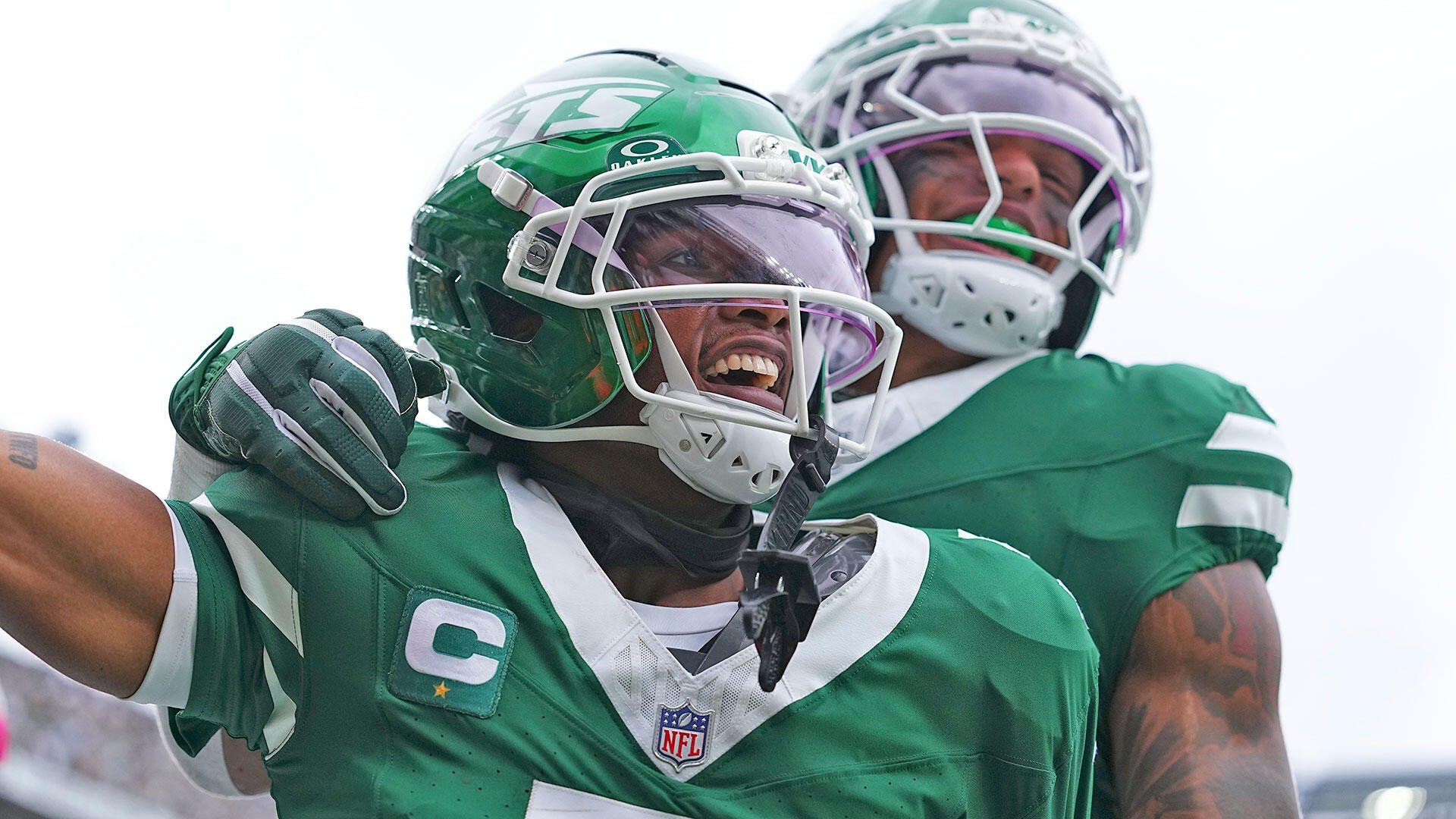
France walked off the pitch at Stade Pierre-Mauroy in Lille on the evening of 8 June 2026 with the kind of result that tells a coach almost nothing he did not already know, and a single performance that tells the rest of the continent something it has been arguing about for months. Michael Olise, the 24-year-old Bayern Munich attacker, scored a hat-trick in a 3-1 victory over Northern Ireland — his first three goals for the senior national side, and the final act of a warm-up programme built, deliberately or not, around the question of who carries this team into the World Cup.
The answer, increasingly, is a player who two years ago was being talked about as an understudy and is now being talked about in the same breath as the Ballon d'Or. Whether that conversation is premature is the only question worth taking seriously. The rest is noise.
A statement in the right place
Olise opened the scoring inside the first quarter-hour, added a second before the interval, and completed his hat-trick early in the second half. The three finishes, on a night when France controlled territory but were repeatedly tested by a Northern Ireland side that refused to sit deep, demonstrated the full range that has made him a starter for club and country: a left-footed strike from distance, a near-post run finished through traffic, and a composed finish after a switch of play. The opposition, of course, matters. Northern Ireland are ranked outside the top forty and arrived in Lille with one win in their last eleven competitive outings.
What the night confirmed is not that Olise can score against modest opponents — that has been established for two seasons at Bayern — but that Didier Deschamps is prepared to build the team around him. The system that has often looked like a compromise between the old generation and the new one, with Kylian Mbappé as a fixed point and a cast of supporting runners, now has a second axis. That is a tactical change with consequences. It means France no longer depend on a single creator to unlock a low block; it means the right side of the attack is now a scoring threat in its own right, not a feeder lane.
The Saha argument
It is Louis Saha, the former France striker, who has done the most to push the conversation from "promising" to "plausible." Writing in his column for BBC Sport on 9 June 2026, Saha argued that Olise has the tools to move into Ballon d'Or contention, citing his end product at Bayern and the maturity of his movement in the French attack. Saha, who played at three major tournaments and spent most of his career in English football, is not a name that gets attached to hype by reflex. When he makes the case, it travels.
The case rests on three things: volume, variety, and visibility. Volume, because Olise's output at Bayern has climbed season-on-season. Variety, because his goal profile is unusually wide for a wide attacker — he scores from outside the box, off the line, on the counter and from set-pieces. Visibility, because the World Cup, hosted this summer across the United States, Canada and Mexico, is the only stage on which a single player can convert a club reputation into a global one. Saha is essentially betting that Olise's game will scale into the tournament in a way that makes the case for him self-evident by mid-July.
What the counter-narrative looks like
The case against is not frivolous. Olise has not yet produced a tournament-defining performance at senior international level; the hat-trick against Northern Ireland is the largest single reference point he has. The Ballon d'Or in 2024 went to a player — Rodri — whose case rested on a full season of decisive contributions for club and country, including a Champions League and a major international trophy. To enter the conversation, Olise would need both. The structural problem is that France's path to the latter is crowded: Mbappé, who finished high in the 2024 voting, remains the most visible attacker in the squad and will attract the bulk of the attention regardless of how well others perform. Players do not win the Ballon d'Or by being the second-best player on the best team; they win it by being the best player on a winning team, or by carrying a less-fancied side deeper than expected.
There is also a quieter, structural objection. Awards voting has been increasingly sensitive to narrative, and the narrative around Olise is still a defensive one — the player who made the right move at the right time, leaving Crystal Palace for a Champions League contender, slotting in alongside a superstar attack. Until the narrative becomes offensive — that this is the player who wins France a tournament they would otherwise have lost — the votes will not follow.
Stakes for the summer, and for the cycle after
If France reach the latter stages in North America, Olise's standing changes whether or not he is the headline act. A deep run, with goals, would make the Ballon d'Or conversation credible even without a winning trophy; an early exit would defer it to a more favourable platform. The more durable stake is positional. A successful tournament cements him as the second pillar of the French attack for the next cycle and gives Deschamps a tactical flexibility he has not had since the 2018 generation. A failure, by contrast, does not undo his club trajectory but complicates the national-team one, and that is the ledger that international managers read.
What remains genuinely uncertain is whether the Saha case — modest opposition, against a depleted press, and on a night when France had the game under control — will be borne out against the higher-grade sides the World Cup will demand. The sources do not specify how Deschamps intends to use him against a deep-lying top-ten opponent. That is the next data point worth waiting for, and the only one that will tell anyone anything real.
How Monexus framed this: the wire coverage treated the result as a routine warm-up win and led on Olise's hat-trick as a milestone. Monexus treats the milestone as secondary; the Saha column is the news, because it relocates the conversation from a one-off performance to a season-long argument about hierarchy.