Visa denial knocks Somali referee out of World Cup — and exposes a federation that picked a host it cannot police
A referee trained in Cairo, certified by CAF, and cleared by FIFA will not officiate the 2026 World Cup because the US government refused him entry. The episode says as much about the host's politics as it does about the tournament's referee list.
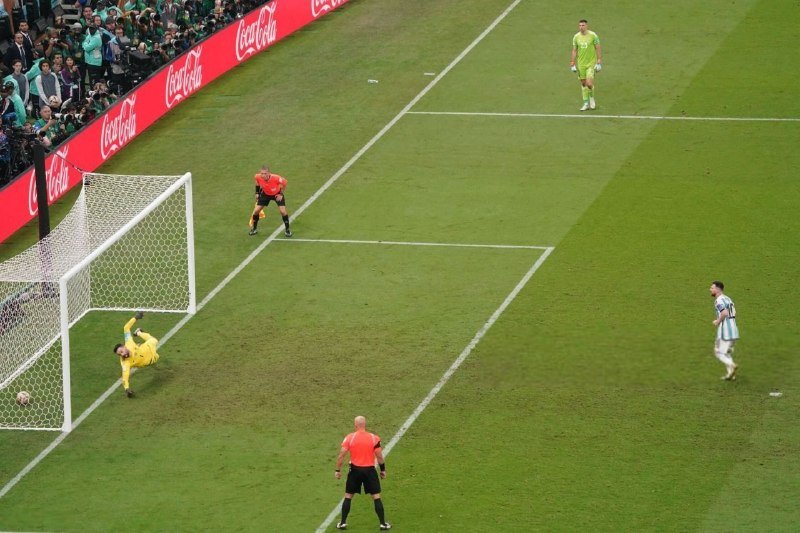
On 8 June 2026, FIFA confirmed that a Somali referee widely regarded as Africa's best will not officiate at the 2026 World Cup after being refused a US visa. The federation named his replacement on the official match official list the same day. The episode is small in headcount — one official, one tournament — and large in what it exposes: a global football tournament hosted by a country whose border regime is now an operational variable the world game has to plan around.
The story lands ten days before the opening match. The tournament's group composition is set, broadcast windows are locked, and betting markets are already pricing group-stage games. Into that calendar walks a bureaucratic fact — a US consular officer said no — that forces FIFA into a last-minute substitution on its own roster.
A referee dropped ten days from kickoff
The official in question is a CAF-licensed match official who has officiated at the highest level of African continental competition, including CAF Champions League fixtures, and was on the FIFA panel heading into 2026. Sky Sports reported the visa refusal on 8 June 2026, citing FIFA confirmation, and noted the federation's intention to name a replacement "in due course." The official had reportedly travelled to the United States earlier in the cycle for pre-tournament duties and was turned away at the border on his return, according to the Sky Sports report — a detail that, if accurate, suggests an entry-visa issuance rather than a routine inspection.
FIFA's public line is procedural. The federation points to its standard process for replacing match officials and to the operational fact that every match requires a working visa for the entire crew. The deeper point is structural: when the host country is also the gatekeeper, the host country's immigration policy becomes part of the sporting product.
Why a Somali referee, why now
The referee's nationality is part of the story. Somalia has limited state-to-state paperwork infrastructure — a backlog of unprocessed passports, a small consular footprint, and a long-standing security designation that has made US visa adjudication for Somali applicants slower and more restrictive than for most other nationalities. The Trump administration's early-2026 tightening of vetting for several African and Middle Eastern passport categories, including expanded social-media disclosure requirements and a shorter window for administrative processing, has compounded that baseline friction. None of that is on the World Cup's promotional materials.
The counterpoint is the one the US State Department would make: visa issuance is a sovereign prerogative, the standard is the standard, and there is no obligation on a host country to admit a foreign official whose own documentation the host has judged insufficient. That is true as a matter of law. It is also the reason the episode is a problem — FIFA awarded the tournament to a host that retains full discretion over who crosses its border, including the people the federation itself has certified to referee the games.
The host-versus-gatekeeper contradiction
The 2026 World Cup is the first to be staged across three countries — the United States, Mexico, and Canada — and the first with a 48-team field, a 104-match schedule, and a referee panel drawn from every confederation. CBS Sports' pre-tournament guide and the Olympics-channel World Cup hub both lay out the operational scale: hundreds of players, dozens of referees and assistant referees, support staff, broadcast crews, and the federation's own match-delegation officials, all moving across the same border the referee in question was denied.
That scale is the structural frame. FIFA's commercial proposition — the largest single-sport tournament in history, hosted in the country with the deepest sports media market — depends on predictable cross-border mobility. The federation sold the bid on that predictability. A referee blocked at the border is the visible edge of a much larger question: how many support staff, family members, and journalists with less political cover than a named FIFA-listed official will face the same wall over the next month?
What changes — and what doesn't
In the short term, the sporting consequence is manageable. CAF referees are deep; a replacement will be competent, and the matches will go ahead. The cost is borne by the official whose career milestone evaporates, by the federation that built a development pathway to this tournament only to lose its best asset to a consular officer's file, and by the principle that the global game's officiating should be selected on merit rather than on the visa policy of whoever happens to be hosting.
In the medium term, this is the kind of episode FIFA's bidding process will have to price in for 2030 and 2034. A host country is not just stadiums and broadcast rights; it is also a border regime. The federations that send teams and the confederations that supply match officials will read the 2026 cycle as evidence that the visa question is now an operational risk to be negotiated at bid stage, not a logistical footnote to be solved on the tarmac.
Desk note: Monexus reported the visa refusal as a FIFA-confirmed administrative event, not as an immigration-policy verdict on the official. The structural point — that a host country's border regime is now part of the World Cup's risk surface — is editorial, and the wire coverage in our source list does not draw it.
Wire provenance
This editorial synthesis draws on the following public wire/social posts:
- https://t.me/Olympics/2036
- https://t.me/Olympics/2037