Southern Lebanon under the bombs: what the wire shows on 9 June 2026
Israeli air and artillery strikes hit Marjayoun and Jezzine districts in southern Lebanon through the afternoon of 9 June 2026, according to both Western-allied field accounts and regional media. The pattern fits a familiar escalation logic, not a new one.
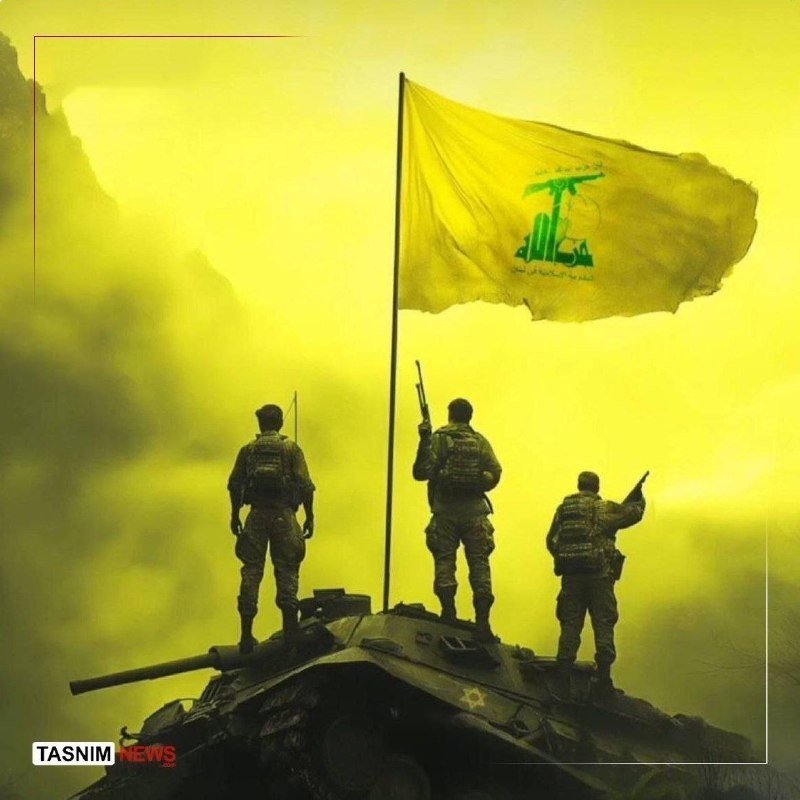
At 15:40 UTC on 9 June 2026, field accounts reported an Israeli airstrike on the Sajad Heights in the Jezzine district of southern Lebanon. By 16:05 UTC, the same dispatchers were flagging artillery fire on the town of Sajad and the Jabal Al-Rafi' area, also in the south. By 16:09 and 16:11 UTC, the reports had multiplied into a "fire belt" on the Reihan Heights and a further strike on Jabal Al-Rafieh in the Marjayoun district. The half-hour sequence is small in itself; the pattern is not. It is the routine arithmetic of the Israel-Lebanon border in 2026, played out in clustered air and artillery action, then in Telegram screenshots, then in the next round of headlines.
The point worth stating plainly is this: the south Lebanon theatre is not a frozen front. It is a working front, with daily exchanges whose individual strikes are too small to clear international news desks but whose cumulative weight shapes whether the next escalation is a skirmish or a war. The 9 June cluster, taken on its own, is a datapoint. Taken against the calendar, it is a reminder.
What the field accounts say
The reporting that surfaced on 9 June 2026 came from two Telegram accounts that operate in near real time on the border. @wfwitness, a field correspondent channel, logged an Israeli airstrike on Jabal Al-Rafieh in the Marjayoun district, then a "fire belt" on the Reihan Heights, a term used to describe concentrated shelling along a line of hills. @alalamarabic, the Arabic-language channel of Al-Alam, an Iranian state broadcaster, framed the same events in the language of urgent bulletin, characterising the strikes as a "raid by the Israeli occupation entity" on Jabal Al-Rafi' and as "Zionist artillery bombardment" of Sajad and the surrounding heights. The two accounts agree on the geography — Sajad, Jabal Al-Rafieh, Jabal Al-Rafi', Reihan — and on the sequence. Their language differs in the way the two media ecosystems always differ: one uses Israeli military terminology, the other uses the language of regional resistance reporting. Neither account on its own constitutes neutral verification; the convergence between them, on specific named places and times, is the news.
The counter-narrative that has to be carried
Israeli security concerns along this border are not manufactured. Hezbollah retains rocket and drone capabilities in the south, and the IDF has repeatedly stated that it will not tolerate the reconstruction of infrastructure north of the Litani. The strikes on Sajad and the Reihan Heights are described in Israeli briefings, when those briefings are made public, as targeting launch sites, observation posts, or engineering teams linked to the group's reconstitution. That framing is absent from the Telegram wires of 9 June — it tends to surface hours or days later, in IDF Spokesperson readouts, in Maariv and Haaretz follow-ups, in Reuters and AFP wraps. The reader who sees only the Lebanese-side wires is seeing a real but partial picture: strikes without context, force without justification. The reader who sees only the Israeli brief sees a sanitised one: targets without damage, action without the cost on the ground that the @alalamarabic dispatches are at least trying, in their own way, to record. Honest coverage holds both.
The structural frame, in plain prose
What the south Lebanon theatre shows, day after day, is a border that has been turned into a managed escalation space. The mechanism is older than the current phase of the conflict: a measured daily exchange of fire, calibrated to stay below the threshold of a second full-scale war, large enough to keep deterrence credible on each side. The dominant Western framing tends to read any given cluster as the precursor to a wider war. The dominant regional framing tends to read the same cluster as the routine operation of a status quo that the international community has effectively outsourced to local forces. The honest read sits between them: the threshold is real, it is defended by both sides, and it is defended imperfectly. On a day when Sajad takes artillery and the Reihan Heights take a fire belt, the threshold is closer to its edge than to its centre, and the diplomatic machinery that might pull it back — the UNIFIL mandate, the US-France-Saudi channel, the Lebanese army's role south of the Litani — is doing the work of restraint, not the work of resolution.
What is still uncertain
The Telegram wires name locations with specificity. They do not name casualty figures, military units involved, or the type of munition used. The IDF's official account for 9 June had not, at the time these dispatches were filed, been cross-posted into the open channels where independent verification operates. Al-Alam's framing — the language of "Zionist artillery bombardment" and "the occupation entity" — is the house style of Iranian state media and should be read as such, not as a stand-alone factual basis. The reasonable conclusion is that strikes occurred at the named places, in the named time window, and that the next several hours of wire reporting will determine whether the day is treated as routine or as the opening move of something larger.
This publication carried the field accounts verbatim where they named specific places and times, and flagged the political framing where it diverged — a split treatment the wires rarely allow themselves.
Wire provenance
This editorial synthesis draws on the following public wire/social posts:
- https://t.me/wfwitness
- https://t.me/alalamarabic
- https://t.me/alalamarabic