Strait of Hormuz Apache crash hands Iran, the U.S. and energy markets an uninvited variable
A U.S. Army AH-64 crash near Hormuz and an open Iranian-missile question are pushing a chokepoint already on edge back to the front of the energy-pricing curve.
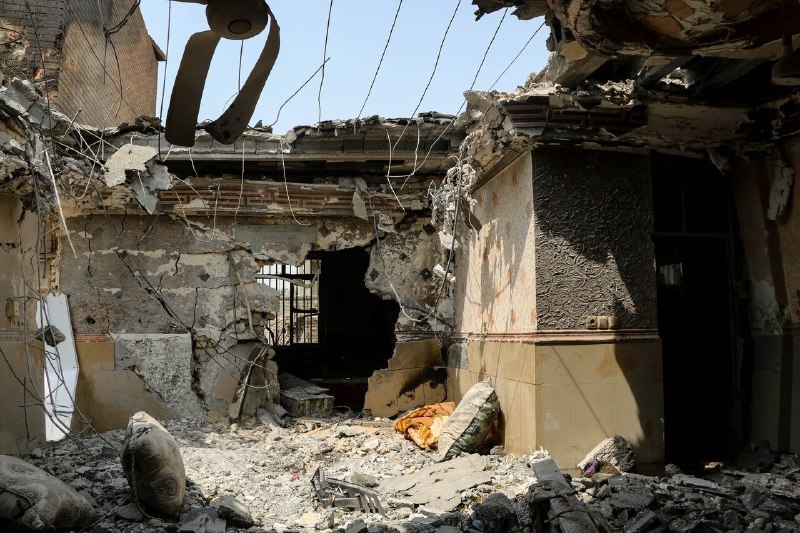
A U.S. Army AH-64 Apache attack helicopter came down in the waters near the Strait of Hormuz on the afternoon of 8 June 2026, and the question of what put it there is now moving faster than the recovery operation. Both pilots survived, a U.S. Navy drone reportedly recovered the crew, and U.S. officials are publicly weighing whether an Iranian surface-to-air missile is a plausible cause, according to a Telegram post by the Beirut-based Middle East Spectator channel at 13:35 UTC on 9 June 2026, drawing on U.S. official sources. The Cradle, a Beirut outlet that covers Iran and the regional axis, separately reported the basic facts of the crash and the dual rescue at 13:34 UTC the same day. The combination — a downed American attack helicopter, a drone-led recovery, and a missile hypothesis that has not been ruled out — turns an already tense corridor into something more combustible, and does so at a moment when oil markets are unusually thin-skinned about the strait.
What the world is watching is a small event with a large surface area. Even if the cause turns out to be mechanical, the speed with which the Iranian-missile question has been put on the table tells its own story: in this part of the Gulf, every American mishap is now read as a stress test of the unwritten rules of engagement between Washington and Tehran.
What the four wires actually say
Strip the reporting back to the four input items and the picture is narrow. The helicopter is an AH-64 Apache, the workhorse of the U.S. Army's attack fleet. The location is the Strait of Hormuz — the chokepoint through which roughly a fifth of globally traded oil passes on most days. The timing is the afternoon of 8 June 2026. The crew of two survived, and a U.S. Navy unmanned platform was used to recover them, according to a Polymarket-curated wire relayed via X at 13:09 UTC on 9 June 2026. There is no claim in the four source items about the cause of the crash beyond the U.S. officials' "investigating" framing of an Iranian surface-to-air missile as one possible explanation, and there is no Iranian official denial or confirmation in the input set.
That thinness matters. There are essentially two stories in play: the operational one — a helicopter down, two aircrew safe — and the political one, in which the crash becomes a referendum on how close Iran and the United States are to direct fire.
The counter-narrative Iran is not yet on the record for
Iran's official channels have not, in the four source items, been heard from on this incident. That silence is itself worth noting, because Iran's playbook in incidents like this typically runs through two tracks: a formal Foreign Ministry or military statement once facts are in hand, and a slower, more diffuse set of comments from IRGC-linked outlets and members of parliament that frame any American setback as evidence of U.S. vulnerability. The first track has not engaged. The second is invisible in this source set, and this publication does not project a position onto Tehran that the available material does not support.
The most plausible alternative read of the four items is also the least dramatic one: the Apache suffered a mechanical or training incident in hot, salty, low-visibility conditions near the strait, the U.S. Navy's growing drone fleet recovered the crew, and "investigating the possibility of an Iranian SAM" is the cautious default language any Pentagon briefer would use after a Gulf crash — not an accusation. That read is consistent with the words on the wire. It is also, almost by construction, the read that will dominate American evening-news coverage, and it deserves to be taken seriously.
The structural frame: a corridor that prices risk on contact
What makes the mundane read insufficient is the corridor. The Strait of Hormuz is the single most consequential narrow waterway in the global energy system. Iran has, at various points over the last decade, threatened to close it, exercised fast-attack craft and mining capability in it, and shadowed Western naval vessels transiting it. The U.S. Fifth Fleet, headquartered in Bahrain, exists in significant part to keep it open. Any incident in or near the strait is read by oil traders, by Saudi and Emirati planners, and by Tehran's strategists, as a data point on whether the unwritten rule — that direct U.S.–Iran kinetic action is to be avoided even when proxy war is hot — is still holding.
A helicopter crash does not by itself break that rule. But a helicopter crash that is publicly speculated, however carefully, to have been caused by an Iranian surface-to-air missile does test it. The question for markets and governments is not whether the U.S. believes Iran shot the helicopter down. It is whether the U.S. will be forced to act as if it does, even provisionally, in the days of investigation that follow.
Stakes: oil, alliance politics, and the drone recovery precedent
The near-term stakes are oil. Brent and Dubai benchmarks have, in previous Hormuz-adjacent episodes, moved two to four percent on the first headline and given back the move if the incident proved contained. The four source items do not contain price data, and this publication does not insert figures that are not in the wire. The honest statement is that the direction of pressure is upward, the magnitude will depend on follow-on reporting, and any Iranian statement — particularly from the Foreign Ministry or the IRGC — will be the next decisive input.
The medium-term stakes are about recovery doctrine, not just this helicopter. The reported use of a U.S. Navy drone to recover the two pilots is, if confirmed in detail, a quiet operational data point about how the U.S. military is now willing to use unmanned systems in high-threat littoral environments — exactly the kind of mission that, a decade ago, would have required a manned rescue platform and a substantial escort. That shift is structural, and it is the kind of detail that tends to be under-reported in the first 48 hours of an incident.
The longer-horizon stakes are about the U.S.–Iran rule of non-contact. If the investigation produces evidence of an Iranian SAM, the political pressure in Washington to respond will be substantial, and the response options will all be unattractive: a kinetic strike invites escalation, a sanctions package changes nothing on the water, and a diplomatic démarche depends on a diplomatic channel that has been mostly frozen. If the investigation produces a mechanical-cause finding, the political effect is contained but the incident still adds to a running tally of close calls. Either way, the strait remains the place where a small event can have an outsized price tag.
What remains uncertain
Four points are genuinely unresolved in the four source items. First, the cause: the U.S. is "investigating" a possible Iranian SAM, which is a working hypothesis, not a finding. Second, the type of the Navy drone involved in the recovery, and whether it was armed or unarmed, is not in the input set. Third, the Iranian reaction: Tehran has not been on the record in the four wires available, and projecting its position would be speculation. Fourth, the operational tempo in the strait in the days ahead — whether U.S. and Iranian naval forces will deconflict more carefully, or will be drawn into closer passes as a show of resolve — is not yet visible in the source material. Each of these is a place where the next 72 hours of reporting will reshape the story, and this article will be read against that next wave, not the last one.
Wire provenance
This editorial synthesis draws on the following public wire/social posts:
- https://x.com/polymarket/status/
- https://t.me/Middle_East_Spectator/
- https://t.me/thecradlemedia/
- https://t.me/TheCradleMedia/