Trump's 'go it alone' warning to Netanyahu signals a quieter US umbrella over Israel-Iran ceasefire
A reported phone call in which Donald Trump told Binyamin Netanyahu that Israel could end up 'alone against Iran' lands as a fragile Israel-Iran halt in fighting takes hold, exposing how thin the US security guarantee has become.
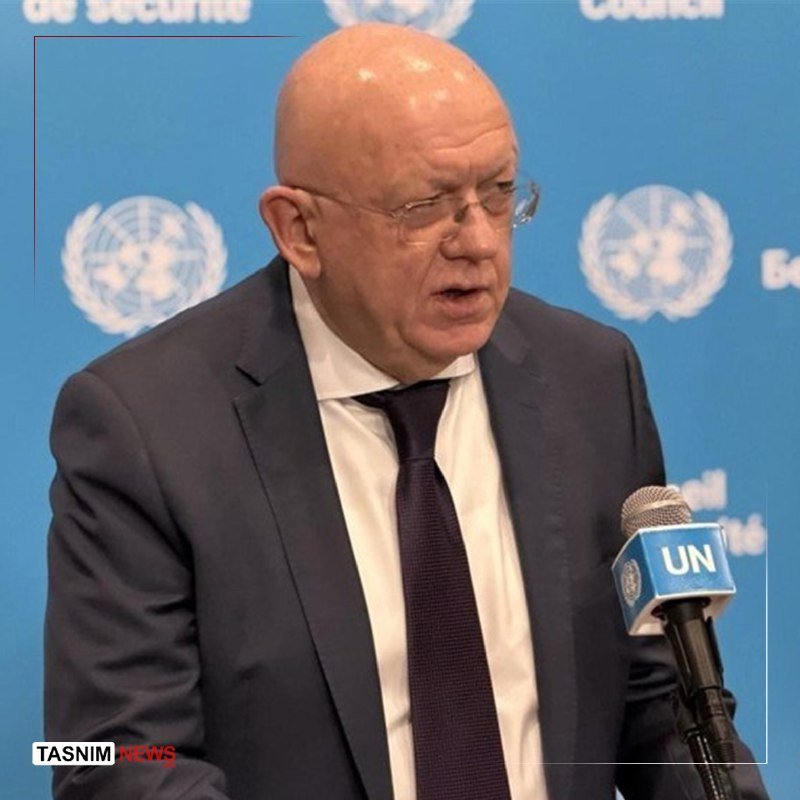
A reported telephone exchange between Donald Trump and Binyamin Netanyahu on 8 June 2026 has reframed the diplomatic geometry of the Israel-Iran flare-up. According to a post by the X account @sprinterpress on 8 June 2026 at 21:34 UTC, the US president told Israel's prime minister that the Jewish state "could end up alone against Iran" if it did not calibrate its campaign — a remark that, on the same day that Al Jazeera reported the fighting had been halted, signalled that the American security umbrella over Israel is being held looser than at any point in the postwar era.
The warning was not abstract. Al Jazeera's breaking-news wire at 00:00 UTC on 9 June 2026 cited Iran's Health Ministry as reporting 3,637 people killed and 11,188 wounded in Israeli strikes since March, a toll that has transformed the argument inside Washington from one about escalation to one about exit. The BBC's analysis the same evening, headlined "Israel and Iran flare-up tests Trump's grip and could strengthen Tehran's negotiating hand," argued that the web of fractious alliances and dysfunctional ceasefires demonstrates how destabilised the region remains. The two readings are not contradictory. They are the same picture from different sides of the lens: a president with less appetite for the cost of the war, and an adversary that has absorbed the punishment and survived to bargain.
The phone call and its wording
The most consequential single line of the past 48 hours is not in any official readout. It is the quotation carried by the X account @sprinterpress, paraphrasing Trump's comments to Israel's N12 television channel: "I told Bibi to" — a sentence that the post truncates, but whose implication is delivered in the headline above it. The framing is unambiguous. The American president is signalling to his Israeli counterpart that the escalatory option carries a political price in Washington that the United States is no longer willing to underwrite, and that Israel should treat that price as a constraint rather than a negotiating posture.
The choice of channel matters. N12 is an Israeli outlet; the comments were aimed at a domestic Israeli audience as much as at Tehran. By speaking in Hebrew-language media about the limits of US backing, Trump has done two things at once: he has given Netanyahu political cover at home to wind down the campaign without being seen to have been forced into it, and he has reminded Iran's negotiators that the military pressure Israel has been applying does not have an infinite American refill.
What the casualty ledger looks like
The Iranian Health Ministry figure — 3,637 killed and 11,188 wounded since March — is the only quantified body count in the public record on the Iranian side of this exchange. It is a Ministry figure, and like all such figures issued from a combatant government it should be read as a lower bound rather than a precise census. But it is also the figure Iran is choosing to publish, which means it is the figure Tehran wants in the room when negotiations resume.
The BBC's framing piece is the more cautious of the two wires on the diplomatic question. Its argument is not that the ceasefire is collapsing, but that the architecture around it is. The piece notes that the alignment of regional actors remains fractious, that previous ceasefires have been honoured mainly in the breach, and that the longer the war continues the more the United States loses its ability to set terms. The Al Jazeera wire, by contrast, treats the halt in fighting as the operative fact. Both are, in their different registers, consistent with the Trump-Netanyahu exchange: a war that the United States now wants to be over, even if it cannot yet say so out loud.
Why the US umbrella is thinning
The structural story is not new, but the speed of it is. For two decades the operative assumption inside the Israeli defense establishment, and inside the Iran-watching community in Washington, has been that an Israel-Iran confrontation would draw in the United States within hours. The Trump-Netanyahu exchange suggests that assumption no longer holds in quite the same form. The president is not withdrawing the alliance; he is repricing it. The implicit message is that Israel can still strike, but that each strike will now be met with a quiet American bill for the trouble, and that the bill will be presented in the form of a public reminder that Israel is on its own if the wider war resumes.
This is the same logic that has governed US policy toward Ukraine: an alliance that is genuine, but contingent, and in which the patron reserves the right to set the ceiling on the proxy's action. The BBC's reading — that the flare-up could strengthen Tehran's negotiating hand — is the corollary. A United States that is publicly telling its closest Middle Eastern partner to dial back is, in the language of the negotiating chamber, a United States that has decided it has paid enough for the privilege of escalation.
What remains uncertain
The public record on the Trump-Netanyahu call is thin. The N12 comments are paraphrased through an X post, not on the official White House transcript, and the full sentence that began "I told Bibi to" is not in the thread context above. The Iranian casualty figures are ministry figures and have not been independently verified by a UN body or a wire service with on-the-ground access. The status of the ceasefire itself is described as a halt rather than a signed agreement, and the BBC's analysis piece is explicit that previous halts in this cycle of fighting have not held. Monexus finds the directional read — that Washington is now leaning on Tel Aviv rather than the other way around — to be the most consistent reading of the three sources in the public record, but the precise scale of the shift cannot be pinned down from this material alone.
The next 72 hours will be the test. If Iranian and Israeli delegations both confirm a sustained pause, the Trump remark settles into the diplomatic record as a private warning that did its work. If the exchanges resume, the warning becomes a deadline — and the question of who, exactly, is left standing alone in this fight moves from the diplomatic register back into the military one.
Desk note: The wire framings split on a single question — whether the halt in fighting is the headline or the background. Monexus treats the Trump-Netanyahu exchange as the headline, and the casualty toll and the ceasefire status as the ledger against which that exchange will be tested.
Wire provenance
This editorial synthesis draws on the following public wire/social posts:
- https://x.com/sprinterpress/status/
Follow the event.
These dated source records provide context. They do not retrospectively verify this archive article.
Separate what the nuclear watchdog reported from what it could not determine after the June 2025 strikes.