The White House as arena: a UFC card, a World Cup task force, and a presidency that now stages itself
A federal judge has been asked to block a UFC fight on White House grounds, while a new task force readies counter-drone coverage for 78 World Cup matches. The pattern: the executive branch converting its own architecture into a venue.
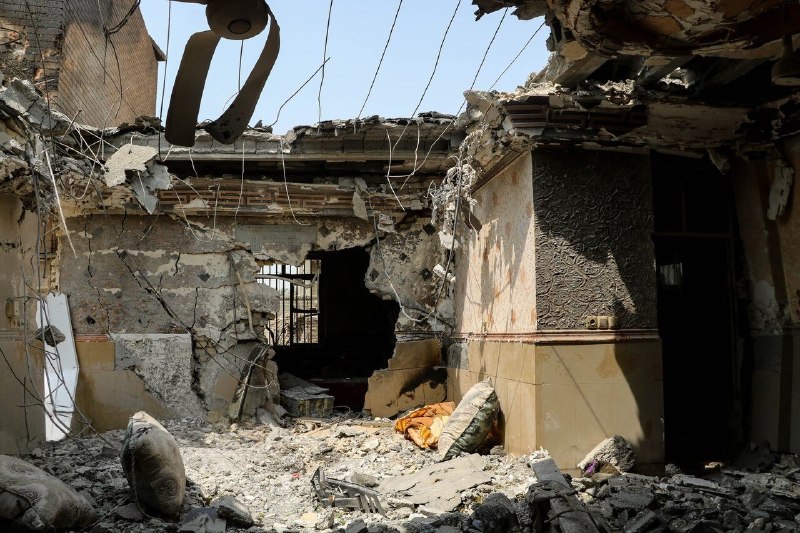
A federal judge in Washington was asked late on 8 June 2026 to block a proposed Ultimate Fighting Championship event from being held on the grounds of the White House, according to a Reuters dispatch posted at 23:10 UTC. The request, the first formal legal challenge to a fight card that had been teased for months as part of the administration's 250th-anniversary programming, frames a question that the cable shows have mostly avoided: how much of the executive campus is now available for hire, and on whose authority.
The same twenty-four hours produced a second signal from the same seat of power. A new White House World Cup task force director disclosed on 8 June at 17:19 UTC that all 78 matches of next summer's tournament — together with every officially sanctioned fan fest in the host cities — will sit under a dedicated counter-drone envelope, with detection and interdiction authority concentrated inside the executive branch rather than dispersed across the host municipalities. A separate prediction market on Polymarket, opened the same day, asks whether the president will personally attend the US men's team's opening fixture, an indicator that his travel calendar is now itself a tradable signal.
Read together, the two items describe a single drift: the White House is no longer only the symbolic centre of American government, it is becoming the producer, the venue, and increasingly the security guarantor of the events the rest of the country watches.
The venue problem
A UFC card staged on the South Lawn is not a logistical footnote. It is a decision to convert a federal reserve — a property held in trust for the public — into a privately branded arena, with the executive branch as promoter. The plaintiffs in the Reuters filing argue that the relevant statutes and the public-lands character of the campus preclude the use; the administration, in its public statements so far, has treated the event as a fait accompli. The legal merits are narrow. The political signal is wider: the line between governing and performing has, in practice, been redrawn to the advantage of the officeholder.
The same dynamic shows up in the World Cup task force. Counter-drone authority for seventy-eight matches and a constellation of fan zones is not, in the abstract, controversial. Drone incursions over stadium airspace are a real and recurring threat, and a coordinated federal posture is the kind of interagency work that any host country would be expected to do. What is notable is the choice of locus. A host-city security plan normally lives with the city, the state, the FBI field office, and a joint operations centre. The decision to make the White House the single named authority compresses that chain and folds the political leadership directly into the operational picture — a structural choice with two consequences: it raises the political cost of any failure, and it raises the political reward of any success.
The counter-narrative: this is what a modern White House does
The administration's defenders will say, with some force, that the presidency has always been a stage. From the Easter Egg Roll to state dinners, the White House has long functioned as a backdrop for both soft power and political theatre. The 250th anniversary is, on this reading, simply an occasion to do more of what every modern president has done — host concerts, commission portraits, schedule the Made in America showcase. The counter-drone envelope around the World Cup is, similarly, what any executive would do for a tournament of this scale. The legal complaint against the UFC card is the complaint of people who have not adjusted to the modern presidency, not a serious constitutional objection.
That case is not weak. The optical centre of American political life has always been partly performative, and the constitutional objections to a fight card on the lawn are likely to lose on the merits: the executive has wide latitude over the use of the Executive Mansion and its grounds, particularly for events with a public-affairs rationale. The deeper question is whether the cumulative weight of these productions — fights, tournaments, parades, faith events, campaign-style rallies staged on federal property — adds up to something that resembles governance at all, or whether it now resembles something closer to a permanent reality show, with the security apparatus of the state as its backdrop.
What the structural frame actually shows
Strip the question of its packaging and the pattern underneath is familiar. A media environment in which attention is the scarce resource has, for a decade, rewarded executives who can produce it. Platforms, prediction markets, and cable-news cycles all convert the visible actions of a head of state into measurable volume — page views, contract volumes on Polymarket, search-trend spikes, poll bounces. The UFC card, the World Cup task force, the prediction market on whether the president attends the opening match: each is, in its own register, a vehicle for converting political office into a content product. The reason the same office keeps staging these events is not a mystery of personality; it is the rational response of an office that has discovered it can sell its own visibility more reliably than it can sell legislation.
The counter-drone decision sits inside the same frame. A World Cup hosted across eleven American cities is, in any year, a security undertaking of the first order. A counter-drone envelope coordinated from the White House is also a way of making the federal presence visible at every stadium, in every host city, on every broadcast — the security state as branding.
Stakes and what to watch next
The narrow legal question is whether a federal judge will issue the requested injunction against the UFC card. A more telling set of indicators will sit elsewhere: whether the counter-drone task force publishes a charter with named operational lines to state and local agencies, or whether it remains a White House-run shop; whether the prediction market on the president's attendance at the US opener resolves cleanly on a verifiable appearance; and whether the next administration of either party inherits a White House campus whose grounds, airspace, and event calendar are now routinely treated as instruments of the incumbent rather than as common holdings.
The sources do not specify the identity of the plaintiffs in the UFC filing, the specific statutory provisions cited, or the date the proposed card is to take place. The counter-drone disclosure, similarly, has not yet been matched by an interagency memorandum that names the lead federal component. What is clear is that the executive branch is, in this news cycle, behaving as a venue operator, a tournament guarantor, and a betting-market reference point at the same time. The legal and political response to that compound role will define the boundary of presidential staging for the rest of the decade.
Desk note: Monexus treated the Reuters legal filing and the Polymarket/world-cup task force items as two data points in a single pattern rather than as separate sports and politics stories. The frame is the conversion of executive architecture into content infrastructure, and the prediction market is treated as evidence of how that content is now priced.
Wire provenance
This editorial synthesis draws on the following public wire/social posts:
- http://reut.rs/3Sumg8Y
- https://t.me/polymarket