US helicopter down in Strait of Hormuz; Trump says crew safe, report due
A US Army helicopter went down in the Strait of Hormuz on 9 June 2026; the president says the pilots are uninjured and a formal report is expected within 24 hours.
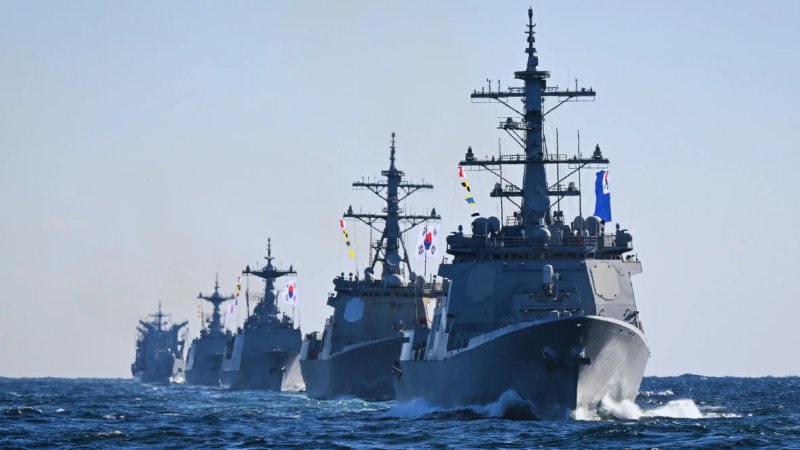
A US Army helicopter came down in the Strait of Hormuz on the morning of 9 June 2026, prompting a direct, on-camera exchange with President Donald Trump. Trump confirmed the incident and said the pilots were uninjured, adding that a formal US report would follow. The crash, in the narrow waterway through which roughly a fifth of seaborne oil passes, lands at a sensitive moment for both regional shipping and the wider energy market.
The event is small in human terms — no casualties reported as of the latest wire — and large in signalling terms. Any US military incident in the Strait of Hormuz feeds directly into a long-running standoff over Iranian maritime activity, the presence of US Central Command (CENTCOM) forces in the Gulf, and the unwritten rules that have kept tanker traffic moving through the chokepoint for decades. The coming 24 hours of official reporting will determine whether the downing is read as a mechanical failure, an operational mishap, or something more pointed.
What we know, hour by hour
The first public confirmation came from Trump himself in a pool exchange picked up by Iranian state outlets shortly after 07:00 UTC. Press TV's English feed, citing the president's remarks, quoted Trump as saying: "The pilots are fine. Nobody injured. We are going to issue a report tomorrow." The Tasnim News agency and Al-Alam TV both carried video of the same exchange, with a reporter noting that soldiers were reported to be in the water before the all-clear was given. None of the three Iranian state-linked outlets contradicted the uninjured framing; all three drew on the same on-camera remarks, which suggests the confirmation originated from the US side rather than from regional militaries.
The aircraft type, the unit, and the exact phase of flight have not been disclosed in the wire so far. Press TV referred to it as a US Army helicopter. Neither CENTCOM nor the Pentagon has, as of the 07:00 UTC window, issued a written release — the channel pool relied on the presidential exchange and an initial report, rather than a defence-department readout.
The counter-read from Iranian state media
Iranian coverage did not editorialise the incident as an attack in the early reports, but the framing was deliberate. Tasnim and Al-Alam both led with Trump's words and his expression of confidence, then pivoted in adjacent coverage to the broader US naval posture in the Gulf. The implied line — visible in the choice of clips and the surrounding chyron — is that even a routine US presence in Hormuz carries risk, and that the Islamic Republic's maritime forces operate nearby under the assumption that accidents are always possible. Press TV's headline used the verb "acknowledges", which carries a softer tone than "confirms" and lets the network present Trump as responding to, rather than leading, the news cycle.
That is the routine posture of the Tehran-aligned media ecosystem: report the fact, attribute confirmation to the US side, and let the geography of the chokepoint — and the memory of earlier seizures, drone incidents, and the 1988 Vincennes shootdown — do the rhetorical work.
Why this corridor, why now
The Strait of Hormuz is the most consequential single stretch of water in the global energy system. The US Energy Information Administration has long estimated that around 20% of seaborne oil and a substantial share of liquefied natural gas transit the strait, with Iran's coastline on the north shore and the Omani and Emirati flanks framing the southern approach. Any aviation incident there — even one with no casualties — is read instantly against that backdrop. Markets, foreign ministries, and shipping insurers price the possibility of escalation into the cost of transit and the price of optionality, regardless of whether the underlying cause turns out to be mechanical.
A helicopter, on the other hand, is not a tanker. The operational and signalling calculus is different. A downed tanker invites questions about Iranian Revolutionary Guard Corps Navy boarding tactics, mine-laying, or proxy harassment. A downed US military aircraft invites questions about air-defence identification zones, mid-air collision risk with commercial traffic operating under Instrument Flight Rules, and the density of US rotary-wing activity out of carriers and regional bases. Without the pending report, the cause is genuinely open.
Stakes and the day ahead
The near-term stakes are practical. A confirmation that the aircraft was on a routine transit, with the crew recovered and no hostile contact, lets the energy market shrug and clears the way for the formal US report to land as a stand-alone safety bulletin. A confirmation of any other cause — a mechanical failure with systemic implications for the airframe, a near-miss with Iranian forces, a navigation error that put the aircraft into Iranian-controlled airspace — would reopen a different conversation about rules of engagement, deconfliction hotlines, and the political appetite in Washington and the Gulf for a fresh round of maritime tension.
For Tehran, the calculation is more cautious. The Islamic Republic has benefited, in recent years, from a steady drumbeat of incidents that keep the US presence in the Gulf politically expensive at home and logistically difficult to sustain, without crossing the threshold that would invite a serious Western response. An incident that the Iranian side can present as evidence of US operational risk in its own backyard — without Tehran being implicated in the cause — fits that pattern almost perfectly. The coming report will test whether that reading holds, or whether something more uncomfortable is buried inside the wreckage.
This publication will update the article once CENTCOM or the Pentagon publishes a written release, and once any independent satellite, AIS, or flight-tracking corroboration of the incident becomes available.
Desk note: Monexus ran the wire as it broke, led with the US presidential confirmation, and let the Iranian state outlets speak in their own framing without merging their language into the Western wire. Where the three state-aligned channels diverged from each other on tone — Press TV's "acknowledges" versus Tasnim and Al-Alam's pooled video treatment — we flagged the difference rather than smoothing it over. No further claims have been made until the formal US report.
Wire provenance
This editorial synthesis draws on the following public wire/social posts:
- https://t.me/presstv/
- https://t.me/tasnimplus/
- https://t.me/alalamfa/