Adidas, beer and the algorithm: what World Cup 2026 ads say about the tournament's commercial centre of gravity
With the World Cup two weeks out, brand spending is concentrating in a handful of mega-spots. The pattern, and the players behind it, suggest a commercial centre of gravity that no longer sits where it did in 2014.
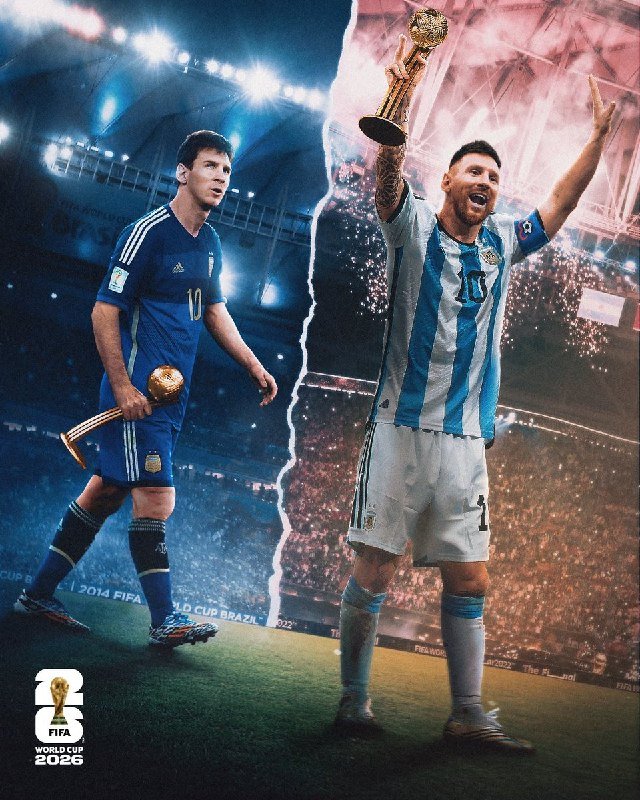
The 2026 FIFA World Cup is now two weeks away, and the advertising market around it is, by every available measure, more concentrated than at any tournament in memory. ESPN's 9 June 2026 review of the early big-ticket World Cup spots — a sweep that placed Adidas at the top of its rankings against a field of megabrand competitors — is the first cross-category snapshot of a campaign cycle that has, almost in spite of itself, narrowed down to a handful of names.
The interesting question is not which spot is best. It is why the ad market around a 48-team tournament held across three countries looks, structurally, a lot like the ad market around a 32-team tournament held in one. Fewer brands are doing more of the work. The economics of attention have re-sorted themselves around a small set of platforms, a small set of players, and a small set of cultural levers that an algorithm can actually push.
The spot, and the league behind it
ESPN's review framed the contest as Adidas versus a deep field — the apparel and beer categories that have owned the World Cup for two decades, plus the tech platforms that have spent the last cycle buying their way into the conversation. The narrowness of the actual buying layer is the more telling fact. According to the 9 June piece, the brands willing to spend at the scale the tournament now requires are a meaningfully shorter list than the one that bought into South Africa 2010 or Brazil 2014.
The structural shift is platform-driven. A spot that runs once on a broadcast network in 2010 reached a large but diffuse audience. A spot in 2026 has to clear a stack of rights holders — the host broadcasters, the streaming co-rights holders, the league's own social channels, the players' personal social channels — before it lands. Each layer is its own auction, with its own optimisation logic, and each one rewards brands that already have the data infrastructure to buy across them. The result is a barbell: a small set of mega-spenders at the top, and a long tail of niche buys underneath.
Players as distribution
The U.S. men's national team, which Reuters reported on 9 June 2026 is treating the tournament as a "once in a career" opportunity, is, separately, becoming the delivery mechanism for that ad market. The reporting describes a squad that understands the scale of the moment — a home World Cup, expanded to 48 teams, the first to be staged across the United States, Canada and Mexico.
That is also a squad whose individual players function as pre-built distribution nodes. A single national-team goal in a U.S. broadcast window now travels through league-controlled highlight feeds, player-controlled TikTok and Instagram accounts, and a small set of media partners that have already paid for the underlying rights. The ad industry has noticed. World Cup campaigns in 2026 are not built around the 90 minutes. They are built around the second-screen curve, and the players are the second screen.
This is a different commercial geography from 2014, when the host nation's team exited at the round of 16 and the tournament's centre of gravity drifted to the European clubs whose players dominated the knockout rounds. A deep U.S. run would lock the commercial centre of gravity inside the host market for the entire competition. A short one would re-expose the underlying dependence on a small set of European-based stars to carry the cultural weight.
What the concentration hides
There is a plausible counter-read. The narrowing of the ad market could be cyclical rather than structural. A recessionary 2023-24 squeezed brand budgets; the survivors came into 2026 with cash and a backlog of demand. By 2030, with the tournament back in Europe, the field could broaden again.
The counter-counter is in the data layer. The platforms that monetise World Cup attention are not waiting for a friendlier cycle. They are building the pipes — the rights deals, the player partnerships, the first-party data integrations — that lock in a small set of buyers regardless of the macro environment. ESPN's piece, taken together with Reuters's reporting on the U.S. squad, suggests a tournament where the on-pitch product and the off-pitch distribution are being shaped by the same handful of counterparties. The ad market is not just following the game. It is, increasingly, the game.
The stakes for everyone else
For brands outside the top tier, the practical question is whether the tournament is still buyable at any meaningful scale. The ESPN ranking — which is, by construction, a ranking of the spots with the largest media weight behind them — does not measure what the long tail is paying to be visible. The sources reviewed here do not break out the small and mid-tier spend, and that absence is itself a tell.
For the U.S. Soccer Federation, the stakes are cleaner. A deep run, paired with the commercial apparatus now bolted to the team, would entrench a generation of player-market value inside the domestic league system. A short run would not undo that apparatus, but it would force the next round of rights negotiations to be fought on the other side of the table.
What remains genuinely uncertain, on the public record available here, is how much of the 2026 ad market is genuinely incremental and how much is pulled forward from other quarters. The wire reporting describes the spending; it does not yet describe the substitution effects. That is the figure worth watching when the post-tournament reviews land in August.
This publication read the ESPN ad-ranking piece and the Reuters U.S. squad report as the two anchor inputs, and treated them as a window into the commercial architecture of a tournament that the wire coverage is still in the early stages of mapping.
Wire provenance
This editorial synthesis draws on the following public wire/social posts:
- http://reut.rs/4fBxD8N