World Cup 2026 arrives with a betting boom, a longevity record, and a wastewater surveillance net
Three storylines now define the run-up to kickoff: an American sportsbook bonanza, a record that will fall three times in a single tournament, and a federal disease-tracking operation quietly bolted onto the host cities.
Three threads now define the 2026 FIFA World Cup in the United States, Canada and Mexico, and none of them is a goal. The first is a wagering economy that did not exist at this scale a decade ago. The second is a longevity record that will, in the view of multiple outlets, fall three separate times during the tournament. The third is a public-health surveillance operation that will sample municipal wastewater in the host cities for pathogens before, during and after matches.
What ties them together is that the World Cup has stopped being a single event. It is a host-city stress test, a platform for state-level public-health infrastructure, and the most heavily bet-upon sports tournament in American history. Each strand carries its own risks, and each has its own evidence trail.
The betting layer
American sportsbooks have spent the last week publishing 2026 World Cup guides, with CBS Sports's June 8 explainer the most comprehensive public catalogue of the new market. The guide itemises promotional offers, group-by-group odds, roster information and schedule detail for the 104-match tournament.
The structural change is jurisdictional, not technological. Since the Supreme Court's 2018 decision cleared the way for state-by-state legalisation, the United States has built a patchwork of regulated sportsbooks, and the World Cup is the first men's tournament to be played almost entirely inside that patchwork. The fan in Texas, New York or Ontario now has a legal wagering menu that no previous World Cup host market has been able to match.
The counter-frame is the one the gambling-harm community has been refining for five years. World Cup betting is concentrated, in volume, on a small number of high-profile matches. A tournament that runs for roughly five weeks can compress a year's worth of wagering decisions into a fortnight, and the cohort most exposed — occasional bettors drawn in by national-team patriotism — is also the cohort least likely to set loss limits in advance. The mainstream wire coverage has not centred that argument. It will, eventually.
The longevity record
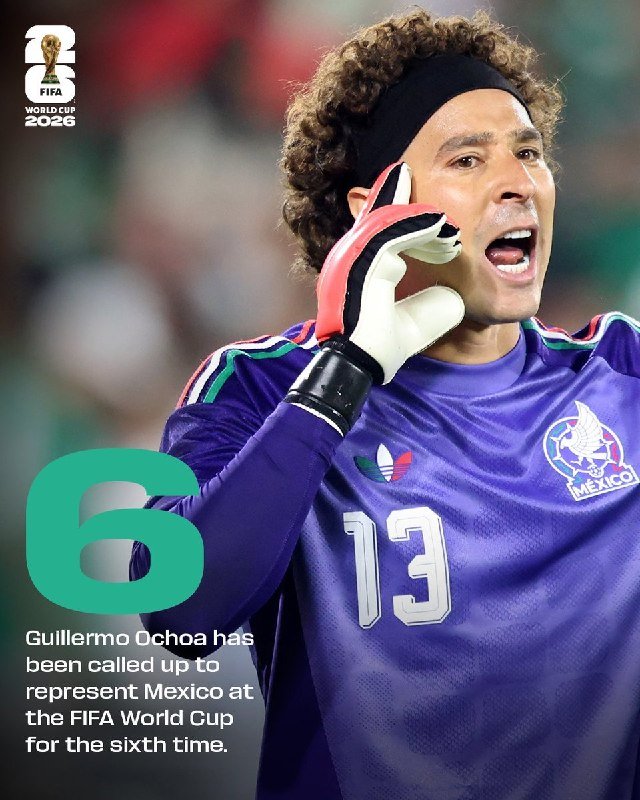
ESPN reported on June 8 that the tournament will see a single record broken three times. The record in question concerns longevity at a World Cup: oldest player to appear, oldest to start, oldest to score. The 48-team, 104-match format gives the maths room to break in stages, because more caps and more minutes go to a wider group of veterans than any previous edition.
The framing matters. Longevity records in football have historically been treated as trivia. In a 48-team tournament, they are a structural feature: a deeper bench, a larger talent pool, and a format designed — explicitly — to give older players more routes into the squad. The record will be broken three times because the tournament is engineered to give it three chances to be broken.
The wastewater net
The most consequential of the three threads is the one that least resembles sport. According to a Reuters dispatch published on June 9, public-health teams will screen US wastewater for disease outbreaks throughout the tournament. The system samples municipal sewage at treatment plants serving host cities, looking for signatures of respiratory viruses, enteric pathogens and other infectious-disease markers before clinical case counts catch up.
The technology is not new — wastewater surveillance was built out during the COVID-19 pandemic and is now embedded in the US Centers for Disease Control and Prevention's routine monitoring. What is new is the scale and the political weight. A World Cup concentrates millions of visitors into a small number of host-city metros over a five-week window. The wastewater signal, in other words, becomes a real-time early-warning instrument for exactly the kind of population mixing that produces outbreaks.
There is a counter-narrative here too. Wastewater surveillance is anonymous at the population level, but it is not anonymous at the sub-catchment level. A hospital catchment area serving several thousand people can be identified from a single manhole. The privacy questions raised by sustained surveillance of that kind have, to date, been handled at the level of municipal memoranda of understanding rather than federal statute. The World Cup will be the first time a major federal public-health instrument is run at full stretch for an event of this visibility.
Stakes
The three threads will collide at moments the organisers have not yet announced. A bettor who tests positive mid-tournament becomes a question for both the sportsbook and the public-health authority. A veteran player who breaks the longevity record will be asked, inevitably, about his training regimen, and the answer will be a story about sports science that the public-health system has data on but rarely publishes. A wastewater signal that spikes during a host city will be a story that runs on the same day as a knockout match, and the public will have to learn, in real time, how to read both.
The dominant framing — that this is a tournament with a few interesting side-stories — understates the convergence. The 2026 World Cup is the first major international sporting event to be staged inside a mature American sports-betting market, the first 48-team men's World Cup, and the first to be wrapped in a federal wastewater surveillance net from day one. Each of those is, on its own, a structural change. Together they constitute a different kind of event.
What remains uncertain is the failure mode. The wire coverage has been upbeat. The gambling-harm community has flagged the risk window. The public-health apparatus has not yet been stress-tested at this scale. None of the three threads has produced a casualty, a scandal, or a public confrontation, and none of them is guaranteed to do so. The next six weeks will be the first real evidence on whether the model holds.
This publication framed the wastewater thread as a public-health story with sports-betting adjacency, rather than the inverse — the surveillance apparatus is the lower-volume but higher-stakes of the three, and the betting boom is the more familiar frame. The longevity record, in our reading, is a function of format rather than a quirk of rosters, and the coverage should say so.
Wire provenance
This editorial synthesis draws on the following public wire/social posts:
- http://reut.rs/43XLDCG