The April Inflation Print Was Supposed to Be Boring. It Isn't.
May CPI came in hot, oil inventories are heading toward multi-decade lows, and Washington is deporting voters. The real story is what those three things have in common.
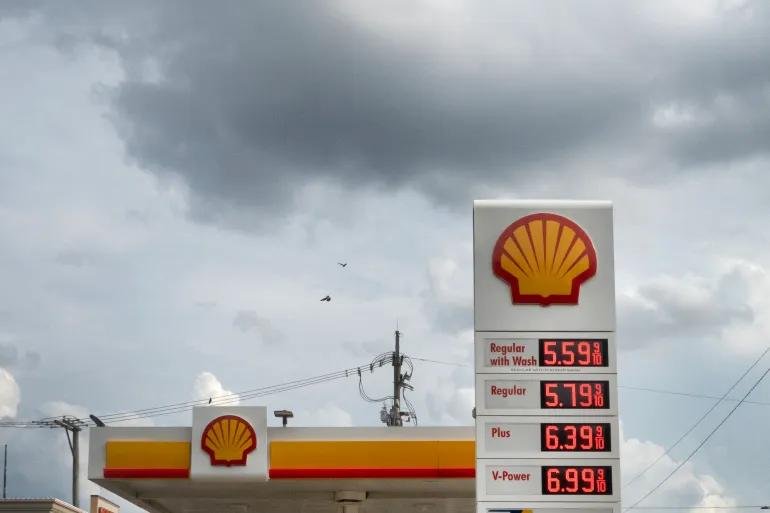
The number that landed on 10 June 2026 was not supposed to land there. U.S. inflation, on NBC's read of the May print, surged to 4.2%, up from 3.8% in April — the highest level since early 2023. That is not a base-effect wobble. It is a four-tenths-of-a-point monthly jump in the headline number, in an economy that the Federal Reserve has spent two years trying to convince markets is on a glide path to 2%. The print arrived the same week the U.S. Energy Information Administration warned that oil inventories in the world's largest economies are headed toward multi-decade lows, and the same week the Department of Homeland Security directed ICE to deport non-citizens caught voting in U.S. elections. Read those three items together and the boring-CPI story stops being boring.
Each of these is, on its own, a credible datapoint with a boring explanation. The 4.2% print reflects sticky shelter and services; the EIA warning reflects underinvestment in upstream capacity; the DHS directive reflects post-2024 housekeeping. But the sequencing is the story. Inflation re-accelerates just as the strategic commodity cushion underneath the dollar thins, and just as the political class reaches for a cheaper enforcement theatre than the one its voters actually want. That is not a coincidence. It is a configuration.
The print, and what the print is hiding
A 40-basis-point monthly jump in headline CPI does not happen in a vacuum. It happens because the prices that move slowly — rents, wages, insurance, medical care — finally rotate into the print that moves fast — energy, food, airfares. NBC's headline cites 4.2% year-on-year, with the April-to-May delta doing most of the damage. The last time the year-on-year rate sat anywhere near 4.2% was January 2023, when the Fed was still in the middle of its fastest hiking cycle in four decades. Markets had been told, repeatedly, that the rate cuts beginning in late 2024 were a victory march. The May print calls that victory march into question without quite ending it. The Fed can still cut once more this year if services inflation cools, but the bar just got higher, and the bar got higher in a way the dot plot does not yet reflect.
The honest read is that the Fed spent 2025 cutting into a labour market it misread, and is now discovering that the goods side of the economy — the side its tightening was meant to break — is no longer the side driving the print. The new driver is the cost of things the Fed cannot easily tighten against: insurance premiums, housing renewals, and any oil-linked input that feeds back into logistics and food. That is a different kind of inflation problem, and it does not respond to the same medicine.
The oil story underneath the oil story
The EIA's warning that inventories in the world's largest economies are headed toward multi-decade lows is the structural backdrop the inflation print needs to be read against. A multi-decade-low inventory regime means that any supply shock — a tanker incident, a Gulf of Guinea export halt, a Saudi-Russian quota dispute — translates into a price shock inside of weeks rather than months. The strategic petroleum reserve exists to absorb exactly this kind of shock, and the U.S. SPR has spent the last three years being drawn down for budget reasons that have nothing to do with energy security. The two facts — depleted SPR, depleted commercial inventories — are not connected by conspiracy. They are connected by accounting.
The non-Western read of this is more pointed: the countries that accumulated strategic reserves while the U.S. drained its own are now sitting on the optionality. China's petroleum reserve has grown in every published quarter since 2022. India's strategic storage has expanded. The Eurozone's emergency stocks are quietly being restocked. The configuration is one in which the U.S. remains the system price-setter but holds a thinner buffer to enforce that role. That is not a forecast of collapse. It is a description of thinner margins for error in a thinner market.
The DHS directive and the price of cheap enforcement
The DHS instruction to ICE to deport non-citizens caught voting in U.S. elections is, on the official read, an integrity measure. Non-citizen voting in federal elections is already a federal crime, and the directive is framed as enforcement of an existing prohibition. The political read is sharper. Voter-integrity enforcement is cheap: it does not require new legislation, it does not require a budget increase, and it produces a visually legible enforcement moment without touching the actual mechanisms of election administration. The expensive reforms — mandatory EIC verification at scale, paper-ballot audits, federalised voter rolls — remain off the table.
The price of cheap enforcement is that it absorbs the oxygen that might otherwise go toward the things voters consistently rank above immigration: prices, housing, and the cost of healthcare. The timing of the directive, in a week with a 4.2% print, is not an accident. It is a substitution. When the macroeconomic story turns ugly, the political class substitutes a theatre of control for a substance of control, and the public gets a vivid enforcement image where it might otherwise have gotten a wages report.
Stakes, and what the next ninety days settle
If the June and July prints come in flat-to-down from 4.2%, the Fed can credibly hold the line and signal one more cut for late 2026. If they do not, the rate path reopens, the dollar strengthens on the back of higher-for-longer, and the cost of the energy transition rises at exactly the moment the inventory cushion is thinnest. The countries best positioned for that scenario are the ones with their own buffers — China, India, the Gulf petro-states — and the ones worst positioned are the import-dependent emerging markets that ran dollar-debt into the assumption of a 2% world.
The most plausible alternate read is that the May print is a one-off driven by airfares and seasonal energy adjustments, and that the underlying trend is closer to 3.6% than 4.2%. The Bureau of Labor Statistics will issue its customary revision in the following month, and there is genuine possibility the headline softens. The case against that read is that the EIA warning and the SPR drawdown are not one-offs. They are the trend. The inflation print is the variable; the commodity and reserve configuration underneath it is the constant. Constants outlast variables.
Monexus framed this as a configuration story — inflation, energy inventory, and political theatre as a single sequence — rather than as three disconnected wires. The dominant Western read treats each item in isolation; the structural read treats the sequencing as the news.
Wire provenance
This editorial synthesis draws on the following public wire/social posts:
- https://twitter.com/disclosetv/status/2064694503999439153/photo/1
- https://t.me/s/osintlive
- https://twitter.com/polymarket/status/2064350123004473612
- https://twitter.com/polymarket/status/2064318875112998734