Protesters paralyse Berlin airshow access as Germany-Israel arms debate boils over
Activists blocked roads into Berlin's ILA airshow on 10 June 2026, forcing delays and reopening a domestic fight over German weapons bound for Israel.
Pro-Palestine activists blocked access roads to the ILA Berlin International Aerospace Exhibition on the morning of 10 June 2026, disrupting traffic around the Schönefeld fairground and forcing the show's organiser to delay public opening by roughly an hour. According to a Telegram post by The Cradle Media at 14:24 UTC, demonstrators sat across multiple approach routes, unfurled banners condemning German arms sales to Israel, and called on visitors and exhibitors to turn back. Berlin police moved in to clear the blockades; the city's fire service also attended after a small smoke device was set off near Gate 21, the same Cradle dispatch reported. No injuries were reported in the initial account.
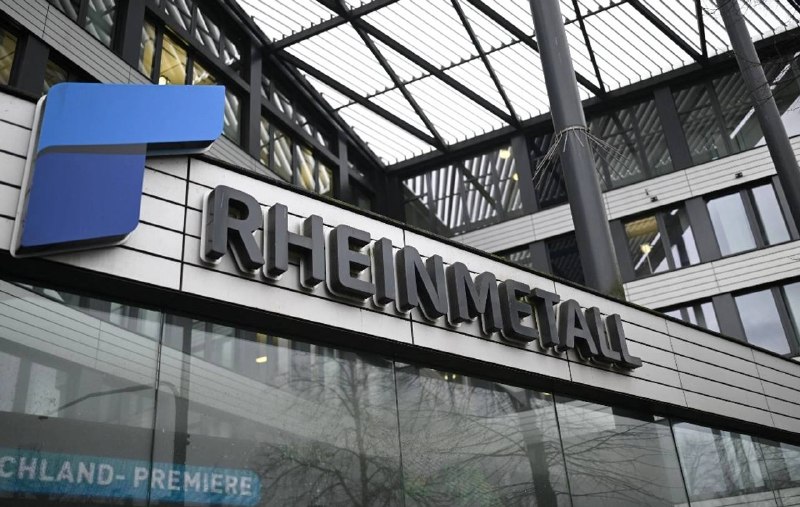
The protest lands on the most politically combustible day of the German aerospace calendar. ILA, run by the BDLI industry lobby and held only every two years, is the showcase where Germany's defence primes — Rheinmetall, HENSOLDT, Diehl, MBDA Deutschland — typically sign export-oriented memoranda with partner governments. This edition, opening against the backdrop of the war in Gaza and continued German military assistance to Israel, was always going to be a flashpoint. The disruption turned what had been a scheduled press-and-politics day into a public argument about where Berlin's red lines on arms exports actually sit.
What the demonstrators wanted
The Cradle's reporting frames the action as part of a wider European cycle of civil-disobedience campaigns targeting defence exhibitions — from the 2023 disruption of the Paris Air Show's Israeli stand to the recurring blockades at Britain's DSEI arms fair in London. The demands, as relayed through the Telegram coverage, were narrowly focused: an immediate German halt on weapons components and licences bound for the Israeli defence establishment, and a public accounting of which ILA exhibitors hold live export permits for end-use in Israel.
That specificity matters. Germany is not a major supplier of complete weapons platforms to Israel, but German industry provides subsystems that end up in Israeli airframes, drones and tank programmes: optics and targeting electronics from HENSOLDT, propulsion components, small-arms and artillery ammunition produced under licence. The campaign is therefore built around supply-chain visibility — the same argument that has driven litigation in Italian and Spanish courts over the past eighteen months. The activists' bet is that voters and parliamentarians who tolerate tank sales draw the line at civilian harm downstream, and that public pressure can outrun the slow licensing machinery inside the Federal Economics Ministry.
The official line, and where it cuts
Inside the exhibition hall, the messaging was more guarded. BDLI, the organiser, issued a brief statement saying ILA was a forum for technology, partnership and security policy, and that lawful protest was part of the democratic compact so long as it did not endanger visitors. The German Economics Ministry, which under Chancellor Friedrich Merz retains portfolio responsibility for arms-export licences, declined to comment on the specific blockade. A government source told German media on 9 June that Berlin was "in close consultation" with Jerusalem on the implementation of existing licence conditions, and that further decisions would follow a review expected later this summer.
That phrasing is doing heavy lifting. Germany's post-2023 arms-export guidelines already state that licences for weapons that could be used in "indiscriminate" operations are to be denied, and that Israel — like any recipient — is expected to permit end-use monitoring. In practice, only a small handful of licences have been frozen outright, and the contested category of components has continued to flow. The demonstrators, several German peace groups have argued, are forcing a clearer public accounting of an opaque process. The Economics Ministry, by contrast, has consistently argued that publicly litigating individual licences inside an active conflict compromises foreign-policy discretion.
Why the political ground is shifting
Three pressures are converging on the German debate. First, the legal front: in November 2025 a Berlin administrative court ruled that the government must justify a specific licence for tank-ammunition components, narrowing the discretion the ministry had previously claimed. Second, the parliamentary front: the Bundestag's left flank — Die Linke, parts of the Greens, the Sahra Wagenknecht Alliance — has tabled a motion calling for a comprehensive freeze, and a cross-party letter signed by 64 lawmakers was reported in the German press in early June. Third, the street front, of which Wednesday's blockade was the most visible moment in a year of weekly demonstrations in Berlin, Frankfurt and Hamburg.
What is harder to read is the position of the defence industry itself. Rheinmetall and HENSOLDT both have substantial commercial exposure to the Israeli market, but a larger and faster-growing share of revenue is now flowing into Ukraine, into EU "re-arm Europe" procurement, and into the Indo-Pacific via the F-35 programme. Inside the ILA press centre, the structural argument is that no single export customer can be allowed to set the moral tone of a continent-wide rearmament. That is, in effect, a warning to politicians: if the industry is to keep scaling to meet NATO's 3-percent-of-GDP commitments, the political class will have to make peace with the Israeli market on its own terms.
The structural read
Europe's biggest defence show is no longer a sales floor; it is a legitimacy event. A decade ago ILA was where Luftwaffe officers walked the halls in dress uniform, where ministers gave keynote speeches about transatlantic burden-sharing, and where the most controversial question on the floor was the future of the Eurofighter. Today the buildings on the edge of Schönefeld are ringed by demonstrators, court orders, parliamentary motions and export-licence reviews, and the question is whether European industrial policy can co-exist with the politics of Gaza. The answer, for now, is unsettled — and Wednesday's blockade ensured it stayed that way on the day it most needed to.
Stakes and what to watch
The near-term test is procedural. The Economics Ministry's summer review will, on past form, conclude that existing licence conditions are being respected, and will quietly renew the bulk of pending permits. The political test is whether the Bundestag motion gathers enough signatures to force a binding vote before the autumn recess. The market test is whether Israeli procurement authorities begin to diversify away from German subsystems altogether, a process that has already begun for some small-calibre ammunition categories and that the protesters, perversely, may accelerate. Each of these threads will be easier to read in four to six weeks than they are today.
What remains uncertain
The Cradle's dispatch does not name the organising coalition behind the blockade, the exact number of demonstrators present, or the precise duration of the road closures. Initial accounts disagree on whether the fair's public opening was delayed by one hour or two, and on whether any exhibitor stands were physically entered by protesters. The official police statement, referenced indirectly in the coverage but not published in full at the time of writing, will determine whether charges are filed for resisting officers or for breach of the peace — categories that, in German law, carry materially different consequences for future authorisation of similar actions. Until those details are on the record, the political reading above should be treated as plausible rather than confirmed.
Desk note: Monexus has framed this as a domestic legitimacy fight over an opaque licensing regime, not as a verdict on the underlying conflict. The Cradle's reporting — sourced via its Telegram channel — provides the immediate facts on the blockade; the political and structural analysis above is built on the public record of German export guidelines, Bundestag motions, and the November 2025 Berlin administrative court ruling, and is clearly labelled as such.
Wire provenance
This editorial synthesis draws on the following public wire/social posts:
- https://t.me/TheCradleMedia
- https://t.me/thecradlemedia