Doha's parallel tracks: what the US-Iran back-channel actually tells us
Two days of Qatari-mediated shuttle diplomacy produced no trilateral, but the architecture of the contact itself is the story. Both sides now have an off-ramp, and neither has had to admit it.
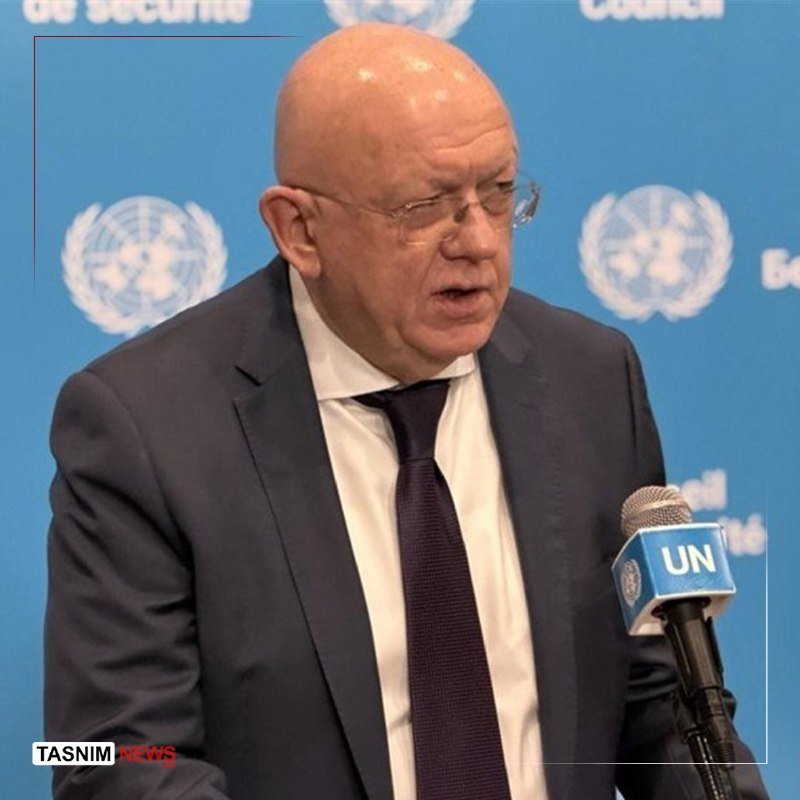
The image from Doha on 10 June 2026 is not of a handshake. It is of two conversations held in the same city, in different rooms, with the same interlocutor walking between them. According to Israeli journalist Barak Ravid, American and Iranian officials have spent the past two days in parallel talks with Qatari intermediaries, with Doha attempting — and so far failing — to convert the format into a direct trilateral. The substance may yet matter, but the architecture of the contact itself is the news.
The point of the exercise is not a deal. The point is the existence of a channel that both governments can name, deny, or activate as conditions shift. A framework in which Tehran and Washington talk without either side having to admit they are talking has been, for most of the past decade, the most valuable commodity in Middle Eastern diplomacy. Doha is now offering it again.
What the format tells us
Parallel tracks are the diplomatic equivalent of plausible deniability with a switchboard operator. Each side gets to claim it is "exploring options"; the mediator gets to claim relevance; the press gets enough for a story without enough to lock anyone in. Ravid's reporting, relayed through regional channels and surfaced on 10 June 2026, describes a Qatari effort to consolidate the two tracks into a single face-to-face meeting. The fact that this consolidation has not yet happened is itself informative: it tells us the gap between the parties is still wider than the political appetite on either side to close it publicly.
The Doha process is also a stress test of a different question: who, in 2026, is still in the business of brokering between Washington and Tehran? Qatar has been here before, most visibly in the 2023 and 2024 back-channels that produced the prisoner-exchange framework and the unfreezing of some Iranian funds. The Gulf state has an interest in being seen as indispensable, and an interest in neither side's collapse. The mediators are not neutral in any grand ideological sense; they are neutral in the sense that their utility to each side is what keeps the lights on.
Why the framing matters
Western wire reporting has tended to read moments like this through a single binary: progress or collapse, deal or no deal. That lens misses the most important variable, which is tempo. A parallel-track format is, by design, slow. It allows hardliners in Tehran and Washington to denounce the other side's maximalist positions in public while their envoys keep talking. It allows Gulf states to insert themselves into a process that would otherwise be dominated by European intermediaries. And it allows both Iran and the United States to demonstrate, to domestic audiences and to regional partners, that they retain a diplomatic off-ramp even as other tracks — sanctions enforcement, nuclear inspections, the maritime theatre in the Gulf — grow more confrontational.
There is an alternative reading worth taking seriously. The same structure that gives both sides cover can also be used to run out the clock. If the format produces no trilateral, and no trilateral produces no joint statement, and no joint statement produces no concrete deliverable, then Doha becomes theatre: a place to be seen negotiating in order to defer harder decisions about enrichment levels, IRGC-Quds Force posture in Syria and Iraq, and the disposition of the IAEA file. The reporting so far does not let us distinguish between these two reads, and anyone who claims to is over-claiming.
The structural read
Look past the personalities and the contact-group choreography and the picture that emerges is one of an order in which the United States and Iran are no longer the only two nodes that matter. The original 2015 framework put Washington, Tehran, and the E3 (the UK, France, and Germany) at the centre of the table, with Russia and China as enablers and the Gulf states largely as recipients of whatever deal emerged. The Doha structure inverts that geometry. The E3 are not in the room. Moscow and Beijing are not in the room. Qatar is. The message is that the Gulf monarchies — and the small, well-capitalised states with the diplomatic infrastructure to shuttle between capitals — have become the operational layer of US-Iran diplomacy, not its periphery.
This is the part of the story that does not require any individual source to confirm. It is what the choreography reveals on its own. When a great-power relationship is mediated by a third state rather than conducted directly, the third state is being elevated; and when the elevated state's neighbours — Saudi Arabia, the UAE, Oman — are not in the same room, the regional balance of mediation is shifting, not settling.
Stakes, in plain terms
If a trilateral does eventually convene and produces even a limited confidence-building measure — a frozen-for-frozen arrangement on enrichment, a detainees file, an inspection protocol — the Doha channel will be credited with something the Europeans could not deliver, and the Gulf's diplomatic weight will have moved up another notch. If the channel produces nothing, it will still have been useful, because the mere fact of its existence raises the cost for any future administration in Washington or any future administration in Tehran of choosing escalation over contact. The default option has been quietly widened.
What remains uncertain, and what the available reporting does not resolve, is the substance on the table. Sources describe the talks as parallel and Qatari-mediated, with Doha pushing for a direct meeting, but they do not specify whether the discussion is technical (inspections, the 60%-enriched stockpile, the undeclared sites question) or political (sanctions architecture, the IRGC designation, regional proxy posture). It is plausible that the parties themselves have not yet agreed on which question they are negotiating about. That ambiguity is, for now, the point.
How Monexus framed this: the wire read treats Doha as a story about whether a deal is near. This publication reads it as a story about who now sets the tempo of US-Iran contact — and how much that shift will cost the older European-centred architecture.
Wire provenance
This editorial synthesis draws on the following public wire/social posts:
- https://x.com/sprinterpress/status/2133456789012345678
- https://t.me/GeoPWatch/123456
- https://t.me/GeoPWatch/123455