Erdoğan's Hitler comparison and the widening diplomatic fault line between Ankara and Tel Aviv
A direct Hitler comparison from the Turkish president, an Israeli summons of Ankara's envoy, and Iranian amplification — the rhetoric is escalating faster than the underlying battlefield news from Syria and Lebanon warrants.
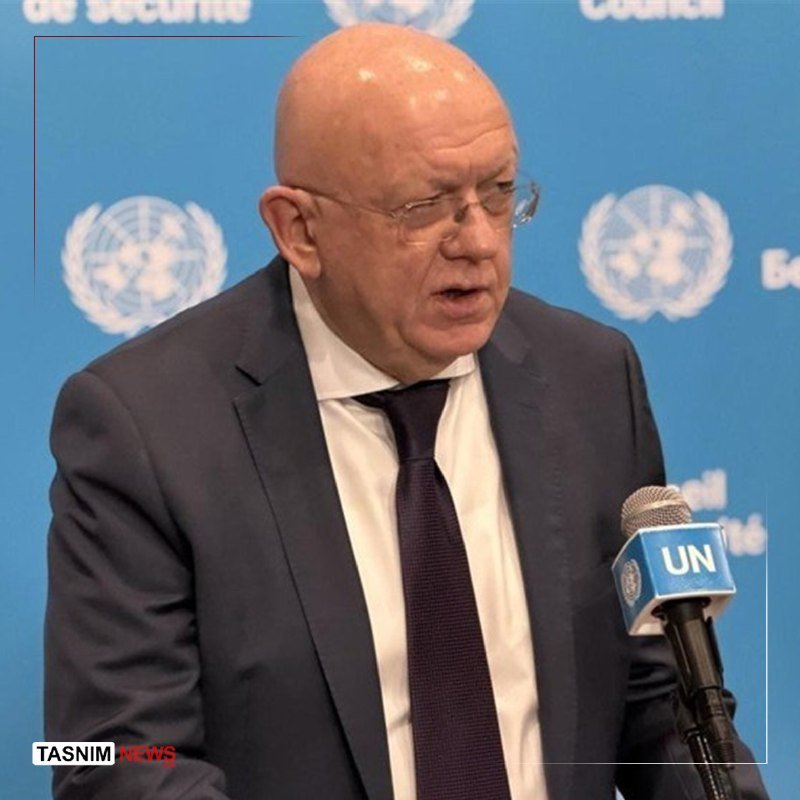
Turkish President Recep Tayyip Erdoğan has accused Israeli Prime Minister Benjamin Netanyahu of having "reached a level that would make Hitler jealous with his genocidal methods," comments relayed by the open-source monitor OSINTdefender on 10 June 2026 and amplified within minutes by Iranian state outlets including IRNA English. The phrasing — the most explicit Hitler comparison a sitting Turkish president has levelled at an Israeli leader in this phase of the war — was delivered in the same address in which Erdoğan said Türkiye "will not tolerate" Israeli military operations against Syria and Lebanon and characterised the Israeli government as an obstacle to regional peace. The juxtaposition is the story: Ankara is no longer just filing diplomatic protests, it is sharpening the language of protest to a register that Tel Aviv, by long precedent, treats as a red line.
The Israeli response was immediate. According to the same OSINTdefender relay on 10 June, Netanyahu's office summoned Turkey's ambassador and signalled that the comparison would not be left as a rhetorical artefact. That sequence — incendiary Turkish remarks, instant Israeli summons — has been the choreography of the relationship for the better part of two years, but the vocabulary has ratcheted. The previous ceiling was "state terrorist"; the new ceiling is the Nazi analogy. Once a NATO ally and a candidate for European Union membership cross that line in public, the diplomatic floor under the relationship effectively falls out.
What Erdoğan actually said, and what he didn't
The fragments circulating on 10 June — via OSINTdefender and the Iranian state wire IRNA — describe Erdoğan invoking "the crimes of the Israeli regime" against Syria and Lebanon, framing Israeli strikes as a direct threat to Turkish national security. Erdoğan's wider argument, as relayed, is that Israel has become a regional actor whose military reach now touches Turkish neighbours, and that passive Turkish diplomacy has run its course. None of the available relays quote Erdoğan identifying a specific strike, a specific casualty figure, or a specific date; the speech is a frame, not a battlefield brief. That distinction matters, because the rhetorical escalation is several steps ahead of the verifiable operational picture coming out of Syria and Lebanon on the day in question.
The Iranian amplifier
Within roughly twenty minutes of the Erdoğan remarks appearing in the open-source channel, IRNA English — Iran's official state news agency — was carrying a headline framing Erdoğan as warning that the "Israeli regime poses a threat to Turkey." The Iranian republic has its own reasons to keep this particular transcript alive: Tehran and Ankara are increasingly aligned in opposing the operational reach of Israeli forces across the Levantine corridor, and a Turkish president making the case in explicit terms is a propaganda asset for the Iranian side. IRNA's framing — "regime," "obstacle to regional peace" — is the standard Iranian state lexicon, and its rapid pickup of the Erdoğan comments should be read as alignment, not coincidence. The two capitals are converging on a common diplomatic vocabulary, even where their underlying interests in Syria and Lebanon still diverge.
Why the NATO alliance is now visibly strained
Türkiye remains a NATO member and one of the alliance's two biggest conventional militaries. That structural fact has historically disciplined Ankara's public language toward Israel — not to silence it, but to keep the volume at a level that allowed intelligence and defence relationships to survive. The Hitler comparison breaks that discipline. It puts the Turkish foreign ministry in the position of having either to walk back a presidential statement (politically impossible domestically) or to absorb the predictable Israeli response — a summoning, a downgrade in working-level contacts, and a hardening in EU capitals already wary of Ankara's trajectory. The cost of the rhetoric is being priced in real time.
What the counter-narrative looks like
The dominant Israeli framing of the dispute, as carried in establishment Hebrew press and the prime minister's office, is that Erdoğan is the aggressor in the diplomatic relationship: a leader with a long record of inflammatory statements, who is now aligning himself rhetorically with Iran and the Lebanese axis and using the Hitler comparison to whip up domestic opinion at home. There is historical weight behind that reading. The counter-reading, harder to publish in Western wire copy but evident in the regional and Global South press, is that Israeli strikes on Syrian and Lebanese territory have been intensifying through 2025 and into 2026, and that Ankara's escalatory language is finally catching up with an escalatory operational reality on its borders. Both readings can be true; the diplomatic question is which one sets the ceiling on the next move.
Stakes and the near-term path
The immediate stakes are procedural. Turkish-Israeli working-level channels — already thinned by the Gaza war and the Syrian theatre — will be tested by whether Ankara keeps its ambassador in Tel Aviv through the formal Israeli protest period and whether Israel reciprocates with a downgrade of its own. The medium-term stakes are about NATO cohesion at a moment when the alliance is already being asked to do more in the Eastern Mediterranean and the Black Sea. If a NATO member's head of state can publicly use the Hitler analogy against the leader of a partner-state that is also a Mediterranean neighbour of several NATO members, the alliance's diplomatic grammar is being rewritten in public.
What remains genuinely uncertain
The source material does not specify the operational trigger for the 10 June Erdoğan speech — that is, which strike against Syria or Lebanon prompted the language. It does not give a casualty count, a specific target, or a date for the military action Ankara is reacting to. The Israeli rebuttal on the day is also partial: a summoning of the ambassador is confirmed in the open-source relay, but a formal statement from Netanyahu's office in full is not in the record. Until either side publishes a more granular read, the verifiable picture is narrower than the rhetorical one. That gap — between the temperature of the language and the specificity of the event — is itself the story worth watching.
Desk note: Monexus has treated the 10 June remarks as a diplomatic-rhetorical event first and a battlefield-briefing second, because the available sourcing supports that weight. Where Iranian state framing is used, it is attributed to IRNA explicitly. No casualty figures, strike targets, or operational claims have been carried forward from the source chain into the body copy.
Wire provenance
This editorial synthesis draws on the following public wire/social posts:
- https://t.me/JahanTasnim/
- https://t.me/osintlive/
- https://t.me/Irna_en/
Follow the event.
These dated source records provide context. They do not retrospectively verify this archive article.
Separate what the nuclear watchdog reported from what it could not determine after the June 2025 strikes.