The Erdogan–Netanyahu Row and the Erosion of the Turkey–Israel Mediation Channel
A renewed exchange of personal insults between Recep Tayyip Erdogan and Benjamin Netanyahu has pushed a once-plausible mediator–reconciliation track into the deep freeze, with consequences for Gaza, energy corridors, and the wider regional order.
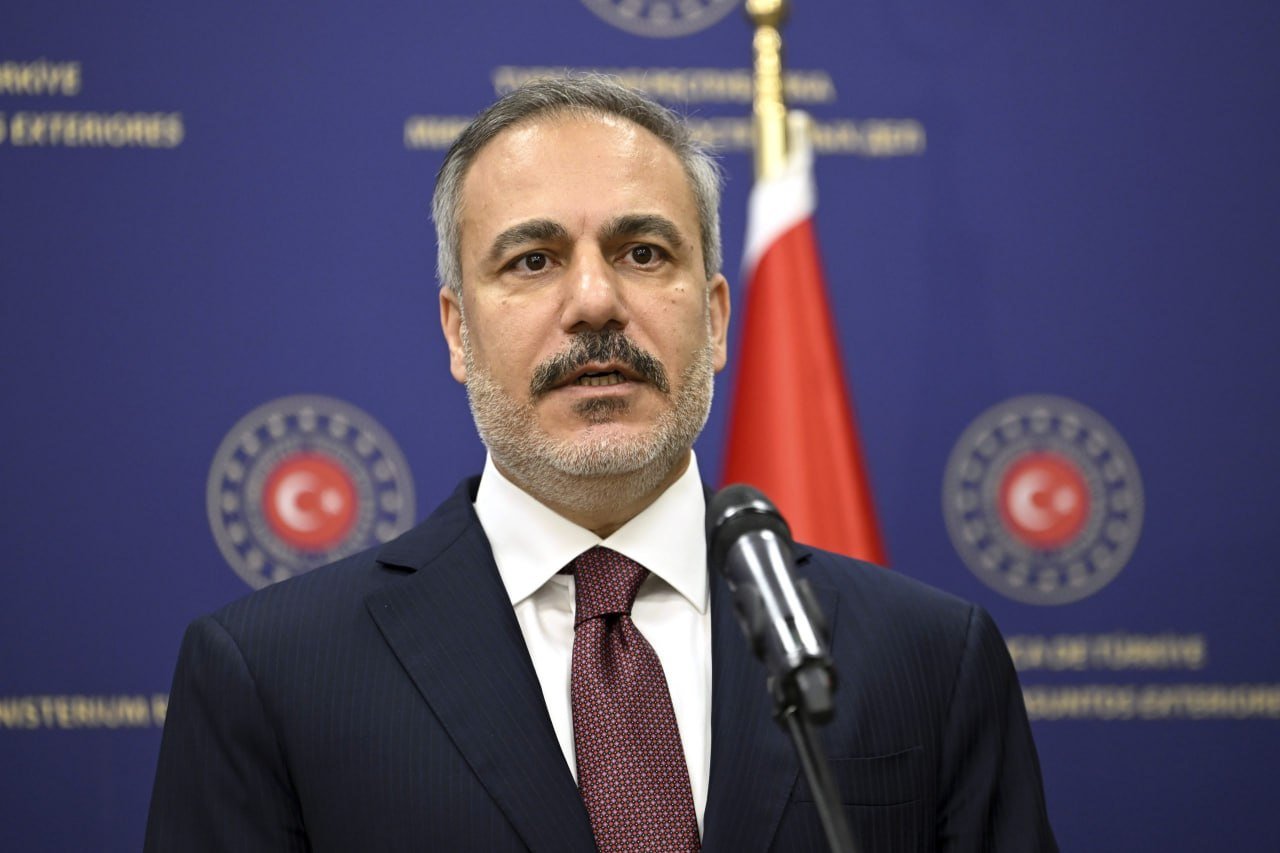
On the morning of 10 June 2026, the long-simmering feud between Turkish President Recep Tayyip Erdogan and Israeli Prime Minister Benjamin Netanyahu broke into the open again, this time with the kind of personal charge that diplomatic memoranda are not designed to absorb. According to the BRICS News wire on Telegram at 13:42 UTC, Netanyahu declared Erdogan "the last person who can lecture Israel on morality," responding to earlier remarks from the Turkish president that, per the same wire at 14:32 UTC, compared the Israeli leader to Adolf Hitler. By 13:21 UTC, the Beirut-based outlet The Cradle had already published its own flash item describing Netanyahu as having "lashed out" at Erdogan following the Turkish comments. What was once a manageable bilateral irritant is now a daily headline-grade confrontation, and the diplomatic infrastructure that used to keep it contained is visibly fraying.
The two governments have spent the better part of a decade trying to keep this channel from collapsing altogether. The 2022–2023 restoration of full diplomatic relations, brokered quietly under President Isaac Herzog and a more transactional Netanyahu coalition, opened the door to energy talks, an Istanbul air link, and brief speculation that Ankara could once again play middle-man in a Gaza or wider regional settlement. That scaffolding has been eroding since the war in Gaza began in late 2023, but the exchanges of 10 June 2026 mark the moment when the mediator track is effectively dead in the water. The question now is what replaces it — and which regional players have the standing, and the motive, to fill the gap.
From warning to war of words
The current episode is not an isolated outburst. The Cradle's midday bulletin framed Netanyahu's response as the latest in a sequence of "fresh attacks" on Erdogan, and the BRICS News wire — a channel that aggregates state-adjacent material from BRICS+ capitals and tends to amplify Global South framings of the Middle East — was already passing the duelling quotes within minutes of each other. The speed matters: by the early afternoon UTC, both men's offices had been given the opportunity to outdo the other in public, and the language had escalated well past the level at which a phone call from a third capital can de-escalate.
Erdogan's invocation of Hitler is the kind of comparison that Israeli officialdom treats as a red line, regardless of the speaker. Netanyahu's retort, in turn, is calibrated to remind a domestic Israeli audience that the Turkish president has been among the most vocal critics of the Gaza campaign since late 2023 and has hosted senior Hamas political figures in Istanbul. Both men are playing to constituencies that do not reward nuance: Erdogan to a Turkish base in which Israel is a usable political adversary, Netanyahu to a coalition in which any softening toward Ankara reads as weakness. The result is a feedback loop in which each round of insults licences the next.
What is new is the public position of the response. Earlier flare-ups — a 2018 Davos walkout, a 2024 UN General Assembly exchange — were treated by both foreign ministries as regrettable but containable. The Cradle's framing of "lashing out" and BRICS News's rapid sequencing of the two statements suggest that, in 2026, neither side is investing in the diplomatic furniture that used to absorb these moments.
A mediation channel that no longer exists
For most of the 2000s and 2010s, Turkey was the only NATO member with a functioning relationship across the Israeli–Arab divide. Ankara normalised ties with Israel in 1949, suspended them in 2010 after the Mavi Marmara flotilla incident, and restored them in 2016 in a deal that hinged on a Turkish aid commitment to Gaza and an Israeli payment to the victims' families. That structure — transactional, formally bilateral, but functionally a third-party channel — survived successive Gaza operations and an attempted economic boycott of Israel in 2018, in part because the Israeli defence establishment wanted it to survive.
The Gaza war that began in October 2023 changed the arithmetic. Ankara's exports to Israel collapsed under a Turkish official pressure campaign, and Erdogan's government emerged as one of the loudest Western-aligned voices calling for a ceasefire. The 2022–2023 reconciliation, which had been sold to Turkish voters as a pragmatic opening, became politically toxic. By the time Netanyahu returned to office at the head of a hard-right coalition in late 2024, the Israeli side had little reason to keep the channel warm, and the Turkish side had even less.
The exchanges of 10 June make explicit what was already implicit: the mediator track is not paused, it is over. There is no plausible near-term Israeli government that will accept Erdogan as a broker, and there is no plausible Erdogan posture that would position him as one. The energy-track layer of the relationship — a 2022 proposed gas export pipeline from Israeli fields to Turkey and on to Europe — has no political cover in either capital. The once-mooted possibility of joint influence over a future Palestinian Authority configuration is no longer on any working group's agenda.
The wider regional scramble
When one mediation channel closes, the work does not disappear. It moves. The 10 June escalation is best understood as the moment when responsibility for any near-term Gaza or wider Israeli–Palestinian track is being redistributed. Three capitals are best positioned to absorb it.
Qatar, which has hosted the Hamas political bureau in Doha since 2012 and has, with Egyptian and US backing, mediated each of the ceasefires of the war to date, is the only Arab government that has the relationships on both the Israeli and the Palestinian-islamist side to operate as broker. The Qatari mediation record is uneven — the October 2023 hostage release and the subsequent brief pauses bought time, but did not produce a settlement — but it remains the operational default. Doha's leverage is real but conditional on US tolerance, and on Saudi Arabia's decision not to compete directly.
Saudi Arabia, which has been edging toward a normalisation track of its own — the US-brokered framework that, in earlier iterations, was conditioned on a Palestinian track — has, since 7 October 2023, kept that file suspended. The Turkish–Israeli collapse, paradoxically, makes the Saudi track more valuable to the United States, because it is the only Arab-Israeli normalisation channel still on the table in any form. It also makes it more politically expensive to Crown Prince Mohammed bin Salman, because normalisation now has to be sold in a region where Turkey is publicly comparing the Israeli prime minister to Hitler. That is a hard sell in the Arab street, and not a free one in the Saudi domestic market.
Egypt, finally, retains the Rafah crossing file, the intelligence relationship with both Israeli and Palestinian factions, and a 45-year-old peace treaty. Cairo has been the senior Arab state on this file since 1977, and the 10 June eruption will, in practice, push more shuttle diplomacy onto President Abdel Fattah el-Sissi's foreign minister and intelligence chief. Whether the Egyptians have the leverage to substitute for the now-defunct Turkish channel is a different question. They have the relationships but, as the 2023–2024 hostage negotiations repeatedly showed, not always the traction.
Counter-narrative: a calculated, manageable split
It is worth taking seriously the alternative reading: that the personal insults are, in effect, managed theatre. The Turkish and Israeli economies are not, in any meaningful sense, at war. Their military establishments are not confronting each other in the Eastern Mediterranean. The defence industrial cooperation that survived the 2016 reconciliation — including Israeli drone and electronic-warfare components that ended up in Turkish service — has gone quiet on the surface but not, by any serious reporting, been formally terminated.
On this reading, Erdogan's invocation of Hitler is calibrated for the Turkish press; Netanyahu's "last person to lecture on morality" is calibrated for his coalition; and the underlying business of intelligence contact, gas-pipeline working groups, and back-channel pressure on Hamas in Istanbul continues in compartments that both governments are careful not to advertise. The Cradle's framing of "lashing out" leans the piece toward reading the row as substantive; the BRICS News wire, by sequencing the two statements within an hour of each other, leans toward the same. Western wires, which have not yet published their own ledes on this exchange at the time of writing, are more likely to treat it as the latest in a familiar pattern.
This publication's read is that the mediator-track reading holds more weight than the managed-theatre one. The reason is structural rather than rhetorical. The 2022–2023 reconciliation was sold, on both sides, on the proposition that economic and energy benefit would constrain the political rhetoric. The events of 10 June 2026 suggest that constraint has failed. When the language of a sitting head of state and a sitting prime minister publicly crosses the Hitler line on a Wednesday afternoon and is met, within the hour, with a "last person to lecture on morality" retort, the diplomatic furniture designed to absorb such moments — quiet phone calls, third-party nudges, foreign-ministerial damage control — is not being deployed. That is the signature of a real rupture, not a managed one.
Stakes and the forward view
The near-term costs are clear. Any prospect of a Turkish role in a post-war Gaza governance arrangement is off the table for the duration of the current Netanyahu government and the current Erdogan presidency. The Eastern Mediterranean gas corridor project, which had been the most concrete economic artefact of the 2022–2023 opening, is now without a political sponsor on either side. NATO, already strained by Turkish positions on a range of issues from F-16 sales to the Russia–Ukraine war, has to absorb one more bilateral rupture among two of its most consequential eastern-flank members. And the diplomatic traffic that used to flow through Ankara — humanitarian aid coordination, intelligence-sharing on jihadist networks in Syria, consular cooperation — is rerouted, slowed, or quietly suspended.
The longer-term cost is structural. The Middle East order that the United States spent the 2010s trying to assemble — a network of normalising Arab-Israeli relations, with Turkey as a marginal but useful connector — was already weakened by the events of late 2023. The 10 June exchange is the moment when the connector role is openly renounced, by the connector itself. The scramble that follows will be led, by default, by Qatar, Egypt, and Saudi Arabia, in that order of operational capacity. The United States, which has historically been the indispensable backstop of any Arab-Israeli mediation, is, under its current administration, less inclined to play that role in the same form. The result is a region with more tracks running in parallel, fewer mechanisms to align them, and a wider cast of states — including, increasingly, Türkiye as a pole rather than a broker — competing to set the agenda.
What remains genuinely uncertain is whether the rupture is permanent or merely acute. Turkish and Israeli officials have, in the past, found ways to communicate through third parties when direct channels were politically impossible — most recently in the second quarter of 2024, when the United States and Egypt both relayed messages. The 10 June row, by contrast, has not yet produced any of that third-party shuttling. If, by the time of the next NATO summit or the next round of Gaza talks, no working-level contact has been re-established, the working assumption should be that the mediator channel is no longer dormant but discontinued, and that the regional order is being rebuilt around its absence.
This publication's framing treats the 10 June 2026 exchange as the public confirmation of a structural break rather than a temporary flare-up, in contrast to the more familiar pattern of managed rhetoric emphasised in some Western coverage. Where wires differ on whether the underlying business of intelligence and energy cooperation continues in compartmentalised form, the article notes that the diplomatic furniture designed to absorb such moments is no longer being deployed — and reads that absence as a signal in itself.
Wire provenance
This editorial synthesis draws on the following public wire/social posts:
- https://t.me/bricsnews
- https://t.me/bricsnews
- https://t.me/thecradlemedia
- https://t.me/TheCradleMedia
- https://en.wikipedia.org/wiki/Israel%E2%80%93Turkey_relations
- https://en.wikipedia.org/wiki/2023_Israeli_attack_on_Gaza
- https://en.wikipedia.org/wiki/Eastern_Mediterranean_gas_forum
- https://en.wikipedia.org/wiki/Qatari_role_in_the_Israel%E2%80%93Hamas_conflict
- https://t.me/bricsnews
- https://t.me/bricsnews
- https://t.me/thecradlemedia
- https://t.me/TheCradleMedia
- https://en.wikipedia.org/wiki/Israel%E2%80%93Turkey_relations
- https://en.wikipedia.org/wiki/2023_Israeli_attack_on_Gaza
- https://en.wikipedia.org/wiki/Eastern_Mediterranean_gas_forum
- https://en.wikipedia.org/wiki/Qatari_role_in_the_Israel%E2%80%93Hamas_conflict