Erdogan draws a red line at the Mediterranean: Turkey says Israeli strikes on Syria and Lebanon now threaten its own security
Speaking in Ankara on 10 June 2026, President Recep Tayyip Erdogan warned that Israeli operations in Syria and Lebanon have escalated to a point that "now also threatens Türkiye," framing the dispute as a direct national-security question and setting up a potential collision with NATO ally Israel.
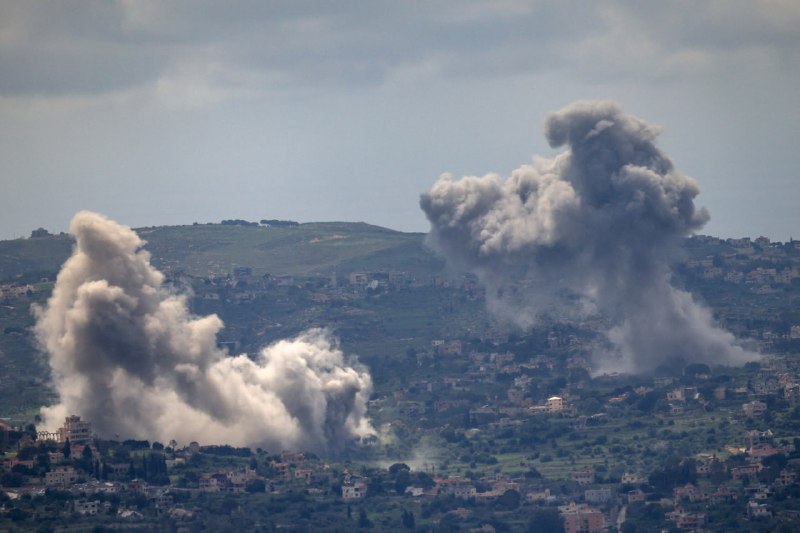
On the morning of 10 June 2026, Turkish President Recep Tayyip Erdogan stood before his cabinet in Ankara and did something NATO diplomacy rarely sees in real time: he publicly rebuked a fellow member-state's military campaign as an existential threat. The immediate target was not Israel itself but Israeli operations in Syria and Lebanon, which Erdogan said have now "reached a point where they threaten Türkiye as much as Syria and Lebanon," according to wire reports that carried the statement within minutes of its delivery. The escalation was rhetorical first and military second, but the wording was the most explicit Ankara has used since the early months of the Syrian war, and it landed in a region already saturated with overlapping air campaigns, fragile ceasefires, and a NATO alliance trying to keep its two most strategically awkward members on speaking terms.
The choice of language matters. By placing Türkiye on the same footing as two states already absorbing Israeli strikes, Erdogan recast a Mediterranean dispute that Western wire reporting has tended to frame as a localised, Israel-versus-Hezbollah-and-Damascus problem into something that includes Turkish territorial exposure. The reference to "provocative actions" in the Mediterranean, reported by Liveuamap's wire mirror at 10:32 UTC on 10 June, signals that Ankara's concern is not only the airspace over Idlib and the Beqaa Valley but the broader maritime and air geometry in which Türkiye has spent the last three years repositioning itself as a regional security actor with its own red lines.
What Erdogan actually said, and in what order
The sequence of statements, pieced together from Telegram-wire mirrors carrying N12, Israeli and Iranian state media, and Open Source Intel coverage, follows a recognisable Erdogan pattern: an opening accusation against Prime Minister Benjamin Netanyahu personally, followed by a direct warning to the wider region, followed by a taunt aimed at anyone still defending Israel diplomatically.
At 10:10 UTC, Clash Report carried the load-bearing line: "Netanyahu and his criminal network's attacks against Syria and Lebanon have reached a point that threatens not only these two brotherly countries, but now also Türkiye." Seven minutes later, the same outlet carried the second passage, in which Erdogan urged states in the region not to "go looking for adventure" and not to "hitch themselves to the wagon of the Zionist network of massacres," promising a Turkish response if any actor tested Ankara's patience. By 10:27 UTC, Tasnim News, an Iranian state outlet, had already elevated the framing: "Türkiye will not tolerate Israel's attack on Syria and Lebanon," with Erdogan quoted as saying that Netanyahu and "his criminal network" had moved from threatening neighbours to threatening a NATO member. By 10:32 UTC, the broader Liveuamap wire, citing N12, was reporting the "Mediterranean" formulation.
The cascading language — "provocative actions," "Zionist network of massacres," "criminal network" — is familiar from Erdogan's 2023-24 rhetoric on Gaza. What is new in 2026 is the explicit national-security framing. Ankara is no longer speaking primarily in the register of humanitarian solidarity with Palestinian civilians or the Syrian opposition; it is speaking in the register of a state that calculates its own exposure to Israeli airpower and to the regional escalation that follows in the wake of Israeli operations in its near abroad.
Why Türkiye, why now: the structural picture
Three structural pressures converge to make the 10 June warning more than a rhetorical reflex. Each is visible in the regional dispatches that fed into the wire coverage.
First, geography. Türkiye shares a long and historically difficult land border with Syria, a maritime boundary with Lebanon's neighbours, and a contested air and naval space in the eastern Mediterranean where Ankara has built a defence posture explicitly designed to deter unilateral operations by regional air forces. When Israeli operations expand into Syrian and Lebanese airspace, the geometry of those strikes — the flight corridors, the refuelling tracks, the early-warning radar returns — runs along the same air and sea lanes that the Turkish military monitors. Ankara does not need to be struck to feel strategically exposed; it only needs to watch the same airspace get busier.
Second, displacement. The Syrian and Lebanese fronts have, over the past eighteen months, produced renewed flows of refugees and returnees across Turkish-controlled border regions. Ankara's patience for absorbing those flows is finite and politically costly; it is also one of the few leverage points Turkish diplomacy retains over the EU and over NATO capitals. Warnings that Israeli operations threaten Türkiye should be read in that context: they are a way of forcing Western allies to treat the Israel file as a Türkiye file as well.
Third, NATO politics. Türkiye remains the alliance's largest standing military in the eastern flank and the only NATO member with continuous ground forces in northern Syria. It is also the NATO member most openly critical of Israeli operations in this period. Erdogan's statement forces a question NATO headquarters would prefer to defer: how does an alliance that includes Israel through a growing partnership architecture, and that includes Türkiye as a frontline state, manage a widening disagreement between the two about operations in the eastern Mediterranean? No NATO mechanism cleanly resolves that question, which is precisely why Erdogan's public escalation is significant.
The Israeli frame, and the Global South frame
The Israeli security establishment's framing of operations in Syria and Lebanon, as carried by Israeli wire and Western outlets over recent months, treats the campaign as a continuation of long-running efforts to prevent the entrenchment of Iranian-aligned forces on Israel's northern border, to interdict weapons transfers, and to degrade the post-2024 Hezbollah reconstitution that has rebuilt rocket and drone capabilities at a pace that Israeli planners find intolerable. Within that frame, strikes in Syria and Lebanon are defensive in intent, even when their kinetic footprint is heavy, and the relevant audience is a domestic Israeli public that has repeatedly rejected political solutions on its northern frontier.
That frame, however, is not the only one operating in the region. From the perspective carried by Iranian state media, by parts of the Arab press, and now by Turkish presidential rhetoric, Israeli operations in Syria and Lebanon are part of a longer regional pattern in which the use of force is shifting away from the post-1991 norms of proportionality and toward something more openly punitive. Turkish state-adjacent commentary, including Tasnim's mirror of Erdogan's remarks, treats the Mediterranean theatre as one in which Israel is operating with widening latitude because the Western powers that would normally constrain it are unwilling or unable to do so. The two readings are not compatible; they describe different wars.
The editorial challenge is to hold both. Israeli planners have real and documented security concerns; the operational tempo in Syria and Lebanon in this period is striking Israeli population centres in ways the Israeli public has not tolerated. At the same time, the regional counter-frame is not manufactured: the strike footprint, the civilian toll reported by UN agencies and wire services, and the political intransigence inside Israel on the modalities of any ceasefire are all factual inputs that support the structural critique Erdogan is voicing. Neither frame cancels the other; together they describe a region that has run out of diplomatic room to absorb the next round of escalation.
Stakes, and the next ten days
If the trajectory of 10 June holds, three things are likely to follow, and one of them is genuinely new. The first is an Israeli diplomatic pushback, most likely through quiet channels with Ankara, designed to prevent the dispute from metastasising into a NATO-internal crisis. The second is a Turkish move to internationalise the complaint, probably through a UN General Assembly or OIC framework, which is the institutional vocabulary Erdogan has used before when he wants to convert a bilateral complaint into a multilateral one. The third, which is the genuinely new element, is the possibility of Turkish action in the eastern Mediterranean that constrains Israeli air or naval operations in a way that has not been attempted since the 2018-2020 corridor disputes. None of these is certain; the only certainty is that the 10 June statement has raised the cost of a quiet response for both governments.
What remains uncertain
The wire coverage of the 10 June statement is unusually thin on operational detail. None of the carrying outlets specified which Israeli strikes, in which Syrian or Lebanese theatres, prompted the escalation. The "Mediterranean" formulation, carried by N12 and forwarded via Liveuamap, is not yet matched in the public reporting by a specific incident or set of incidents that would clearly trigger the language. It is plausible that Ankara is responding to an accumulated pattern rather than a single event; it is equally plausible that a specific episode — a downed aircraft, a strike on a Turkish-affiliated facility, an interception at sea — has not yet been publicly confirmed. Until the underlying trigger is established by independent reporting, the statement should be read as a calibrated warning, not as a response to a discrete provocation that has already been documented.
The staff-writer desk treats the 10 June statement as the opening bid in a new phase of the Mediterranean dispute, not as the crisis itself. Where Western wire framing is likely to treat Erdogan's language as performative, this publication reads it as a structural signal: Ankara is repositioning itself inside NATO as a state that will not defer to Israeli operations in its near abroad, and the next several weeks of diplomacy will be defined by how NATO, the EU, and the wider Western alliance absorb that fact.
Wire provenance
This editorial synthesis draws on the following public wire/social posts:
- https://t.me/Liveuamap/
- https://t.me/tasnimnews_en/
- https://t.me/osintlive/
- https://t.me/ClashReport
- https://t.me/ClashReport
- https://t.me/tasnimnews_en
- https://en.wikipedia.org/wiki/2026_Israel%E2%80%93Lebanon_crisis