Fayyad’s ‘final decision’ line tells you who really sets the terms in south Lebanon
A Hezbollah-aligned official says the resistance — not Beirut, not Washington — holds the final card on the south. The claim matters because the diplomacy now underway is built on the opposite premise.
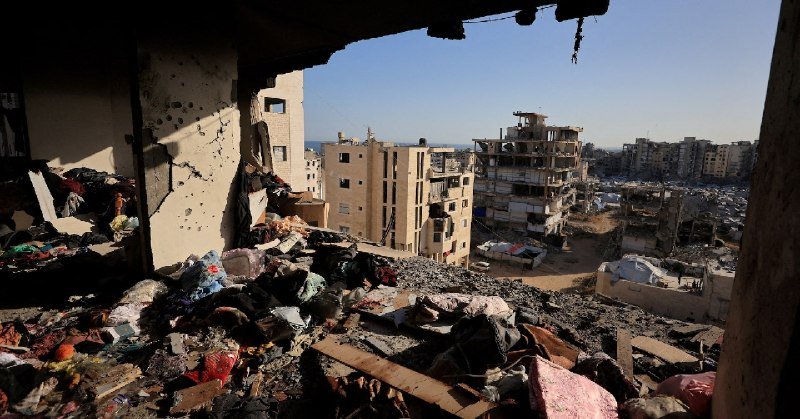
On the evening of 10 June 2026, a Hezbollah-linked official walked into a Lebanese microphone and said, on the record, what the movement’s spokespeople have spent the last several months saying in private: the so-called resistance, not the Lebanese state, holds the final say over the country’s south. The remarks — delivered by a figure identified only as “Fayyad” across Al-Alam Arabic’s wire — carried three distinct assertions in roughly fifteen minutes. The first was a veto. “No one,” Fayyad said, “can bypass the resistance in any form of solution,” and it is the resistance that “has the final decision regarding the south.” The second was a threat wrapped in confidence: the resistance’s “capabilities are great, and the wider the battlefield expands, the more losses it will be able to inflict on the Israeli enemy.” The third was an olive branch, carefully pruned: full confidence in Parliament Speaker Nabih Berri “in terms of basic constants.”
Strip the rhetoric away and you have a hard claim about who actually negotiates on Lebanon’s behalf — and a hard claim about what the wider-battlefield doctrine costs the people living on it.
What the line is really saying
Lebanon has spent the better part of two years caught between a United States–brokered ceasefire framework and a ground reality in which the armed movement that fired across the border in October 2023 is the same movement that decides, village by village, whether a village stays quiet. The Beirut government can sign letters. The Lebanese Armed Forces can post positions. None of that changes the operational fact: in the south, the local balance of force is set by a non-state actor answerable to a foreign patron, not to a cabinet. Fayyad’s “final decision” formulation is the movement saying, out loud and in Arabic, that the diplomatic architecture the United States and France have been building is decorative unless it is also signed off in Dahiyeh and, ultimately, in Tehran.
Why the Berri cover matters
The line about the Speaker is doing diplomatic work, not diplomatic niceness. Nabih Berri is the Shia pole of the Lebanese political system, the head of the Amal Movement, and a man who has spent four decades acting as the senior Shia interlocutor with both the Saudi-aligned and the Iranian-aligned wings of his own community. By publicly backing Berri “on basic constants,” the resistance side is signalling two things at once. It is telling Beirut’s Sunnis, Christians and Druze that the channel of negotiation still runs through a recognised constitutional office, not through a militia commander. And it is telling its own base that the Speaker is the civilian clothing the resistance intends to wear when the next round of talks begins. Read together with the “final decision” line, the message is unsentimental: Berri is the face; Fayyad, and the apparatus behind him, is the hand.
The wider-battlefield bluff — and its price
The threat to expand the battlefield deserves more skepticism than it has received. Capability and willingness are not the same variable. The movement retains a substantial rocket and drone inventory, an experienced cadre in the south, and a deterrent logic that has, on the historical record, deterred a ground re-invasion. It does not retain the ability to impose strategic cost on Israel without that cost being paid, first and hardest, by the Shia villages of south Lebanon and the Beqaa. The line about inflicting losses “the wider the battlefield expands” is therefore a threat to extend the geography of suffering, not a credible threat of victory. Reporting from south Lebanon over the past year has consistently shown that it is Lebanese civilians — not Israeli towns — who absorb the first and the worst of every escalation. The framing of “losses on the enemy” obscures, by design, who pays the entry fee.
The real negotiation is elsewhere
What makes the Fayyad remarks worth taking seriously is not their bluster but their timing. The diplomatic track that is supposed to be delivering calm to the border — talks facilitated by Amos Hochstein and his successors, with Qatari and Egyptian shuttles in the margins — is built on a premise the remarks explicitly reject. The premise is that a sovereign Lebanese state, acting through recognised institutions, can deliver a quiet southern border in exchange for an international reconstruction and stabilisation package. Fayyad is telling you, on the record and in real time, that premise does not hold. The resistance, not the cabinet, is the contracting party. Until that gap is closed — by Beirut being given the means to govern its own border, or by the diplomatic track being rewritten to deal directly with the armed actor — every ceasefire is provisional and every quiet month is borrowed.
The honest reading is not that the south is about to blow up. It is that the south is being governed, in slow motion, by a party that does not pretend to be a government. The “basic constants” line is the only part of the statement that resembles a concession. Everything else is a reminder of who, in this corner of the Mediterranean, still holds the final card.
This publication frames the south-Lebanon file around the question of who actually negotiates for the border, rather than around the official line of any one capital. The Lebanese state, the United States, Iran and Israel all have reasons to keep the present ambiguity in place. The people of the south are the only constituency with no seat at any of those tables.
Wire provenance
This editorial synthesis draws on the following public wire/social posts:
- https://t.me/alalamarabic
- https://t.me/alalamarabic
- https://t.me/alalamarabic