Gulf of Oman strike and an AI equity plan: parsing the second Trump term's twin power moves
A US warplane disabled an Iran-linked tanker in the Gulf of Oman the same week Washington signalled it wants equity stakes in frontier AI firms. Together, the moves sketch a foreign-policy doctrine fused to a domestic industrial one.
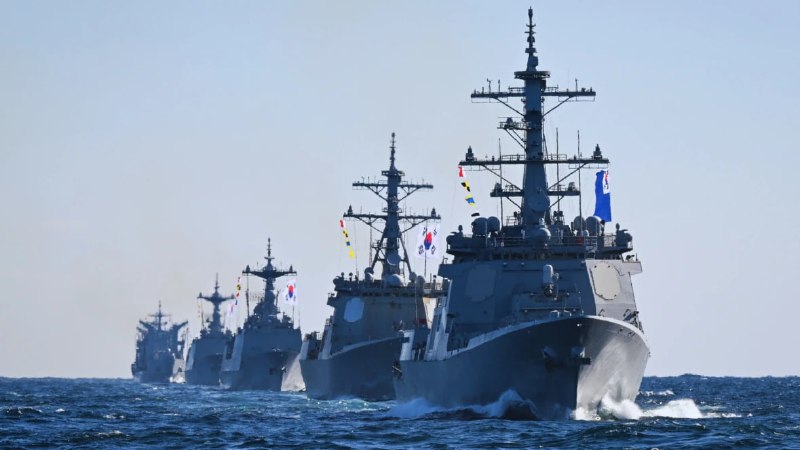
On 10 June 2026, a US warplane fired on and disabled a tanker in the Gulf of Oman that the US military said was attempting to transport oil from Iran in violation of an American blockade. The strike, reported on 10 June 2026 at 16:26 UTC via the @insiderpaper Telegram channel citing a US military statement, lands in the middle of an unusually dense news cycle that, taken together, sketches a doctrine: coercive energy diplomacy aimed at Tehran fused to an expansive, equity-bearing industrial policy at home. The same morning, President Donald Trump told reporters that the United States had "secretly" been taking out "millions of barrels" of oil from Iran every night — a claim amplified on the X account @polymarket at 16:09 UTC — and announced that the US government would seek equity stakes in top AI companies to make the public "very rich," per @polymarket at 15:56 UTC. The Iran file is being run at maximum pressure, in the phrase relayed by Fox and captured on the @unusual_whales X account at 13:57 UTC. Trump, the same channel noted earlier, warned Iran it would "pay the price" for taking too long to accept a deal. The thread is the same thread.
The tactical move in the Gulf of Oman, and the policy superstructure behind it, are not separable. The strike is the instrument; the announced AI equity plan is the dividend. Read together, they suggest a White House attempting to do two things at once: reassert the dollar's pricing power over seaborne energy flows, and convert a slice of the frontier technology economy into a sovereign balance-sheet asset. Both moves are unapologetically transactional, and both treat other governments — allied and adversary — primarily as counterparties.
The Gulf of Oman and the grammar of blockade
The strike is the most concrete act. A US military statement, carried on the @insiderpaper Telegram channel at 16:26 UTC on 10 June 2026, said an American warplane fired on and disabled a tanker in the Gulf of Oman that was attempting to transport Iranian oil in violation of a US blockade. The geography matters. The Gulf of Oman is the maritime chokepoint linking the Persian Gulf to the Arabian Sea and, via the Strait of Hormuz, to the wider Indian Ocean shipping lanes. Roughly a fifth of the world's seaborne oil transits this corridor. Disabling a single vessel is a tactical event; the framing — a US blockade declared and enforced against Iranian crude exports — is a strategic posture.
The blockade, and the kinetic enforcement of it, sits on top of a sanctions architecture that has been running for years. The novelty in June 2026 is the willingness to fire on a foreign-flagged vessel in international waters and to describe it, in the same breath, as the routine defence of a US-declared prohibition. That is a meaningful doctrinal shift, and the language used in the brief US military statement — "in violation of a US blockade" — is the operative phrase. A blockade, under the law of the sea, is itself a recognised instrument of pressure. Once declared, every vessel on the relevant trade route is on notice; the standard for intervention moves.
The Trump remarks on "millions of barrels" per night, captured on @polymarket at 16:09 UTC on 10 June 2026, are the second layer. If a blockade is being enforced nightly, and if oil that would have reached market is being intercepted, then someone is not getting paid for that crude. The implicit audience is two-fold: Tehran, which is being told that sanctions have teeth again, and the global oil market, which is being told to expect tighter physical supply if diplomacy fails.
Maximum pressure, version 2.0
The phrase itself surfaced in the same news cycle. At 13:57 UTC on 10 June 2026, the @unusual_whales X account relayed Fox reporting that Trump is "exerting maximum pressure to get a deal done with Iran." It is the revival of an Obama-era formulation, last deployed heavily during the first Trump administration, in which sanctions, diplomatic isolation and the threat of force are layered until the adversary either negotiates or breaks. The novelty this time is the blockade language, and the open, almost casual, talk of nightly interdictions.
The counter-narrative inside Iran, and across much of the Global South, is consistent and partly defensible. Iranian officials, and analysts writing in outlets aligned with Tehran, argue that the US sanctions regime is itself an extraterritorial imposition — that secondary sanctions enforced on third-country buyers are an attempt to project American domestic law onto neutral trade. From that vantage point, a US blockade of Iranian crude is not the defence of an international norm; it is the unilateral application of a domestic preference to neutral waters. The Western wire line treats the blockade as a legal instrument of US national-security policy. Both reads are present in the public record, and both are cited routinely; the difference is which legal frame you find more persuasive.
This is the part of the story where standard Western coverage tends to flatten. The tanker was, by the US military's own description, attempting to transport Iranian oil in violation of the blockade. That much is in the brief. The rest — flag state, crew, ownership, whether the cargo was in fact Iranian, what the legal basis of the blockade itself is — the @insiderpaper relay does not specify. Until those details are public, the strike is best treated as a documented event with a thin public docket. Readers should hold off on the temptation to assume what the filings will eventually say.
The AI equity announcement: industrial policy with a sovereign balance sheet
At 15:56 UTC on 10 June 2026, the @polymarket X account reported that Trump had announced the US government would seek equity stakes in top AI companies to make the public "very rich." The headline is unusual enough to deserve to be read twice. The federal government, in this framing, is positioning itself not only as regulator or customer of the frontier AI sector, but as a co-owner. The mechanism is not specified in the relay — whether through direct grants, convertible instruments, a sovereign fund, or some hybrid — but the destination is.
Read against the Gulf of Oman strike, the AI announcement is not a separate story. It is the same story told with a different instrument. A government that can interdict a foreign tanker to enforce a sanctions regime is also, in this telling, a government that can take a stake in a private frontier firm to make the public a shareholder. The political theory in both cases is similar: the state is large enough, and the strategic stakes high enough, that traditional procurement and antitrust tools are too thin. If the technology is going to be consequential, the public should own a piece of it; if the oil is going to be consequential, the state should control access to it.
This is industrial policy in its most muscular form. The US has, since 2022, run variants of industrial policy through the CHIPS and Science Act, the Inflation Reduction Act, and a series of Defence Production Act authorisations. The June 2026 announcement extends that template into equity ownership. The closest historical analogue is the Reconstruction Finance Corporation's equity positions in private banks during the 1930s, or the synthetic-fuel programmes of the 1970s. The closest contemporary analogue is the equity stake structures used in the 2008-09 bank bailouts. The scale implied — "top AI companies" — is not small.
The structural frame here is plain. The frontier technology sector has, for the better part of a decade, been a story about private capital, sovereign-cloud customers, and self-regulating foundation-model labs. The state has been a customer and a regulator, not an owner. The June 2026 announcement ends that separation. If the policy is implemented as described, the federal government becomes a co-investor in the upside of a small number of firms that, by any reasonable measure, will be the most consequential private actors of the next decade. That is a different kind of industrial policy than subsidy; it is sovereign balance-sheet exposure to a private asset class.
What is being said to whom
The signalling is unusually dense. To Tehran, the message is that sanctions are no longer paper; they are accompanied by boarding parties, in this case aerial ones. To the global oil market, the message is that Iranian crude supply is conditional, and that the United States is prepared to manage that supply politically. To the AI sector, the message is that frontier capability is treated as critical infrastructure on the same level as power grids and ports; the public, in return, gets a financial claim on the upside. To the rest of the federal government, the implicit message is that executive-branch discretion over both sanctions enforcement and industrial deployment is wider than it has been in some time.
There is also a quieter audience: the AI companies themselves. The announcement, on its face, trades a more compliant regulatory environment and federal procurement for equity dilution and a public share. Whether that trade is welcome in the boardrooms of frontier AI firms is not recorded in the source material. But the direction of the offer is clear. The state is willing to be a co-owner in exchange for influence over the trajectory of a technology that, by the standards of any serious analyst, will reorganise the labour market, the defence stack, and the energy grid. The companies that decline the offer will be the ones the state does not co-own; they will be the ones the state regulates most aggressively. The ones that accept will be the ones whose alignment with public priorities is, by construction, financial as well as rhetorical.
The counter-narrative is structural and serious. The same political theory that justifies the government as a co-owner of frontier AI firms also justifies, in the hands of a different administration, the government as a co-owner of newspapers, of banks, of agricultural conglomerates. The diffusion of state equity across the private economy is a rebalancing that is difficult to reverse. A federal government that has a balance-sheet stake in the most consequential technology firms of the 2020s is, in a meaningful sense, no longer the regulator of an arm's-length industry; it is the majority partner. Critics across the political spectrum have argued, at various points, that such arrangements concentrate political power in the executive, weaken independent oversight, and blur the line between public interest and private return. The June 2026 announcement is the most explicit US version of that argument yet.
Stakes, and what the next 30 days look like
The stakes are concrete on a short horizon. If the blockade holds and AI equity negotiations begin, the visible effect on oil markets will be a tighter, more politicised supply curve for Iranian crude and, by extension, for the marginal barrel out of the Middle East. Brent and Dubai will respond. Shipowners will reroute or accept the premium of running a US blockade; insurers will reprice war risk; Iranian export volumes will fall. On the AI side, the visible effect will be a discrete set of capital-structure events at the top of the model-lab stack, in which some firms accept federal equity and some do not, and the market re-prices the difference.
Over a longer horizon, the question is whether this combination — coercive energy diplomacy and equity-bearing industrial policy — survives a single presidential term. The doctrine is internally coherent only if the executive is willing to use both instruments hard. A successor administration that refuses to interdict tankers or refuses to take equity in AI firms will, in effect, reverse a 12-month doctrine. That is the political vulnerability of the model. It depends on continuity of will.
The Iran file also has the more familiar risk: miscalculation. A US blockade declared in international waters is, depending on flag state and cargo, an act that other maritime powers have a legal interest in. The brief US military statement reported via @insiderpaper does not specify the flag of the disabled tanker, the destination, the cargo manifest, or the legal notice procedure. None of the source items, as relayed, supply those details. The strike is a documented event with a thin public docket, and the public docket will thicken over the coming days, one way or another.
What is already clear is that the second Trump term is, in the same week, attempting to do two structurally similar things at once: interdict physical flows it does not like, and acquire financial claims on digital capabilities it does not yet own. Both moves treat the world as a set of counterparties. Both moves are unapologetically transactional. Both moves, if sustained, will leave the United States in a different posture in 2027 than it occupied in 2024. The Gulf of Oman tanker, in that sense, is not a regional story. It is the opening line of a much longer document.
Desk note: Monexus has treated the Gulf of Oman strike and the AI equity announcement as a single news cycle, on the reading that the operative signal is the doctrine rather than the individual event. The article relies on the @insiderpaper Telegram relay, the @polymarket X account, and the @unusual_whales X account, and does not extend the source list beyond the items supplied; readers seeking the flag, cargo and ownership detail on the disabled tanker should treat those details as not yet on the public record.