Hegseth Tells CENTCOM to Prepare Strikes on Iran as Trump Opens the Door to a 'Strong' Bombardment
U.S. Secretary of Defense Pete Hegseth said on 10 June 2026 that CENTCOM 'will be busy tonight,' signalling an imminent U.S. strike package on Iran even as the White House left a narrow diplomatic window open.
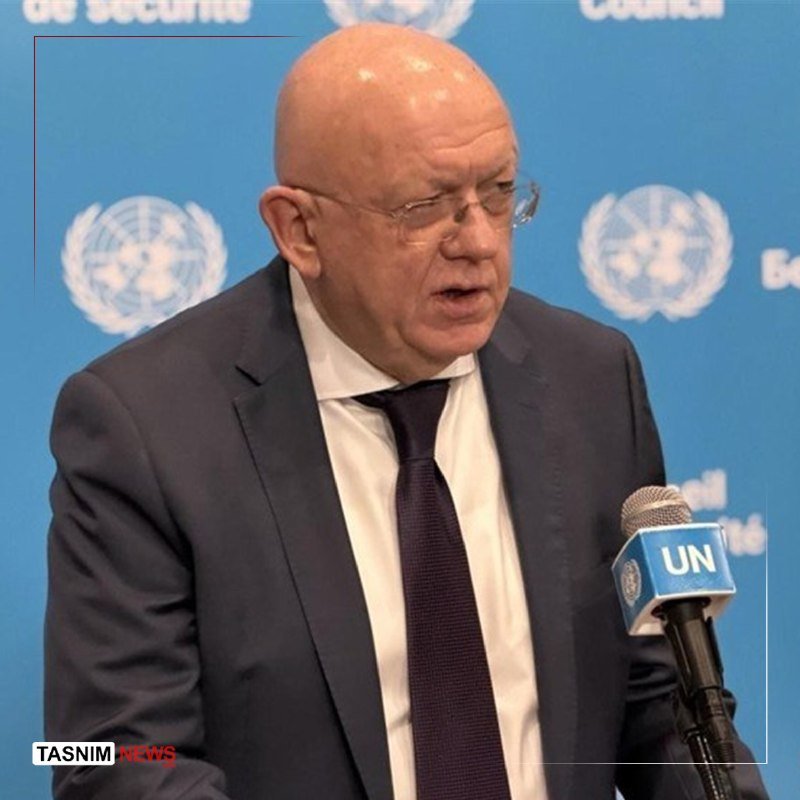
U.S. Secretary of Defense Pete Hegseth said on the evening of 10 June 2026 that U.S. Central Command "will be busy tonight," telegraphing an imminent American strike package against Iran and confirming in the bluntest terms yet that President Donald Trump has authorised a military operation targeting key Iranian facilities. The remarks, captured in real time by regional Telegram channels covering the Middle East beat, mark a sharp escalation of the war of words that has run through June and put a deadline — measured in hours, not weeks — on Tehran's diplomatic options.
The subtext of Hegseth's statement is the one that matters: the United States is signalling that the next move will be kinetic, but the precise size, sequencing and target set remain deliberately vague. The pattern is a familiar one in modern coercive diplomacy. Public statements are calibrated to leave a thin corridor for negotiation while making the cost of refusal visible enough to force a decision. Iran's leadership now has to weigh whether to test that corridor, or to treat the public framing as a bluff and absorb the consequences.
What Hegseth actually said
Three Telegram channels with large Middle East followings — Middle East Spectator, Clash Report and GeoP Watch — posted near-identical text of Hegseth's comments within minutes of each other on 10 June 2026, between roughly 20:42 and 20:47 UTC. The headline formulation, repeated across the feeds, was that "CENTCOM will be busy tonight, because President Trump said we will be hitting Iran hard, and we will be." A second formulation, posted to Clash Report and GeoP Watch at around 20:45 UTC, framed the choice in terms of timing: if the strikes come "tonight," they will be "clear and strong"; if they come "tomorrow night," they will be "strong and clear." In both readings, Hegseth left "throughout" an opportunity for Iran "to make a deal."
The phrasing is significant for what it concedes and what it withholds. Hegseth did not name specific target categories, did not give a target list, did not provide a start time, and did not disclose whether any operation would be unilateral or coordinated. The repeated word "strong" — used twice in the contingency formulation — does the rhetorical work of signalling resolve without committing to a particular effect. That is the kind of language designed to be read in Tehran and in Gulf capitals simultaneously, by actors who will draw different conclusions from the same sentence.
The diplomatic corridor is narrow, not closed
The most important qualifier in Hegseth's remarks, repeatedly emphasised across the Telegram posts, is the line that "throughout, Iran has an opportunity to make a deal." It is the clause that allows the White House to insist, in the event of strikes, that diplomacy was tried — and to insist, in the event of a deal, that the threat of force was what made it possible. From Iran's perspective, the same sentence functions as a deadline; from Washington's, as a fig leaf.
There is no public readout, in the source material available to Monexus on 10 June 2026, of any live channel between the U.S. and Iranian governments, nor any indication of which "deal" is on the table. The reporting frame, as the Telegram channels captured it, is built around a binary: strikes tonight, strikes tomorrow, or a last-minute diplomatic reversal. The mechanism that would deliver the third outcome is not described.
What the framing does, structurally
The pattern on display is not new. The U.S. has spent the better part of two decades using public statements, force-posture changes and timed leaks to compress the decision window of adversaries in the Middle East. The present episode compresses that window to hours. The structural effect is to push the burden of de-escalation onto Tehran: every hour that passes without a diplomatic move becomes, in the dominant U.S. framing, an Iranian choice to absorb strikes rather than negotiate.
Two things follow. First, the room for back-channel diplomacy in this kind of compressed window is real but limited. The Omani, Qatari and Swiss intermediaries who have carried messages in previous U.S.–Iran episodes work on longer cycles than a single evening. Second, the information environment itself becomes a tool. By the time Tehran has read, parsed and rebutted the U.S. message, the operational window may already have closed. Telegram channels with global distribution act as the loudspeaker.
What remains uncertain
The source material available to Monexus at the time of writing is a set of near-contemporaneous Telegram posts, all attributed to Hegseth and all aligned in substance. That alignment is itself a fact worth noting. It is consistent with a single set of remarks being relayed from a press conference or on-camera briefing, but it is not the same as a transcript, and it is not the same as a U.S. Department of Defense release. No wire-service confirmation, no White House readout and no Iranian official response appears in the material available at 20:47 UTC on 10 June 2026.
The specifics that would allow a reader to weigh the threat are therefore not in the public record yet. Which facilities, in which sectors, with what ordnance, on what legal authority, and with what expectation of Iranian retaliation — all of these remain to be verified from primary sources as the situation develops. Monexus will update this story as wire confirmation and official readouts become available.
How Monexus framed this: where the wire cycle on the evening of 10 June 2026 was still chasing confirmation of the strike package, we are publishing on the verified public statement by the U.S. Secretary of Defense, drawn from the regional Telegram channels that captured it in real time, and flagging the parts of the picture that the source material does not yet support.
Wire provenance
This editorial synthesis draws on the following public wire/social posts:
- https://t.me/Middle_East_Spectator
- https://t.me/ClashReport
- https://t.me/ClashReport
- https://t.me/GeoPWatch
- https://t.me/GeoPWatch
Follow the event.
These dated source records provide context. They do not retrospectively verify this archive article.
Separate what the nuclear watchdog reported from what it could not determine after the June 2025 strikes.