Trump's Strait of Hormuz claim unravels within hours as Energy Secretary calls it an error
Within hours of the president announcing a covert escort mission credited with moving 100 million barrels, his own Energy Secretary labelled the central claim an error — exposing how the story of US control over Hormuz is being told faster than it is being verified.
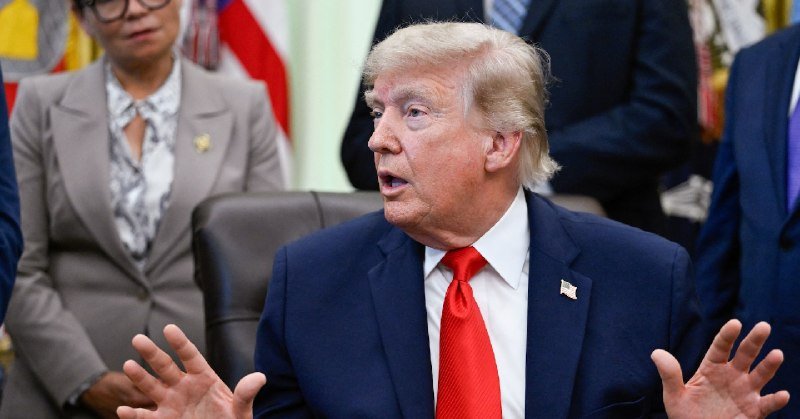
On 10 June 2026 at roughly 17:53 UTC, US President Donald Trump posted on Truth Social that a secret US military mission to escort oil tankers and commercial ships through the Strait of Hormuz had moved more than 100 million barrels of oil. By 18:29 UTC, fewer than ninety minutes later, his own Energy Secretary, Chris Wright, was on the record telling reporters the central premise of the announcement had been wrong. "That was an error," Wright said, per the wfwitness wire. The episode leaves the public record of an active Middle East security operation in an unusual state: a presidential boast of operational reach contradicted, within the same news cycle, by the cabinet secretary whose department owns the energy-security narrative.
The facts that survive scrutiny are narrower than the original claim. Trump asserted that he had ordered the operation the previous month and that US forces had effectively guaranteed passage through the chokepoint through which roughly a fifth of seaborne oil ordinarily moves. Wright's walk-back, also carried by wfwitness, indicates that the framing of what the navy did — and what it did not do — cannot be relied on as stated. What neither account disputes is that tanker traffic through Hormuz has been under strain; what remains contested is whether the United States has demonstrated control of the corridor, or only of the messaging around it.
What was actually claimed, and what was actually retracted
The original Trump statement framed a covert, month-old US military mission with three concrete claims: that he had personally ordered it, that it had escorts operating in the strait, and that the cumulative oil moved under that escort was in excess of 100 million barrels. Wright's retraction, as relayed by wfwitness, did not deny that escorts had occurred at all. It called "an error" the specific public assertion that the navy had escorted a tanker through the strait successfully. The careful reading is that the secretary separated the existence of an escort mission from the narrative scaffolding the president had erected around it — including the headline figure of 100 million barrels, which has not, as of 18:29 UTC on 10 June, been independently substantiated by any source item in the public record this article can cite.
Iranian state outlets moved fast on the contradiction. Fars News framed the episode as "Trump in a dream world," reporting on 18:06–18:07 UTC that the US president had claimed America controls the strait "not Iran." The framing matters because it positions the retraction not as a routine clarification but as evidence that the US is overstating its hand in a corridor Iran considers its own maritime sphere. Read alongside Wright's admission, the Iranian framing lands with more force than it would have done against the original announcement alone.
Why the messaging gap matters more than the operational gap
The energy market treats Hormuz as the most consequential pinch-point in global seaborne supply. A credible US escort mission would, on paper, compress the risk premium embedded in crude and freight pricing; an unconvincing one does the opposite. The structural problem with the 10 June episode is not that the US navy has no role in the strait — it plainly does — but that the public description of that role was generated first at the political level, then qualified at the cabinet level within the same hour. Markets, allies and adversaries all read the same two statements and draw different conclusions.
There is a second-order reading that the wfwitness and Fars items, taken together, support without either stating outright: when a commander-in-chief announces an operational result and a secretary walks it back within ninety minutes, the operational claim is now treated as political currency rather than military fact. That is uncomfortable for allies who may have been asked to coordinate convoy routing, and it is useful for Tehran, which can point to the gap as evidence that US pressure in the strait is rhetorical rather than material.
The Iranian counter-frame
Tehran's read on Hormuz has been consistent for years: that the strait is not, in legal or operational terms, an American lake. The Fars reporting on 10 June is the latest iteration of that line, but it lands differently against Wright's retraction than it would have against Trump's original boast. The Iranian counter-frame is now also the frame that aligns with what the US Energy Secretary has admitted on the record. That convergence — partial, contested, and almost certainly accidental on the American side — narrows the room in which Washington can claim the narrative high ground on the corridor.
The plausible alternative read is that the original announcement was sloppy but the underlying mission is real, and that the 100-million-barrel figure may yet be defended in a follow-up. The sources available to this article do not support that read. Until the figure is sourced, the cleaner conclusion is that the US government has not yet demonstrated, on the public record, what it claimed it had demonstrated.
Stakes over the next quarter
The corridor question will not wait for Washington to settle its own messaging. Brent and Dubai crude benchmarks react to Hormuz headlines in minutes; insurance underwriters reprice war-risk premia on Gulf tankers on a daily cycle; Iran's Islamic Revolutionary Guard Corps Navy has, in past episodes, seized commercial vessels in the same waters. If the US position is read as primarily declaratory, three things follow over the next quarter: insurers raise premia further, Iran tests the corridor with another seizure or boarding, and Gulf states — already hedging between Washington and Beijing — accelerate the diversification of export routes they have been quietly building for years. The reputational cost of a presidential claim retracted by a cabinet secretary is not, on its own, a strategic event. The reputational cost layered onto a contested corridor is.
How Monexus framed this vs the wire: this publication treats the 10 June episode as a messaging failure inside a strategic contest, not as a hoax and not as a routine clarification. The wfwitness items gave us the timing and the direct contradiction; the Fars items gave us the adversarial framing. Where the wire cycle is likely to lead with the spectacle of the retraction, Monexus reads it as evidence that the public description of US reach in Hormuz is running ahead of the verified record.
Wire provenance
This editorial synthesis draws on the following public wire/social posts:
- https://t.me/wfwitness
- https://t.me/wfwitness
- https://t.me/farsna
- https://t.me/FarsNewsInt