The Strait of Hormuz just shut. Now the world gets to see what an energy choke point really costs
Iran's military command closed the Strait of Hormuz to all shipping on 10 June 2026, the first full closure in the waterway's modern history. The market reaction, and the diplomatic one, will reshape the next decade of energy politics.
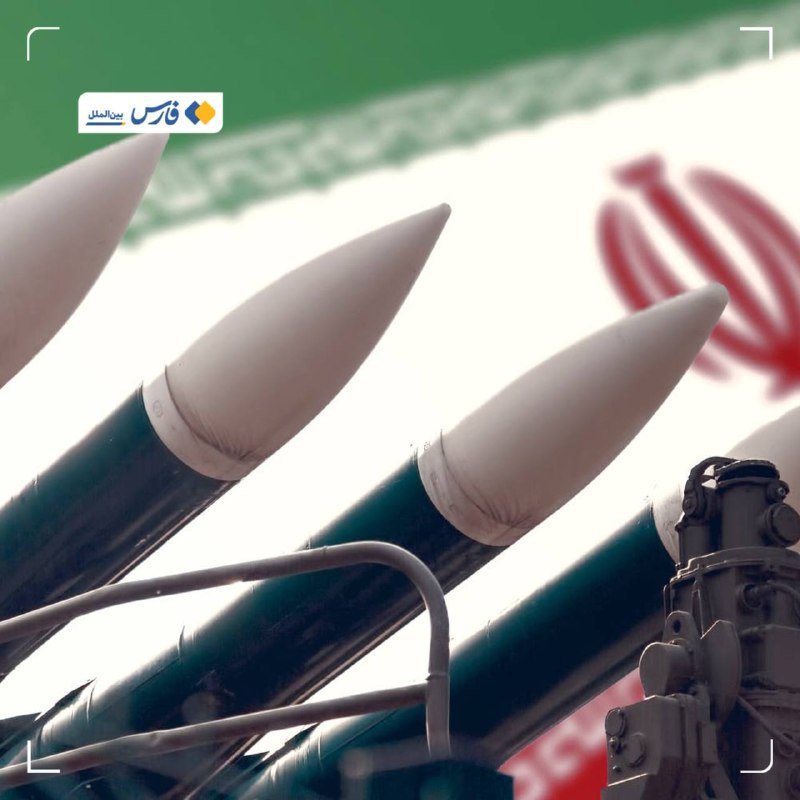
At 22:45 UTC on 10 June 2026, Iran's Khatam al-Anbiya Central Headquarters — the unified command of the Islamic Republic's armed forces — declared the Strait of Hormuz closed to all vessel traffic. The announcement, carried simultaneously by Iranian state media and conflict-monitoring channels, came hours after what the same statement described as American retaliatory airstrikes on Iranian targets. By 22:57 UTC, two ships had been destroyed attempting to transit the waterway, and a separate channel reported that Iranian forces were preparing large-scale naval mining of the approach lanes.
This is the first full closure of Hormuz in the modern oil era, and the world is about to discover what two decades of strategic complacency actually costs.
A chokepoint with no bypass
The Strait of Hormuz is the narrow throat between Iran and the Arabian peninsula through which roughly a fifth of all seaborne crude oil and a third of global LNG passes. There is no pipeline alternative of comparable scale. East-to-west bypasses — the UAE's Habshan-Fujairah line, Saudi Arabia's Petroline — together carry less than half of Gulf-export volumes on a good day, and a fraction of it on a disrupted one. The Saudi East-West pipeline, nominal capacity five million barrels per day, has never run at more than roughly half of that for sustained periods, and its eastern tap is, geographically, on the wrong side of the chokepoint it is meant to bypass.
For four decades, the assumption underwriting global energy security was simple: the United States Navy guarantees the free movement of commerce through the Gulf, and Iran accepts the implicit bargain because the alternative is war it cannot win. That bargain, if reports of Iran's actions on 10 June are accurate, has just been unilaterally voided. The signal is not that Iran intends to keep the Strait closed for months — that would be economic suicide for Tehran as well as the world. The signal is that Iran now believes it can close the Strait on its own terms, for its own duration, and extract a price for reopening it.
The American response — and the silence on the oil tape
The US Energy Secretary told reporters on 10 June that he was "not aware" of the United States taking Iranian oil off the market — a strange statement to make on a day when the Iranian navy has, on multiple competing accounts, just physically shut the most important oil transit lane on Earth. The phrase reads as a financial-stability signal, not a strategic one: officials in Washington are trying to prevent a run on futures markets by drawing a careful line between the oil that is still being produced and the oil that is no longer moving.
That line will not hold for long. Within hours of the closure announcement, oil-tanker tracking aggregators and shipping insurers will reprice every voyage through the Gulf. War-risk premiums — already elevated — will spike. Several major carriers will simply decline to enter the waterway, not because of politics, but because no insurer will underwrite the hull. The price effect, when it comes, will not look like a typical geopolitical bump. It will look like a structural repricing of the cost of moving Middle Eastern energy at all.
What the framing misses
Western commentary is already settling into a familiar groove: Iran as irrational actor, escalation as unprovoked, the Strait as something the US Navy can simply reopen. Each of those frames is wrong in a specific and instructive way.
Iran is not irrational. The closure is a response to strikes on its territory, and it is using the only asymmetric lever available to a regional power facing the world's largest navy. The framing that treats this as unprovoked erases the action that preceded it — the US strike that Iran is retaliating against. And the assumption that the US Navy can simply clear the Strait ignores the basic military problem: a few dozen mines, a few hundred small craft, and a few anti-ship missiles launched from coastal concealment can hold a twenty-mile-wide chokepoint for days before any carrier strike group can suppress them. Days, in oil markets, is a generation.
There is also a deeper structural read. The closure exposes the cost of an energy architecture that has spent forty years concentrating global refining and transit dependency on a handful of nodes in the Gulf, while running down spare capacity, strategic reserves, and alternative-route investment. The petrodollar system, the security umbrella, the assumption that freedom of navigation is a free good — these were always political arrangements dressed up as geography. Geography, on 10 June 2026, has begun to push back.
The stakes — and the next forty-eight hours
If the closure lasts a week, strategic petroleum reserves will be drawn down across the OECD, fuel prices will reach levels that change electoral outcomes, and a frantic diplomatic track will open between Tehran, Riyadh, Beijing, and Moscow. China — the single largest buyer of Gulf crude — has the most leverage to mediate, and the strongest interest in seeing the waterway reopened on terms that do not deepen US influence over the route. A deal brokered by Beijing, even a temporary one, would be a quiet but unmistakable marker of where the diplomatic centre of gravity in the Gulf has moved.
If the closure lasts longer, the question stops being about oil prices and starts being about which governments survive the autumn. Europe, with thin storage and an LNG market that was already stretched, is the most exposed large economy. The United States, as a net exporter, is partly insulated on the production side but fully exposed on the price side — and on the question of whether its navy can do what its presidents have, for decades, promised it could.
The honest summary: the world is not running out of oil today. It is running out of the assumption that the oil will always flow. That assumption was a political artefact. The Strait of Hormuz, on the evening of 10 June 2026, is reminding everyone what artefacts look like when they break.
— Monexus framed this as a structural test of the post-1970s Gulf security architecture, not as a market story. The wire outlets lead with oil futures; we lead with the chokepoint.
Wire provenance
This editorial synthesis draws on the following public wire/social posts:
- https://t.me/ClashReport
- https://t.me/DDGeopolitics
- https://t.me/Middle_East_Spectator
- https://t.me/Middle_East_Spectator
- https://t.me/insiderpaper
- https://t.me/AMK_Mapping
- https://t.me/wfwitness
- https://t.me/bricsnews