Hormuz in the crosshairs: how a 'secret mission' boast pulled the US-Iran war rhetoric back to the brink
Hours after the US President claimed a covert operation funnelled 100 million barrels of oil through the Strait of Hormuz, Tehran promised a 'more crushing' reply and a new round of strikes was threatened. The escalation, and the clerical reaction from the Vatican, have pushed the war of words into unfamiliar territory.
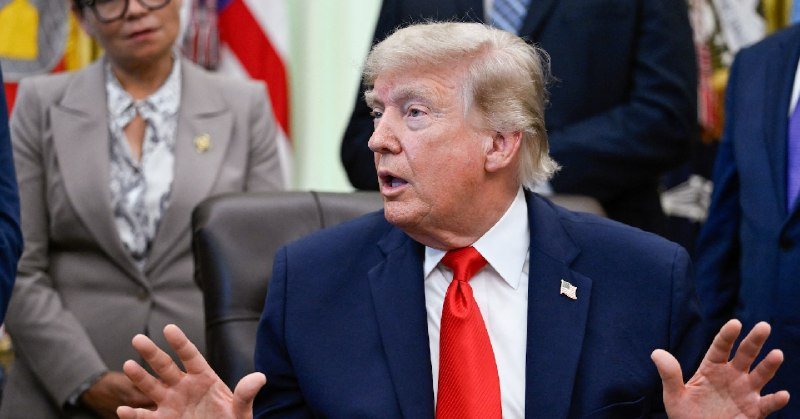
The numbers, if true, are staggering. On 10 June 2026, US President Donald Trump asserted that a secret US military mission had escorted more than 100 million barrels of oil and over 200 commercial ships through the Strait of Hormuz, framing the operation as evidence of American control over the world's most consequential energy chokepoint (The Cradle, 10 June 2026, 19:50 UTC). Within hours, Iran's armed forces spokesman had pledged a "harsher, stronger and more crushing" response to any US threat, and President Masoud Pezeshkian declared that the Islamic Republic "will never bow to threats, pressure, or military aggression" (PressTV, 10 June 2026, 20:19 UTC and 19:10 UTC). What began as a boast about a successful escort mission has hardened into a direct exchange of ultimatum language — and, by late evening UTC, a US president publicly promising new strikes "today" (Middle East Eye, 10 June 2026, 19:35 UTC).
The pattern is familiar, but the volume is not. Washington claims it has the Strait under its thumb; Tehran insists any price will be paid back at compound interest. Both claims are political acts as much as military ones, and the gap between them is where the next 72 hours will be written.
A boast that walks back the diplomacy
Trump's claim, as carried by The Cradle, is notable less for its content than for its timing. A "secret military mission" that allegedly shepherded 100 million barrels of oil and 200-plus commercial vessels through a 21-mile-wide strait is, on its face, an operational disclosure — the kind of statement that, if accurate, would compromise ongoing force posture and, if inflated, would be a domestic-audience flourish aimed at audiences far from the Persian Gulf. The Middle East Eye report hours later had the US President openly threatening fresh attacks and accusing Iran of "playing us for suckers" on a deal to end the war (Middle East Eye, 10 June 2026, 19:35 UTC). Read together, the two messages point in opposite directions: mission accomplished on one hand, betrayal-narrative on the other.
This is the structural problem with the present US posture. Any deal struck with Tehran in 2026 has to survive a Washington commentary culture that treats diplomatic progress as evidence of being out-negotiated. The Cradle's reporting of the Hormuz claim, and Middle East Eye's reporting of the strike threat, are not contradictory — they are two registers of the same American position, one pitched to a domestic base and one pitched at the Iranian negotiating table. Iran, for its part, has chosen to read only the second register.
The Iranian reply, in the regime's own voice
PressTV's two wire items on 10 June 2026 give the cleanest available picture of how the Iranian state is framing the moment. The armed forces spokesman's promise of a "more crushing" response is the operational pitch — the language a military uses when it wants reserve forces, missile brigades and proxy commanders in the Levant and the Gulf to understand that the chain of command has authorised escalation. President Pezeshkian's separate statement, that Iran "will never surrender to threats, pressure," is the political pitch — the language a head of state uses when a domestic audience needs to hear that no humiliation is being absorbed in secret talks (PressTV, 10 June 2026, 20:19 UTC and 19:10 UTC).
Treating these as a single voice flattens the picture. The two statements are doing different jobs. The spokesman is signalling to the IRGC's professional cadre and to regional allies that passivity is off the table. The president is signalling to a battered Iranian public that the dignity of the state is not for sale. Both signals reinforce each other, but they are calibrated to different listeners, and any Western reading that collapses them into "Iran is posturing" misses the architecture.
The Vatican's intervention — and what it does not change
The day's most unexpected wire was the brief from Al Alam Arabic reporting that Pope Leo XIV had stated that "Christians cannot promote war and kill innocent people," in a framing widely read as a veiled reference to the Trump administration's posture toward Iran (Al Alam Arabic, 10 June 2026, 20:13 UTC). It is rare for a papal statement, even one issued through an Arabic-language outlet aligned with the Axis of Resistance, to land on the same news day as an active threat-of-strike cycle. Its effect is symbolic rather than operational — there is no Vatican lever on either the US Fifth Fleet or the IRGC Navy — but it does widen the coalition of voices publicly uneasy with the trajectory. Christian communities in the region, already exposed after months of war rhetoric, now have explicit religious-language cover to oppose further escalation.
What the Pope's intervention does not change is the underlying balance of incentives. The Strait of Hormuz is not a moral question; it is an oil-flow and shipping-insurance question. Roughly a fifth of globally traded crude transits the chokepoint on a normal day. The Cradle's 100-million-barrel figure, even if one accepts it as a cumulative rather than daily number, is the kind of number that moves war-risk premia in London and tanker-booking behaviour in Fujairah within hours. The clerical comment from Rome may shape how escalation is reported in European opinion pages; it will not shape how tanker captains price the next convoy.
What the framing gets wrong on both sides
The dominant Western framing — that Iran is the destabilising actor and the US is restoring deterrence — has the sequencing inverted. The US naval presence in the Gulf predates the current crisis by decades. The Trump Hormuz boast is a public affirmation of a posture that has been operational since at least the Reagan-era reflagging of 1987. The dominant Iranian framing — that Tehran is the besieged party defending its sovereignty against an outlaw empire — has a parallel blind spot: the IRGC's own disruption options in the Strait, including the mining and fast-boat playbook that has been exercised openly for years, are real military instruments, not rhetorical props.
The honest read is that two states with incompatible threat assessments are operating in the same 21-mile waterway, each convinced the other is bluffing. The Cradle's disclosure, the Middle East Eye strike threat and the PressTV statements together describe a bargaining environment in which both sides are signalling maximum resolve to a domestic audience at the exact moment they are trying to extract concessions across the table. Bargaining environments of this kind are how wars start, and how they end, by accident.
Stakes, and what to watch before 13 June 2026
If a strike materialises, oil markets will price a sustained closure risk within hours, and the political space for the deal Trump claimed Iran was sabotaging will close for the medium term. If a strike does not materialise — if the threat is the usual late-cycle bluster that has preceded other failed deadlines in 2025 and 2026 — the public boast about the Hormuz mission becomes a useful benchmark for measuring how the administration chooses to walk back its own escalation. The Vatican comment is a marker that the rhetorical ceiling for the war is no longer purely a question for the Gulf and Washington. Tehran's twin-track signalling, military and presidential, suggests a regime that has decided surrender-language is electorally more expensive than escalation-language, at least for now. The window for a face-saving formula, if one exists, is narrow and probably measured in days, not weeks.
This article was framed by Monexus around the contradiction between the US claim of mission success in the Strait of Hormuz and the simultaneous threat of fresh strikes on Iran — a tension the wire cycle reported on 10 June 2026 but did not, in most outlets, name as a single story. Monexus's contribution is to treat the boast and the threat as two registers of one US position, and to give the Iranian military and presidential voices equal structural weight rather than collapsing them into a single "Iran posturing" line.
Wire provenance
This editorial synthesis draws on the following public wire/social posts:
- https://t.me/thecradlemedia
- https://t.me/presstv
- https://t.me/presstv
- https://t.me/alalamarabic
Follow the event.
These dated source records provide context. They do not retrospectively verify this archive article.
Separate what the nuclear watchdog reported from what it could not determine after the June 2025 strikes.