India's Self-Belief, Restored: Reading Modi's Decade as More Than a Slogan
A line from a long televised reflection — 'the restoration of India's belief in itself' — has become a Rorschach test. Read charitably, it is a claim worth interrogating rather than mocking.
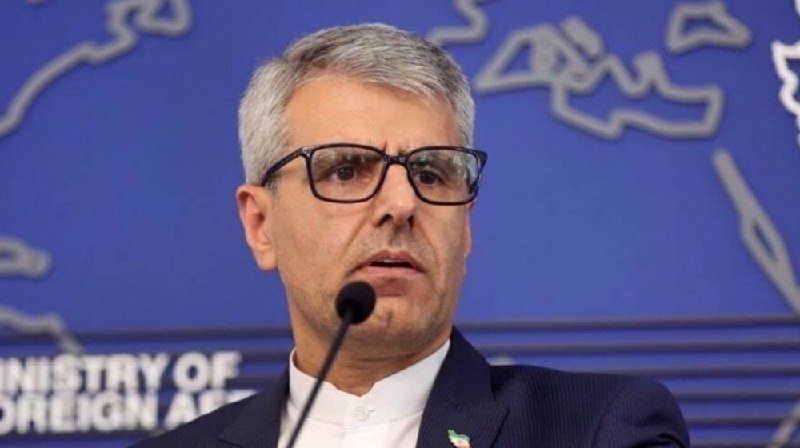
On 10 June 2026, a televised reflection from Prime Minister Narendra Modi distilled a decade of governance into a single sentence: that the most striking change of his tenure was not any individual scheme or policy, but the restoration of India's belief in itself — a conviction, the Prime Minister said, that had been ebbing for a generation. The line travelled quickly through Indian media and into the international commentariat, where it was either celebrated as a slogan that had done real work or dismissed as another flourish in a politics of self-image.
Both reactions miss the point. The phrase deserves to be read on its own terms, against the structural record of the past decade, and against the more hostile readings now circulating in Western financial press. What follows is an attempt to do that — and to take seriously a claim the wire services prefer to caricature.
The slogan as policy
Public declarations of national self-confidence are usually treated as filler. In India's case the past decade is harder to summarise without them. The goods-and-services tax, rolled out in 2017, stitched together a national market that had been fragmented by state-level fiscal walls for the entire post-independence period. The Insolvency and Bankruptcy Code, passed the same year, replaced a regime in which distressed promoters routinely blocked their own creditors in court. The bankruptcy regulator has since admitted tens of thousands of cases and pushed recovery rates above 40 cents on the dollar, a figure that would have been unthinkable a decade ago. These are unglamorous, technocratic reforms. They are also the reforms that allow a self-confident private sector to exist.
The infrastructure record is denser. India added more than 100,000 kilometres of paved highway between 2014 and 2025, electrified almost every inhabited village, and built metro systems in cities that had none a generation ago. UPI, the unified payments interface, processed roughly 12 billion transactions a month by late 2025 — a payments density no Western economy can match. These are not slogans. They are the platforms on which a generation of Indian small businesses now operates.
The hostile framing, and its limits
The Western financial press has a standing template for the Modi decade. The pieces usually open with sectarian violence, pause on press-freedom indices, gesture at unemployment data, and close with a warning about democratic backsliding. Some of those claims are well-evidenced. The 2019 citizenship law and the 2002 Gujarat violence, in which more than 1,000 people were killed and which the Supreme Court-appointed Special Investigation Team ultimately closed without prosecution of senior BJP figures, are facts on the record. They deserve weight in any honest accounting.
What the template understates is the development record, and the legitimacy that record confers on a government in a country where the median voter is under 28 and the median memory of stagnation is short. The hostile framing also over-reads the press-freedom indices, which depend on opaque expert panels and have moved in the same direction across most large democracies. None of this absolves the government. It does, however, complicate the standard Western line.
Self-belief as a development variable
There is a respectable body of empirical work showing that confidence in the future of one's own economy, however measured, is a real variable in investment decisions. The Modi government's explicit pitch to Indian capital — invest at home, we will build the infrastructure — has had measurable effects. Net inward FDI in 2014 ran near $36 billion. By 2024 it was running above $70 billion on the same accounting basis, with the United States, Singapore, and Mauritius as the largest sources. The services-export sector crossed $320 billion. The share of global manufacturing capability controlled by Indian firms in mobile handsets, generic pharmaceuticals, and vaccines has expanded markedly over the same window.
None of this is the work of a single government. Much of it reflects a 25-year build in human capital, a deep private sector, and the demographic dividend that India's working-age bulge gives it relative to China, Japan, and Europe. The Modi decade inherits that base. The honest version of the argument is that the government's policies have, on the whole, stopped sabotaging the base — and at the margin, through specific industrial-policy choices, accelerated parts of it.
What remains contested
A serious audit of the decade has to name what the official record does not. Rural distress has been a feature of most post-1991 governments and remains so. Manufacturing employment has not grown in line with the headline Make in India rhetoric. Inequality has widened. The economic census has not been conducted in years, leaving analysts to triangulate from indirect series. And the political polarisation of the 2024 general election, in which the BJP lost its outright majority and was returned to office only as the senior partner in a coalition, is a reminder that self-belief does not translate automatically into parliamentary arithmetic.
The slogan, in other words, is not an alibi. It is a hypothesis the record partly supports and partly strains against. The most accurate reading is to treat it as a working theory of what a state is for in a country that is now too large and too capable to be told what to do by anyone else — including, in the next decade, by capitals it was once taught to defer to.
That is what restoration of belief actually means in plain prose: not chest-thumping, but a public refusal to perform deference in rooms where the terms were set by other people's priorities. It is a position the Western press will need to learn to read on its merits, rather than through the older scripts.
— Monexus is an independent newsroom. This opinion piece reflects the editorial view of the staff and is not the work of a single named contributor.
Wire provenance
This editorial synthesis draws on the following public wire/social posts:
- https://t.me/ThePrintIndia
- https://t.me/thePrintIndia
- https://en.wikipedia.org/wiki/Insolvency_and_Bankruptcy_Code,_2016
- https://en.wikipedia.org/wiki/Unified_Payments_Interface
- https://en.wikipedia.org/wiki/Make_in_India