Iran's Medical Fraternity Tells the State What It Wants to Hear: Build It Here
A Tehran forum of physicians told President Pezeshkian what the Islamic Republic's own media has been arguing for years: that neutralising US pressure runs through laboratories, not negotiating rooms.
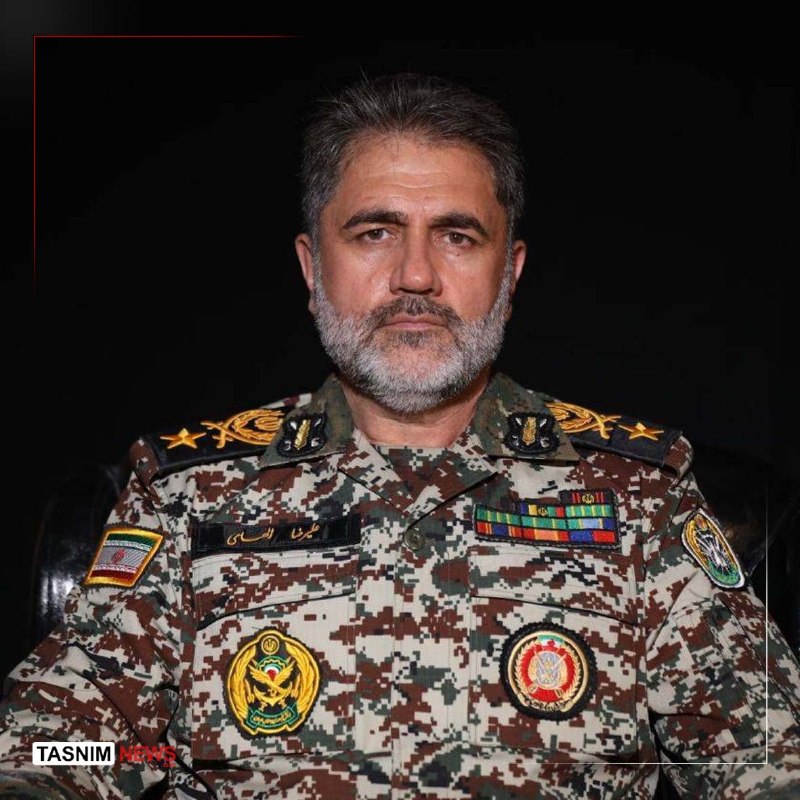
On the morning of 10 June 2026, a roomful of Iranian doctors handed President Masoud Pezeshkian a piece of unsolicited strategic advice. Their diagnosis, delivered in the form of a forum and reported by the state-affiliated Tasnim News Agency, was that the path to neutralising US sanctions runs through laboratories, not negotiating rooms. The remedy: send the country's academics into the field as specialised, interdisciplinary teams, and rebuild the medicine supply chain at home. The subtext, never quite stated in the press release, is that the doctors believe the country's leadership has been over-investing in diplomacy and under-investing in production.
It is worth taking the prescription seriously, and it is also worth noting who wrote it. A gathering of medical professionals urging the president to lean on domestic scientific capacity, and a state news agency publishing the remarks at midday, is the kind of policy alignment that tells the reader less about the doctors and more about the room they are speaking into. The Iranian state has, for the better part of a decade, used the language of "neutralising sanctions" to describe a domestic substitution programme that ranges from pharmaceuticals and medical devices to automotive parts and petrochemical catalysts. The forum reads, in effect, as a reinforcement message from a credentialled constituency to a political leadership that has been sending mixed signals about whether sanctions relief or sanctions resilience is the strategy of first resort.
The medical front of the substitution economy
The forum's substance, insofar as Tasnim's English wire carries it, is the familiar argument that sanctions force a country to do with domestic hands what it would previously have imported. Iran has been here before. The 2012–2015 sanctions episode produced a wave of domestic production in pharmaceuticals, filtration membranes, and industrial enzymes; many of those products turned out to be lower-quality and higher-cost than the imports they replaced, and a number of patients and factory managers will tell you so. What the doctors' forum is asking for, in the language of "interdisciplinary teams," is the higher-end version of that substitution: not just bottling imported active ingredients under an Iranian label, but actually designing the molecules, the devices, and the clinical-trial protocols inside the country. That is a much harder, and more expensive, proposition than the one Iran executed a decade ago.
The honest reading of the doctors' advice is that the easy gains from sanctions-era import substitution are now exhausted, and the hard ones require a state-led research apparatus that the Islamic Republic has been trying to build, with mixed results, since the early 1990s. A pharmaceuticals sector that can substitute for European APIs is one thing. A biotech ecosystem that can produce monoclonal antibodies, advanced imaging components, and the kind of single-use bioreactors that a modern vaccine plant demands, is another.
What the counter-narrative would sound like
It is worth pausing on what a sceptic would say. The standard Western line, which has been carried in pieces by Reuters, Bloomberg, and the Financial Times over the years, is that Iran's domestic-substitution story is partly real and partly theatrical: real in steel, petrochemicals, and some consumer goods; theatrical in advanced medical devices and high-end electronics, where the country remains heavily import-dependent through front companies in Turkey, the UAE, and China. A reader of the Tasnim wire who never sees the Western financial press might come away believing that Iranian laboratories are on the verge of producing the country's entire medical-device stack. They are not. The gap between what the forum describes as a strategic horizon and what the trade data actually shows is the space in which most of the undecided diplomatic questions about Iran now sit.
The structural point is that the doctors are not, in fact, telling the president something he does not already know. They are telling him, in a public forum covered by the state press, that the medical establishment endorses a particular direction of travel. That is the function of these gatherings in the Islamic Republic: a constituency puts its weight behind a policy line, and the policy line is reinforced. Whether the line becomes an actual budget priority is a separate question that the doctors themselves do not control.
The bigger pattern
Iran's argument that it can build at home what it cannot buy abroad is part of a wider pattern in the sanctioned, or near-sanctioned, world. Russia, in the fourth year of its full-scale invasion of Ukraine and the corresponding Western export controls, has leaned heavily on parallel-import schemes and on the rapid expansion of domestic microelectronics and aerospace parts. North Korea has, for decades, made a virtue of import-substitution necessity. Venezuela's oil-services sector has, since the mid-2010s, been an object lesson in what happens when the substitution runs out of road. The common thread is that the political language of self-sufficiency is easy to deliver from a podium and hard to execute in a clean room. The countries that have done it well — South Korea in the 1970s and 1980s, China from the 1990s onward — did so with sustained capital investment, a deep tertiary-education pipeline, and a political system that could absorb a decade of patient capital without demanding short-term electoral returns. The Iranian state has the first of these in patches, the second in parts, and the third not at all.
What remains uncertain
The Tasnim wire is short on specifics. It does not name which academies, which hospitals, or which industrial partners the forum is asking the president to mobilise. It does not say whether the "interdisciplinary teams" the doctors have in mind would operate inside the universities, inside the armed forces' research apparatus, or inside the constellation of bonyads and state-owned enterprises that already dominate Iran's larger economy. The wire also does not say what the doctors told the president about the cost of all this, or how it would be financed, or what they would cut to make room for it. The thread the forum is tugging on is real — the medical establishment is genuinely under pressure from sanctions-era supply gaps, and Iran's pharmaceutical and medical-device sector is a strategic vulnerability the state has been trying to close for at least a decade. But the forum, as reported, is a political signal more than a policy document. The policy document, when it comes, will come from the presidency's economic team, the Plan and Budget Organisation, and the handful of ministers who actually sign off on the spending.
A reader should treat the doctors' advice as an indicator of where Iran's medical-political class wants the country to go, and as a reminder that the Iranian state's preferred answer to sanctions is to build through them, not to negotiate them away. Whether that preference survives the next round of diplomacy, and whether the budget reflects it, is a question for the next forum.
This article was researched and written using wire inputs from Iranian state media. Where the wire carries claims that are not independently corroborated — for example, the scale of any specific domestic-capacity programme the doctors referenced — the article flags the gap rather than fills it.
Wire provenance
This editorial synthesis draws on the following public wire/social posts:
- https://t.me/tasnimnews_en