Tehran's hard-line chorus finds its audience at the IAEA — and the clock is the real story
As the US, UK, France and Germany push a new resolution at the IAEA, Tehran is signalling defiance on two tracks — diplomatic and rhetorical — that point in opposite directions.
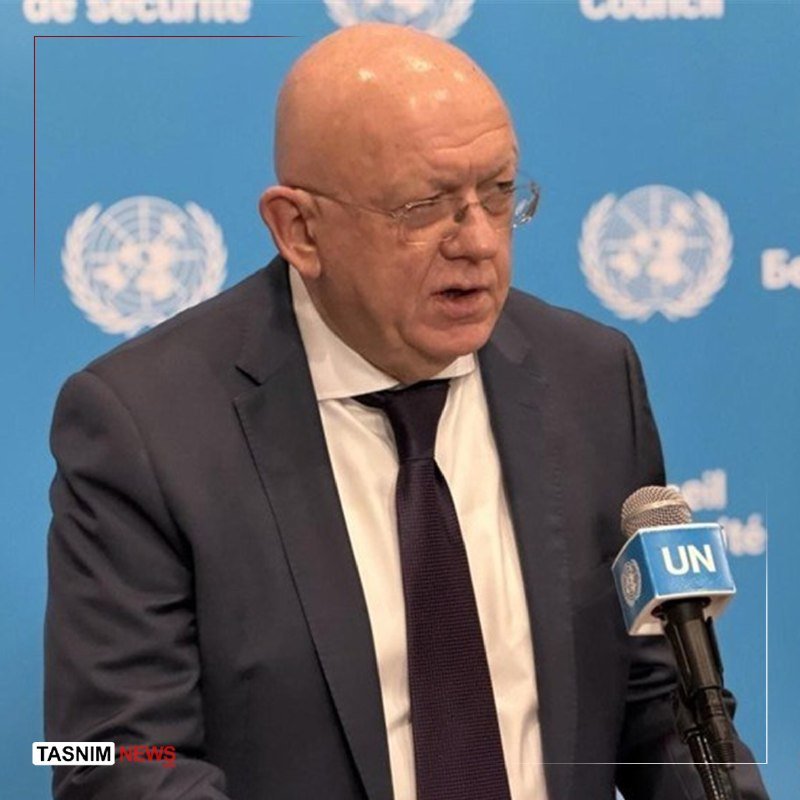
On the afternoon of 10 June 2026, the familiar choreography of a Western-Iranian standoff played out in two rooms. In Vienna, Iran's representative to the International Atomic Energy Agency publicly dismissed a draft resolution from the United States and three European countries as "non-technical and aggressive," according to a post on X by the news account Sprinter Press at 19:48 UTC. Hours earlier, Iranian state-aligned channels had already begun amplifying a parallel message at home: that Tehran's posture would be carried by the Iranian people themselves, not negotiated away in a boardroom. Two tracks, one direction: away from compromise.
The board-level vote has not, at the time of writing, been called. The draft text's substance — the technical grounds cited, the reporting obligations imposed, the consequences threatened — has not been published in the wire items available to Monexus. What is clear is that the diplomatic temperature has risen sharply in a single news cycle, and that the framing war has already been joined.
A resolution that begins as language, not physics
The first thing to read off the Iranian response is what its author chose to attack. The Iranian representative did not contest any specific finding of non-compliance, any cited figure on enriched uranium stocks, or any technical clause. He attacked the character of the text — calling it "non-technical and aggressive." That is a diplomatic argument about legitimacy, not physics. It is the language an aggrieved party uses when it believes the process has been politicised and the technical track has been captured by a political one. Whether that reading is correct, the framing itself is a signal: Tehran intends to treat the resolution as an act of Western coalition behaviour, not as a routine safeguards dispute.
The second thing to read is the coalition. The "three European countries" in the cited remarks are, by long diplomatic convention, the E3 — the United Kingdom, France and Germany. Their co-sponsorship of a US-drafted text is the closest the Western camp can come to speaking with one voice on the Iranian file. The E3's participation does double work: it shields the United States from the charge of unilateralism, and it raises the political cost for any third-country board member who might otherwise abstain. Tehran's complaint, in this light, is not just about a draft. It is about the diplomatic geometry around it.
The home-front chorus
Almost simultaneously, two separate Iranian state-adjacent voices were being amplified through official and semi-official channels. The first, posted on the Al-Alam Arabic channel at 19:52 UTC, cited the Iranian government spokeswoman declaring that Iran would "remain steadfast" by relying on the capabilities of the Iranian people. The second, posted to the same channel at 19:25 UTC, attributed to a figure identified as "Rezaei" the more striking formulation that "in the next war, the area of Iranian territory may increase."
The juxtaposition is deliberate. One message is calibrated for a Western wire reader — measured, public-spirited, the language of national resilience. The other is calibrated for an Iranian domestic audience, and for an Arab-language regional audience consuming Al-Alam, that signals something closer to threat and territorial ambition. Both messages were placed within a single news cycle of a Western draft resolution. Read together, they suggest a regime that wants the diplomatic table and the rhetorical table occupied at the same time, by different speakers.
What the structural frame is actually about
Strip away the rhetoric and the underlying contest is older than this draft resolution. The IAEA board does not, in any single meeting, decide whether Iran will weaponise. It decides what the next reporting cycle looks like, what access inspectors will have, and which states will be tagged as in violation. Each of those decisions feeds the next round of sanctions architecture, and the next round of sanctions architecture feeds Iran's calculation about whether compliance is worth the cost. The board, in other words, is not the destination. It is the gearing.
The pattern of the past several years has been a slow ratcheting: a finding, a resolution, a sanctions snapback, a retaliatory enrichment step, a partial rollback, a new finding. What is different in this cycle is the rhetoric-to-action ratio. The Iranian signal on 10 June 2026 is unusually forward-leaning — the explicit invocation of territorial expansion is not the language of a state preparing to make concessions at the board table. The Western signal is also forward-leaning: a US-E3 co-sponsored text is harder to walk back than a unilateral US demarche, because the E3's domestic politics will not allow it.
What remains uncertain
The single most important unknown, which the available source items do not resolve, is whether the resolution will pass on this board cycle, fail, or be deferred. The text is described as a draft; the sources do not specify the board calendar, the number of co-sponsors beyond the four named, or which non-aligned states have signalled support. They also do not specify the technical findings that the resolution is built on — only the Iranian characterisation of the text's character. Any reader treating today's wire items as a full picture is overreading them.
A second uncertainty is who "Rezaei" is, in the Al-Alam item. The name is common in Iranian politics and military commentary; the available source does not give a full first name, institutional affiliation, or title. The line attributed to him is strong enough that the speaker's identity matters for how it lands with regional audiences, and the source does not give us that.
The stakes, plainly stated
If the resolution passes and Tehran treats it as the Iranian representative described — as a political act rather than a technical one — the next reporting cycle at the IAEA becomes the venue for escalation, not for clarification. Inspections narrow, access tightens, and the E3's ability to claim the technical high ground becomes harder to defend the longer a non-compliant picture persists. If the resolution is deferred, or watered down to secure a majority, the Western coalition's credibility takes a quieter but real hit, and Tehran's calculation shifts back toward holding the line at the current enrichment posture rather than conceding it. The diplomatic geometry around 10 June 2026 is, in either case, the input to a longer equation than the board vote alone can solve.
Desk note: Monexus has framed the wire inputs as two parallel Iranian tracks — diplomatic and rhetorical — rather than treating them as a single Iranian position. The most cautious reading of the available items is that the Iranian government is signalling defiance while preserving the option of further talks, not that it has chosen one or the other.
Wire provenance
This editorial synthesis draws on the following public wire/social posts:
- https://t.me/s/alalamarabic
- https://x.com/sprinterpress/status/
- https://t.me/s/alalamarabic
Follow the event.
These dated source records provide context. They do not retrospectively verify this archive article.
Separate what the nuclear watchdog reported from what it could not determine after the June 2025 strikes.