Live Wire
16:40ZDAILYNATIOWilliam Ruto: We have tested over 100,000 visitors so far, and no single case of Ebola has been recorded.16:39ZWFWITNESSAdditional footage from TehranAdditional footage from Tehran16:39ZALLAFRICAAfrica Sends Record 10 Teams Into World Cup As 2026 Tournament Begins‍[CAF] Africa will make history at the 2…16:38ZBBCWORLDOFIsraeli strikes in southern Lebanon kill 17, reports sayNine of them were killed in a series of attacks in th…16:38ZBBCWORLDOFNorway crown princess's son to stay in custody before rape verdict, says courtThr ruling overturns a lower co…16:38ZBBCWORLDOFFirst charges laid over deadly Hong Kong fireThe Wang Fuk Court blaze last year was the deadliest that Hong K…16:38ZTHECRADLEMIAEA passes resolution demanding Iran disclose uranium enrichment sites16:38ZTHECANARYU10 June 2026📰 Global: Washington justifies the exclusion of Somali referee and Iranian officials ahead of th…16:40ZDAILYNATIOWilliam Ruto: We have tested over 100,000 visitors so far, and no single case of Ebola has been recorded.16:39ZWFWITNESSAdditional footage from TehranAdditional footage from Tehran16:39ZALLAFRICAAfrica Sends Record 10 Teams Into World Cup As 2026 Tournament Begins‍[CAF] Africa will make history at the 2…16:38ZBBCWORLDOFIsraeli strikes in southern Lebanon kill 17, reports sayNine of them were killed in a series of attacks in th…16:38ZBBCWORLDOFNorway crown princess's son to stay in custody before rape verdict, says courtThr ruling overturns a lower co…16:38ZBBCWORLDOFFirst charges laid over deadly Hong Kong fireThe Wang Fuk Court blaze last year was the deadliest that Hong K…16:38ZTHECRADLEMIAEA passes resolution demanding Iran disclose uranium enrichment sites16:38ZTHECANARYU10 June 2026📰 Global: Washington justifies the exclusion of Somali referee and Iranian officials ahead of th…
Markets
S&P 500731.58 0.74%Nasdaq25,385 1.14%Nasdaq 10028,746 1.16%Dow504.07 1.05%Nikkei89.86 1.20%China 5034.94 0.72%DAX41.5 1.30%BTC$62,284 2.29%ETH$1,649 1.77%BNB$594.46 1.48%XRP$1.12 0.62%SOL$64.94 1.59%TRX$0.3229 0.43%DOGE$0.0845 1.05%HYPE$56.08 5.13%LEO$9.45 0.31%RAIN$0.0133 5.60%QQQ$700.43 1.05%VOO$672.35 0.79%VTI$361.11 0.71%IWM$285.03 0.00%ARKK$74.41 0.79%HYG$79.52 0.13%Gold$378.73 3.08%Silver$58.77 0.41%WTI Crude$135.37 3.10%Brent$51.79 2.64%Nat Gas$11.62 2.02%Copper$38.24 0.95%EUR/USD1.1539 0.00%GBP/USD1.3382 0.00%USD/JPY160.49 0.00%USD/CNY6.7807 0.00%S&P 500731.58 0.74%Nasdaq25,385 1.14%Nasdaq 10028,746 1.16%Dow504.07 1.05%Nikkei89.86 1.20%China 5034.94 0.72%DAX41.5 1.30%BTC$62,284 2.29%ETH$1,649 1.77%BNB$594.46 1.48%XRP$1.12 0.62%SOL$64.94 1.59%TRX$0.3229 0.43%DOGE$0.0845 1.05%HYPE$56.08 5.13%LEO$9.45 0.31%RAIN$0.0133 5.60%QQQ$700.43 1.05%VOO$672.35 0.79%VTI$361.11 0.71%IWM$285.03 0.00%ARKK$74.41 0.79%HYG$79.52 0.13%Gold$378.73 3.08%Silver$58.77 0.41%WTI Crude$135.37 3.10%Brent$51.79 2.64%Nat Gas$11.62 2.02%Copper$38.24 0.95%EUR/USD1.1539 0.00%GBP/USD1.3382 0.00%USD/JPY160.49 0.00%USD/CNY6.7807 0.00%
OPENNYSEcloses in 3h 18m
themonexus.
Vol. I · No. 161
Wednesday, 10 June 2026
16:41 UTC
  • UTC16:41
  • EDT12:41
  • GMT17:41
  • CET18:41
  • JST01:41
  • HKT00:41
← back to Saturday edition◉ LIVE ON THE WIREfollow this thread in real time
Opinion

Iran's strike on US bases in Jordan is loud — the message is louder

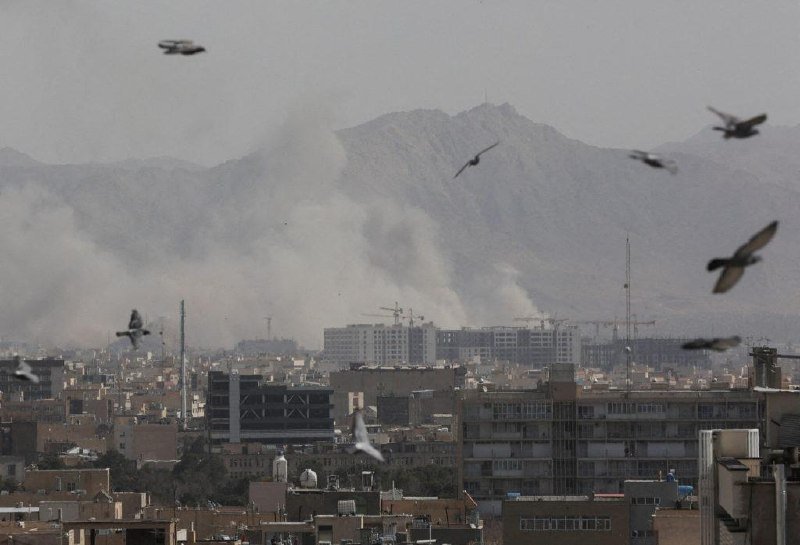
Tehran's claimed missile barrage on three US-aligned air bases is being sold at home as a calibrated response. The harder question is what the escalation ladder now looks like from Washington.
Tehran's claimed missile barrage on three US-aligned air bases is being sold at home as a calibrated response.
Tehran's claimed missile barrage on three US-aligned air bases is being sold at home as a calibrated response. / @thecradlemedia · Telegram

At 08:13 UTC on 10 June 2026, channels aligned with Iran's Islamic Revolutionary Guard Corps claimed the country's missile forces had hit four major targets at the Muwaffaq al-Salti Air Base in Jordan — a sprawling, US-accessed facility southeast of Amman — using long-range solid-fuel missiles. Within the hour, outlets including The Jerusalem Post's wire desk reported that Iran had attacked targets in Kuwait, Bahrain and Jordan simultaneously, framing the barrage as retaliation for US strikes on Iranian air-defence and ground-control stations launched the previous evening. The choreography is the story: this is the first time Tehran has publicly claimed a direct, multi-front strike on US-aligned Gulf air bases from Iranian state-aligned mouthpieces, and the timing — announced inside a single news cycle, with overlapping claims from at least two channels — reads as a deliberate information operation, not a leak.

The message is more interesting than the munition. By selecting US-accessed bases in three different host countries, Tehran forces Washington to answer three different parliaments, three different air-defence arrangements, and three different status-of-forces calculations at once. The strike is being sold domestically as calibrated and sovereign; the harder analytical question is what the escalation ladder now looks like, and whether the US response, if it comes, will widen the geography of the conflict or be quietly absorbed.

What we know, and what we don't

The Iranian-side claims are unusually detailed. The IRGC, relayed by FotrosResistancee at 07:27 UTC and again at 07:43 UTC and 08:13 UTC on 10 June, specifies four targets inside the Muwaffaq al-Salti complex, names the missile class as long-range solid-fuelled, and frames the operation as a response to the prior evening's US strikes on Iranian air-defence infrastructure. The Jerusalem Post's wire desk, in a separate dispatch at 08:00 UTC, adds two further countries — Kuwait and Bahrain — to the target list, indicating the barrage is being described as a coordinated tri-national package rather than a single-base incident.

Three things remain genuinely uncertain. First, the operational outcome: the claims come exclusively from Iranian state-adjacent channels, and no independent OSINT has yet been published in the thread material. Damage assessments, interceptor counts, and any US or Jordanian confirmation are absent. Second, the legal posture of the host states. Jordan hosts US Central Command forward elements and a long-standing defence cooperation agreement with Washington; Kuwait and Bahrain host the US Fifth Fleet and Naval Forces Central Command respectively. Whether Amman, Manama and Kuwait City were notified, consented, or surprised is a question none of the available sources answer. Third, the US casualty and damage picture. In the absence of Pentagon or CENTCOM briefing material in the record, the structural read is that we are watching a claim-and-counterclaim phase — and the next 24 to 48 hours will determine whether the exchange de-escalates into a messaging war or hardens into a sustained cycle.

The counter-narrative — calibrated or reckless?

Western wire framing, where it has appeared in the immediate wake of the claim, is likely to converge on a single word: de-escalatory. The argument runs that Iran, having absorbed a significant strike on its air-defence network the previous evening, has chosen symbolic rather than strategic targets — US-adjacent bases rather than Israeli, Gulf-state or US carrier assets — and has announced the operation through channels that broadcast intent before effect. Read this way, the barrage is a face-saving maximum-pressure counter inside a constrained box: loud enough to satisfy domestic audiences and the so-called Axis of Resistance media ecosystem, narrow enough to leave room for off-ramps.

The counter-read, and the one the Iranian-side channels are plainly trying to install, is the opposite. From Tehran's vantage point, the previous evening's US strikes on Iranian air-defence and ground-control stations were not a routine tit-for-tat — they were an attempt to blind Iranian integrated air defence ahead of further action. A barrage that visibly penetrates three host-country bases, and is claimed in real time, becomes evidence that Iran's long-range strike complex is intact and politically usable. The message to Gulf capitals is that hosting US assets is no longer a shielded status; the message to Washington is that the cost-benefit of further escalation is now visibly stacked against the status quo. Both reads can be true simultaneously. The pivot for analysts is which one survives contact with the next 72 hours of US response.

The structural frame — what kind of escalation is this?

A barrage that hits three host countries at once is not, structurally, a tactical exchange. It is a posture statement. The choice of targets — forward operating bases under bilateral defence agreements, not US homeland assets and not Israeli territory — signals that Tehran is testing the seam between US force posture in the Gulf and the political tolerance of the host monarchies. Bahrain and Kuwait both host critical US naval enablers; Jordan sits astride the southern flank. A single strike would have read as retaliation; a tri-national package reads as an attempt to force a multilateral conversation about US basing.

That is the same conversation the region has been refusing to have for two decades. Gulf states have absorbed US presence as a security premium and an insurance cost simultaneously, and the political bargain has held because the alternative — visible Iranian reach — was not on the table. The IRGC's claimed operation is, on this reading, designed to put it back on the table. Whether the host governments read it that way, and whether Washington chooses to indemnify them visibly, is the real escalation question. The munition is the headline; the basing question is the subtext.

Stakes — who wins, who loses, and over what horizon

In the short term, Tehran wins the information cycle it has been trying to win since the previous evening's US strikes: visible reach, claimed in its own voice, before Western OSINT can fully verify or debunk. The Iranian domestic audience receives evidence that the Islamic Republic can absorb a serious blow to its air-defence network and still project long-range strike power three countries away. The regional audience — Hezbollah-aligned outlets, Houthi media, Iraqi armed factions — receives evidence that the escalation ladder runs in more than one direction.

The US position is more complicated. A measured response preserves the deterrence framework; an oversized response risks the very thing Tehran's messaging is probing — a multilateral Gulf conversation about whether US basing is worth the political cost. The host governments in Amman, Manama and Kuwait City face the sharpest near-term pressure: they must either publicly absorb the strike, publicly condemn it, or quietly seek assurances, and each option has costs inside their own domestic politics.

Over a six-to-twelve-month horizon, the question is whether this barrage becomes a precedent or an outlier. If it is absorbed without a visible US counterstrike, the IRGC has established a new operational template — multi-base, claimed loudly, calibrated just short of US homeland or Israeli targets. If it produces a major US response, the template is closed but the cycle lengthens. Either way, the period in which Gulf air bases were treated as untouchable infrastructure is now visibly over, and the next Iranian news cycle will be read against that backdrop.


Desk note: this article is built almost entirely from Iranian state-adjacent channels and a single Jerusalem Post wire, and treats the IRGC's claims as claims, not confirmed outcomes. Western wires, OSINT analysts and host-state spokespeople have not yet been heard from in the record available at 08:13 UTC on 10 June 2026; the read above will need to be re-tested against the first independent verification.

Wire provenance

This editorial synthesis draws on the following public wire/social posts:

  • https://t.me/FotrosResistancee
  • https://t.me/FotrosResistancee
  • https://t.me/FotrosResistancee
  • https://t.me/The_Jerusalem_Post
© 2026 Monexus Media · reported from the wire