Iran's doctors sound the alarm: the Republic stuck in neither war nor peace
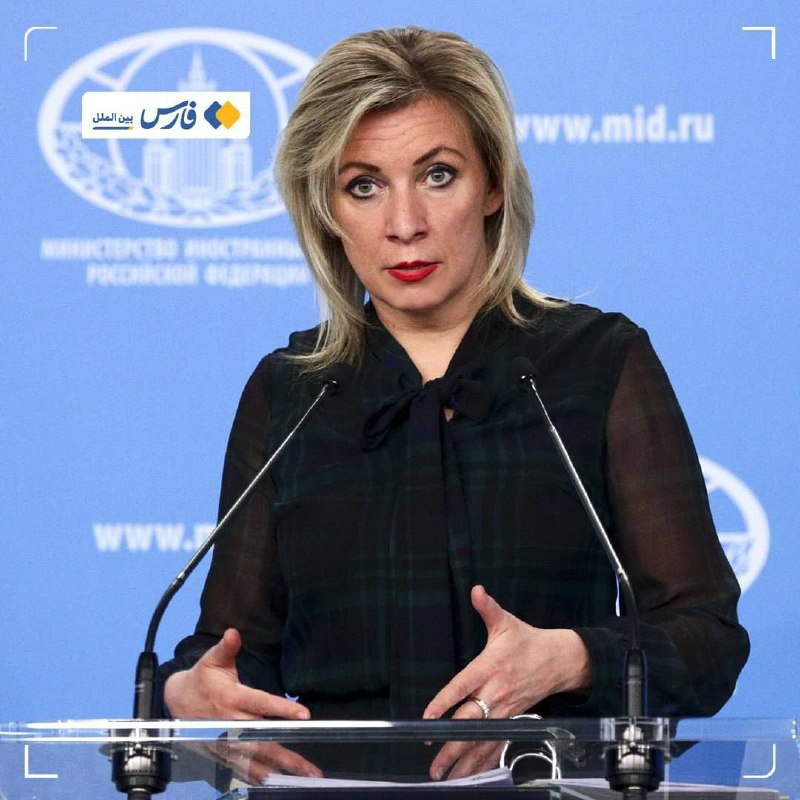
On the morning of 10 June 2026, the Telegram channel of Iran's Fars News Agency carried a video clip in which a group identified as doctors declared that the country must "get out of the state of neither war nor peace," warning that prolonged ambiguity was harmful in itself. The same message, distributed by Fars at 09:46 UTC, added that the enemy "must dream that we will stop their aggression," framing the doctors' intervention as a direct rebuke to any drift toward accommodation. Within minutes, the English-language Telegram channel of Tasnim News, the outlet linked to the Islamic Revolutionary Guard Corps, echoed the line at 09:04 UTC: "Our Iran will not surrender in front of the enemies."
The intervention matters less for its medical content than for the audience it has chosen. Senior figures in the Iranian medical establishment do not routinely appear on state-aligned Telegram feeds to lecture the country on grand strategy. The fact that they have done so suggests a coordinated push by elements inside the Republic's security-aligned press to harden the domestic conversation against any move that could be framed as concession. The chosen vocabulary — "surrender," "aggression," "state of neither war nor peace" — is the vocabulary of a state preparing its public for a renewed confrontation rather than a managed de-escalation.
What the doctors are actually saying
The Fars footage, reposted twice in the same hour from the same channel, advances a single proposition: the liminal condition the country has occupied since the June 2025 twelve-day war is unsustainable. According to the doctors cited by Fars, the situation is not war, but it is not peace either, and the ambiguity is doing damage. The repeated emphasis that "the enemy must dream that we will stop their aggression" is a rhetorical signal aimed inward — at Iranian factions that have publicly entertained the idea of absorbing another round of strikes rather than retaliating, an approach mocked in the same information space by the Middle East Spectator channel at 09:43 UTC, which described as audacious the idea that Iran should "absorb the attacks and simply 'move on.'"
The selection of doctors as the public face of the message is itself a clue. Iran's medical corps has logistical reach into every province and a public trust rating that outpaces most security institutions. Putting the line in their mouths — and not, for instance, in the mouths of generals — is an attempt to widen the constituency for a harder posture beyond the narrow IRGC base.
The counter-narrative the channels are pushing back against
What the Fars and Tasnim amplification does not name is the alternative it is trying to smother. Across the past month, voices inside Iran's commentary class — including outlets sympathetic to the government, regional analysts, and a small but visible cluster of economists — have argued the opposite: that another full-scale exchange would finish the work the June 2025 strikes began, and that the rational path is to absorb limited pressure, rebuild, and wait. Middle East Spectator's pointed reference to a claim that Iran should "absorb the attacks and simply 'move on'" identifies that position by implication. The doctors' statement is, in effect, a direct rebuttal — a refusal of the absorb-and-endure school in language calibrated for mass distribution.
This is the asymmetry worth holding on to: a state-aligned press operation is using a medical gathering to dispute a quietly influential argument inside the same elite. That is not the behaviour of a government confident in its monopoly on the debate. It is the behaviour of a government worried that the absorb-and-endure position is gaining ground it cannot afford to lose.
The structural frame: a Republic without a war, without a peace, without a plan
Iran's strategic condition since June 2025 has been defined precisely by the absence of a clean category. The strikes came, the retaliation came, the ceasefire was reached, and the underlying dispute was left untouched. The regional architecture that frames the dispute — the relationship with the United States, the position of the Axis of Resistance, the question of enrichment — was not resolved; it was merely paused. A state in that condition has to choose, at some point, between reloading for a war that is now structurally possible, or settling into a long cold conflict that quietly hollows out the parts of its deterrent posture that depend on credibility.
The doctors' demand to "get out of the state of neither war nor peace" is the political class acknowledging, in public, that this choice can no longer be deferred. The fact that the demand is being made by a constituency with no obvious stake in the military decision — and amplified by outlets that are themselves instruments of the security state — suggests that the postponement has costs the system can no longer absorb quietly. The structural pattern is familiar: a hegemonic actor that wins a round but cannot convert the win into a settlement is forced into a posture of permanent readiness, and permanent readiness is expensive in lives, capital, and political cohesion.
Stakes and what to watch next
If the line pushed by Fars and Tasnim prevails, the practical consequence is a more aggressive Iranian posture in the negotiations that the mediation track has been trying to advance — the same track that, according to reporting aggregated across regional outlets, has produced tentative movement on sequencing. A posture that defines any concession as surrender makes the sequencing question harder, because the cost of accepting a partial settlement rises inside the domestic audience. If the absorb-and-endure line prevails, the practical consequence is the opposite: an Iran that takes the next round, refuses to escalate, and bets on time. Either way, the suspended condition the doctors have identified is what the next several months of regional diplomacy will, in practice, be negotiating over.
What remains uncertain is the weight of the doctors' intervention relative to the more conventional security voices. The Fars channel carried the footage twice in twelve minutes, which is the rhythm of a coordinated push, not a passive upload. The Tasnim echo, from a channel with a different institutional lineage, suggests the message has cleared the IRGC gate. But the sources do not specify which doctors spoke, which institution convened the gathering, or whether the remarks were scripted or extemporaneous. The evidentiary base for a confident reading of intent is thinner than the volume of the amplification would suggest. A reader should treat the clip as a signal of an internal debate, not as a forecast of policy.
Desk note: the wire frame for this kind of intervention tends to flatten it into a single Iranian posture. The Fars and Tasnim amplification, read against the Middle East Spectator counter-post, is more usefully read as evidence of a domestic fight inside the Iranian elite over whether to treat the post-12-day-war condition as a platform for reloading or a condition to manage.
Wire provenance
This editorial synthesis draws on the following public wire/social posts:
- https://t.me/farsna
- https://t.me/farsna/15906
- https://t.me/Middle_East_Spectator
- https://t.me/tasnimnews_en
- https://t.me/tasnimnews_en