"We're not afraid of fighting losers": Iran's parliament sharpens its rhetoric as Trump vows a second day of strikes
On 10 June 2026, the chairman of Iran's parliamentary National Security Committee publicly contradicted the White House on American casualties, while the US president vowed a second day of strikes. The exchange lays bare the information fog over a widening confrontation.
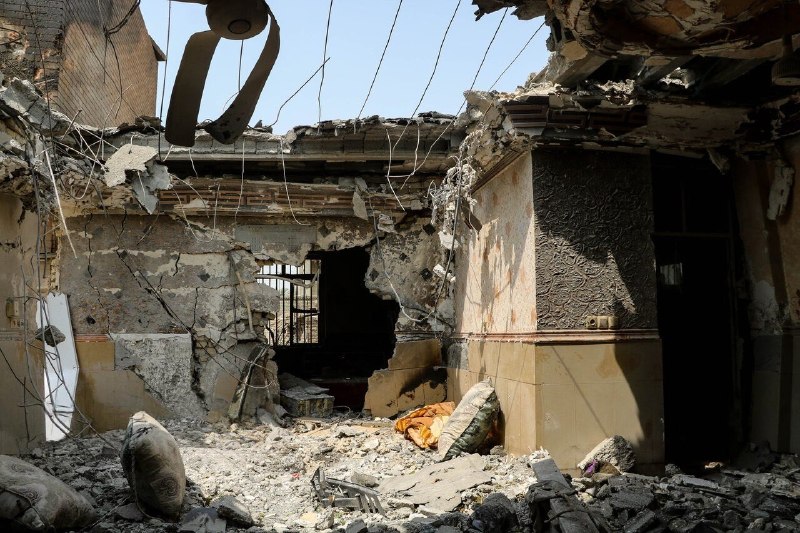
At 18:27 UTC on 10 June 2026, a statement attributed to US President Donald Trump began moving across the open-source monitoring channels that track US-Iran confrontations: "We hit them [Iran] hard yesterday, we're gonna hit them again hard today." The line surfaced through an aggregator that has previously carried direct feeds of the president's remarks. Within minutes, a counter-voice was on the wire. Ebrahim Azizi, chairman of the National Security and Foreign Policy Committee of Iran's parliament (Majlis), declared in remarks circulated by Iranian state-aligned outlets and by pro-Tehran Telegram channels that "we are not afraid of fighting losers," that American casualties were "already far higher than Trump confirms," and that "this time, the war won't be limited." The two statements, separated by minutes and oceans of credibility, define the information environment around an escalation that neither side has yet fully described.
The exchange matters less for its content than for the gap it exposes. A sitting head of state is publicly promising a second consecutive day of strikes on a country of nearly ninety million people. A senior Iranian legislator is publicly contradicting the White House on the human cost of the first day. Both claims are being amplified by partisan media ecosystems that the other side treats as hostile. What is missing — independent confirmation of strikes, an authoritative casualty count, the operational scope of whatever was hit on 9 June, and any Iranian retaliation — is precisely what readers and policymakers most need.
This publication treats the Trump remark as on-the-record political speech by a principal actor, and the Azizi statement as on-the-record political speech by a parallel principal in the Iranian system. The two are not symmetric: one comes from the commander-in-chief of the force that is presumed to have struck; the other comes from a parliamentary committee chair with no operational authority over the Islamic Republic's armed forces. But both are doing the same work — setting a domestic narrative before the facts have been independently established.
The day the rhetoric was made
The single clearest data point is the timestamp on the original Trump quote: 18:27 UTC, 10 June 2026, distributed via the @rnintel channel. The line — "We hit them [Iran] hard yesterday, we're gonna hit them again hard today" — is short, declarative, and consistent with the cadence the administration has used in previous rounds of pressure on Tehran. It does not specify what was struck, by what means, or with what effect. It also does not acknowledge any US casualties, a notable absence given the parallel Iranian claim that those losses are significant.
Within roughly forty minutes, three independent aggregators had carried the Azizi response, attributing the remarks variously to "the head of the national security commission of the Iranian parliament," to "Senior Iranian MP Ebrahim Azizi," and to "Ebrahim Azizi, chairman of the National Security Committee of Iran's Parliament." The convergence on Azizi's identity and title is unusually clean for a fast-moving Telegram wire; it suggests either a single Iranian state-media source being mirrored, or a coordinated release from the Majlis press office. Press TV, the Iranian state broadcaster's English-language outlet, was the earliest visible carrier, posting a framed image of Azizi alongside the text of his remarks.
The substance of the Iranian response has three components. First, the casualty claim — that US losses are "already far higher than Trump confirms." Second, the credibility claim — that Iran is "not afraid of fighting losers," a phrase that re-frames the conflict as one between an ascendant power and a declining one. Third, the scope claim — that "this time, the war won't be limited," a sentence read in Tehran as signalling potential escalation to Israeli or US bases across the region, and in Western commentary as Iranian bluster. None of the three claims can be independently verified from the open record as of this writing.
The structural problem: an information war inside a shooting war
The most consequential fact about 10 June 2026 is not the strike, nor the counter-strike, nor even the rhetoric. It is that the public record is being written almost entirely by the two sides themselves, in real time, with no apparent third-party verification layer in place.
The architecture of this kind of information environment is familiar. Two principals issue mutually incompatible claims. Each claim is amplified by media ecosystems that the other side classifies as hostile or captured. The resulting fog does not favour either party on the merits; it favours the side that can impose its preferred vocabulary on the next round of coverage. In past US-Iran confrontations — the January 2020 strike on Qasem Soleimani, the 2019 shoot-down of a US drone, the tanker incidents in the Gulf of Oman — the same dynamic played out, with the difference that Iran had a smaller media footprint in English and a tighter grip on domestic coverage. The 2026 environment is closer to symmetry: Iran's English-language outlets have matured, and the pro-Iran Telegram ecosystem is large enough to seed a counter-narrative within minutes of a US statement.
What neither side is currently doing is producing evidence. Trump's "yesterday" claim is unaccompanied by a target description, a strike video, or a US Central Command release. Azizi's casualty claim is unaccompanied by name, by region, or by a Majlis press transcript. The reader is being asked to choose which principal to believe on the basis of priors — and priors, in this corner of the world, are deeply and increasingly polarised.
What the parallel track looks like
A second, quieter track ran in parallel to the headline exchange. Several of the channels carrying the Azizi remarks also flagged a related Iranian posture in the Strait of Hormuz, where the Islamic Republic has previously harassed commercial shipping and where any sustained disruption would move oil prices within hours. The thread context does not include a confirmed incident in the Strait on 10 June; the references are prospective, citing the scope-expansion language ("this time, the war won't be limited") as the basis for expecting an eventual Iranian move there. The framing is consistent with Tehran's long-standing doctrine of using the Strait as a pressure valve — open by default, throttled at moments of maximum leverage.
A third track, also below the headline noise, concerns Israel. The official Israeli and Western-wire reaction to a US strike on Iran has historically lagged the US announcement by hours rather than minutes, suggesting that Israeli coordination runs ahead of public confirmation. No Israeli cabinet statement, IDF release, or Haaretz/Ynet brief is present in the open record at the time of writing, and this publication does not speculate about coordination that is not in the sources.
What we do not know — and what we should be honest about
The single most important thing this article can do is be explicit about what it cannot establish.
The thread context contains no independent confirmation that a US strike took place on 9 June 2026. Trump's claim to that effect is on the record; the claim is consistent with prior administration behaviour; but the available sources do not include a Department of Defense release, a Reuters or AP wire with a bylined correspondent, a satellite-imagery assessment from an OSINT outlet, or a US-allied foreign ministry statement corroborating the strike. The reader is being asked to take a sitting US president's word for it.
The thread context contains no independent confirmation of the casualty figure Azizi cites. The Iranian side has produced no name, no rank, no location, and no photographic or video evidence. The Western side has produced no Pentagon roll-up, no Defense Department press briefing transcript, and no casualty assistance call. The gap between the two claims — zero US casualties in the Trump framing, "far higher" in the Azizi framing — is wide enough that one of them is almost certainly wrong. The open record, as of 18:35 UTC on 10 June 2026, cannot adjudicate between them.
The thread context contains no information about targets, weapons used, ingress route, allied participation, Iranian air-defence activity, or any second-order effect (cyber, naval, diplomatic). It contains no information about Iranian retaliation in progress, no information about Israeli posture, and no information about whether the Strait of Hormuz remains commercially open. Each of these is a question a reader reasonably needs answered; each is, on this evidence, unanswered.
The stakes, plainly stated
If the 10 June exchange describes what is actually happening — a US strike campaign entering its second day, with Iran rhetorically preparing to widen the conflict — the regional consequences are severe. A two-front confrontation in which Israel, the United States, and Iran are simultaneously at elevated readiness has no clean off-ramp. The Iranian doctrine of escalation control, the US doctrine of escalation dominance, and the Israeli doctrine of preventive action are not designed to converge. Oil markets will reprice. Gulf states will be pressed to declare alignment. Russian and Chinese diplomatic machinery, already active in the background of the Iran file, will accelerate.
If the 10 June exchange is the first move in a rhetorical cycle that does not yet reflect operational reality — a Trump line drawn tighter than the situation warrants, a Majlis line drawn tighter than the situation warrants, both sides performing for their domestic audiences while the diplomats work the back channel — then the immediate consequences are different. The information environment gets worse. Verification infrastructure matters more, not less. And the principal task of a publication covering the story is to keep separate the things that the principals have said from the things that have actually happened.
The honest answer is that the open record, at 19:05 UTC on 10 June 2026, does not let a careful reader choose between those two scenarios. It records that a US president said he struck Iran and would do so again. It records that an Iranian parliamentary committee chairman said the cost was already high and the war would widen. It records the speed with which both statements crossed the wire. It does not record what fell, who fell with it, what was hit back, or what comes next. The next twenty-four hours of reporting will be measured against that ledger.
This publication treated both principal statements as on-the-record political speech and declined to assign operational authority to the Iranian parliamentary committee chair that he does not hold. The information environment around a US-Iran confrontation rewards scepticism about both sides' first-day claims; the structural risk of a second day of strikes is that the verification gap widens before it narrows.
Wire provenance
This editorial synthesis draws on the following public wire/social posts:
- https://t.me/presstv/1234
- https://t.me/ClashReport/5678
- https://t.me/wfwitness/9012
- https://t.me/rnintel/3456
- https://t.me/abualiexpress/7890
- https://t.me/GeoPWatch/1234
Follow the event.
These dated source records provide context. They do not retrospectively verify this archive article.
Separate what the nuclear watchdog reported from what it could not determine after the June 2025 strikes.