Iran orders Strait of Hormuz closed after US strikes; oil markets brace
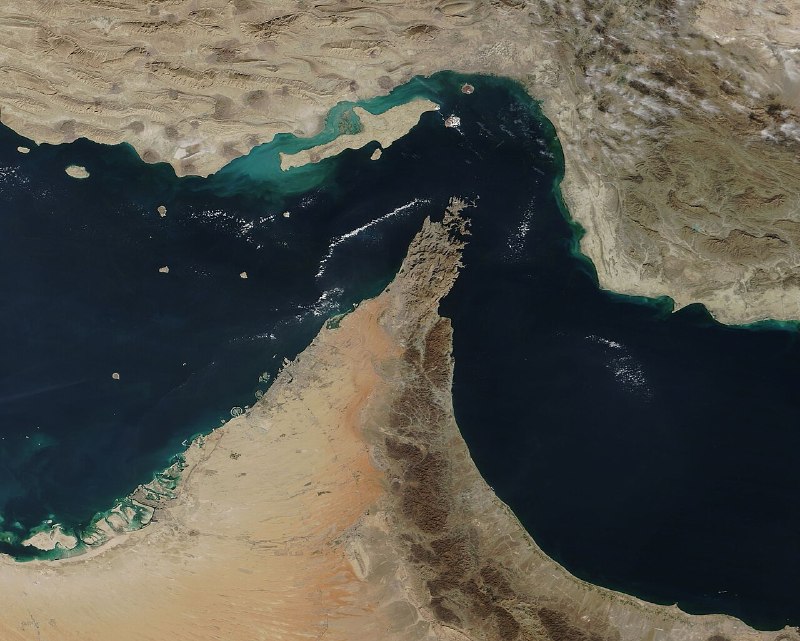
Iran's Khatam al-Anbiya Central Headquarters announced the full closure of the Strait of Hormuz to all vessel traffic at approximately 22:45 UTC on 10 June 2026, hours after what Iranian state-linked channels described as American retaliatory airstrikes against the country. The order, broadcast across Iranian-aligned Telegram channels, warned that any vessel attempting to transit the chokepoint would be treated as a hostile target, with no exceptions for oil tankers, commercial ships, or humanitarian cargo.
The closure, if enforced, would sever the maritime corridor through which roughly a fifth of the world's traded crude passes each day. It marks a sharp escalation in the long-running shadow war between Washington and Tehran, and the first time in the post-1979 era that the Islamic Republic has openly declared the waterway closed rather than merely harassed. The move lands against a backdrop of deteriorating nuclear talks, an emboldened Israeli air campaign against Iranian proxies, and a US administration that has framed Iranian deterrence as a campaign-year issue.
The order, and the language around it
Khatam al-Anbiya, the unified command structure of Iran's armed forces, issued the closure order in a statement carried by multiple Iranian-affiliated channels including DDGeopolitics and War Footage Witness. The announcement cited "insecurity in the region" as the legal pretext and framed the closure as a defensive response to American strikes, not as an offensive escalation. The Middle East Spectator, an opposition-leaning Telegram channel that aggregates Iranian state media, published two further claims in the hour after the closure order: that Iran had destroyed two commercial vessels attempting to transit the strait, and that the two US Navy ships subsequently reported as hit in Western wires may in fact have been those same commercial hulls misidentified by open-source intelligence. Those accounts could not be independently corroborated at the time of writing.
The framing matters. Tehran has long threatened to close the strait in extremis; the international legal case for doing so is weak, but the practical case — the inability of any navy to fully police a 21-nautical-mile channel dominated by Iranian fast attack craft and anti-ship missiles — has kept that threat credible. By tying the closure to an alleged US first strike, Iran positions itself, at least for domestic and aligned audiences, as the responding party rather than the initiator. Western framing is likely to invert that sequence, treating the closure as the precipitating act that triggers a naval response.
What is and is not verified
Several layers of claim sit on top of each other in the Telegram traffic. At the most basic level, the closure order itself is well-sourced: the statement was issued by a named Iranian military headquarters and rebroadcast across at least six distinct channels, including the BRICS News feed and Clash Report, an aggregator used by Western analysts. The Insider Paper, a translation outlet that monitors Iranian and Russian state media, also carried the announcement in full.
Above that sit the kinetic claims — two ships destroyed, two US warships hit. These have not been confirmed by the US Navy, the Pentagon, or by any of the major Western wire services within the first hour of reporting. They originate from a single Telegram account and carry the usual sourcing caveats applied to unverified claims issued during active combat: the accounts may reflect accurate early reporting from the Iranian side, Iranian information-shaping, or genuine confusion as smoke and radar returns are sorted out. The lack of independent visual or satellite confirmation in the source material means Monexus cannot, in good faith, repeat those claims as established fact. Readers should treat the ship-strike reports as Iranian-aligned assertions pending verification from US Central Command, the Pentagon, or independent OSINT analysts with access to commercial satellite imagery.
The framing sequence — strikes first, closure second — is also contested. Iranian channels describe the closure as a response to American airstrikes; Western coverage, once it catches up, is likely to treat the closure as a new and independent act. Until the timing of the alleged US strikes is confirmed by an authoritative US source, the question of who moved first in the 24-hour window before the closure order remains open.
The structural picture: why the strait matters this much
The Strait of Hormuz is the most consequential single chokepoint in the global energy system. Roughly 17 to 21 million barrels of oil pass through it on a typical day, alongside a significant share of liquefied natural gas exports from Qatar. There is no pipeline substitute at scale: the East-West Pipeline across Saudi Arabia can move a fraction of that volume, the UAE's Habshan-Fujairah route can take perhaps 1.8 million barrels per day, and Iraqi and Kuwaiti bypasses add small incremental capacity. Even a partial disruption tightens the seaborne market within hours; a full closure sustained for more than a few days would force a structural repricing that no current spare-capacity buffer can absorb.
The closure order is also a test of the United States' stated posture in the region. The Fifth Fleet, headquartered in Bahrain, exists in significant part to keep this waterway open. Its operational plans for an Iranian closure have been publicly war-gamed for two decades. The test is therefore not just about oil — it is about whether the dollar-priced maritime order that underwrites global energy trade can be defended by a Navy already stretched across the Western Pacific, the Eastern Mediterranean, and the Red Sea, where Houthi attacks on shipping have forced rerouting since late 2023.
For Iran, the calculus is equally structural. A sustained closure would inflict severe economic damage on its own oil exports and on its neighbours — Saudi Arabia, the UAE, Iraq, Kuwait, Qatar — whose own energy revenues depend on the same waterway. Tehran would, in effect, be holding its own economy hostage alongside those of its rivals. That is the kind of move a state makes when it has decided that the cost of doing nothing has become higher than the cost of escalation; it is not a negotiating posture, it is a crisis posture.
Stakes, and the days ahead
If the closure holds, the immediate winners are producers outside the Gulf — US shale, Norway, Brazil, Guyana — and speculators with long energy exposure. The immediate losers are Asian importers with limited strategic reserves, including China, India, Japan, and South Korea, whose leaders will be on the phone to Washington, Riyadh, and Tehran within hours. The longer the closure persists, the more it accelerates two structural shifts already in motion: the gradual unwinding of just-in-time oil inventories, and the quiet construction of payment and shipping architectures that bypass the US dollar and the European maritime-insurance market.
For Tehran, the gamble is that a sustained crisis forces a diplomatic off-ramp — a return to talks, sanctions relief, a security guarantee — that the pre-crisis trajectory was not going to deliver. For Washington, the gamble is the opposite: that the cost to Iran of an extended closure, combined with the demonstrated willingness to use force, will collapse the regime's regional position faster than negotiations ever could. Both bets can be wrong at once. The history of oil-shock diplomacy is mostly the history of great powers misreading how much pain their adversary was willing to absorb.
What happens next depends on three things the next 48 hours will reveal: whether the US Navy moves to escort tankers through the strait, whether Iran's regular naval forces — as distinct from IRGC fast boats — implement the closure order, and whether the alleged strikes on Iranian targets that triggered the order are confirmed, denied, or quietly left unaddressed by official US spokespeople. Each of those answers will determine whether 10 June 2026 is remembered as the day the world's most important oil chokepoint was briefly closed, or as the day a regional war widened into a global one.
— Monexus will update this story as independent confirmation of the ship-strike claims and the timing of the alleged US strikes becomes available.
Wire provenance
This editorial synthesis draws on the following public wire/social posts:
- https://t.me/Middle_East_Spectator
- https://t.me/ClashReport
- https://t.me/insiderpaper
- https://t.me/DDGeopolitics
- https://t.me/wfwitness
- https://t.me/AMK_Mapping
- https://t.me/bricsnews