Iran declares Strait of Hormuz closed to all shipping after IRGC strike on two vessels
Tehran's military command shut the world's most important oil chokepoint on 10 June 2026 after IRGC gunboats struck two vessels attempting to transit, with the closure framed as a response to regional insecurity.
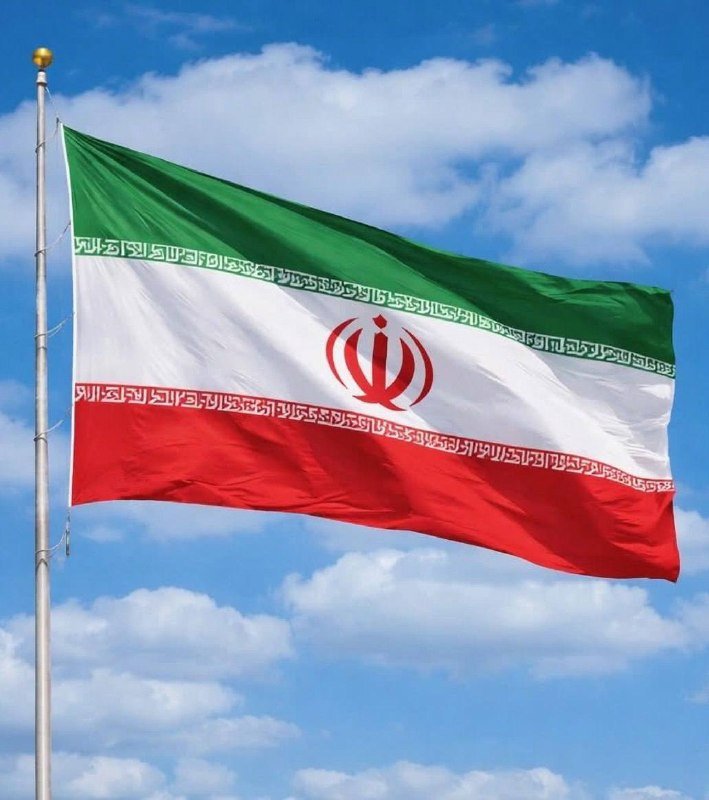
At 22:54 UTC on 10 June 2026, Iran's Islamic Revolutionary Guard Corps Navy said it had struck two vessels that "attempted to illegally transit the Strait of Hormuz" after they violated passage restrictions. Within minutes, the central headquarters of Hazrat Khatam al-Anbiya — Tehran's joint military command — declared the waterway closed to "all types of vessels, including oil tankers and commercial ships," citing "insecurity in the region."
The statements, distributed by Fars, Mehr and Tasnim news agencies and amplified by the IRGC-aligned ClashReport channel, represent the most acute disruption yet to the corridor that moves roughly a fifth of the world's seaborne oil. The closure order is not a quiet advisory; it is an explicit prohibition, broadcast by state media, with armed enforcement already underway at the chokepoint itself.
Iran has, on this reading, escalated from shadow-boardings and selective harassment of tankers to a formal blockade claim over the strait — a posture the international oil market treats as a price event, not a press event.
The order and the trigger
The closure notice was issued by the central headquarters of Hazrat Khatam al-Anbiya, the unified command structure that sits above Iran's regular military and the IRGC. According to the Fars news wire and the English-language Tasnim outlet, the order declared the strait off-limits "to the traffic of any type of vessel, including oil tankers," effective immediately. Mehr news agency posted the same language, pinning the statement to the top of its channel.
The trigger, as the IRGC Navy described it, was two vessels that had ignored the new restrictions. "Two vessels that attempted to illegally transit the Strait of Hormuz were struck after violating the passage restrictions," the IRGC said in the statement relayed by ClashReport. No flag, ownership, cargo, or casualty information was given in any of the four initial dispatches; the IRGC did not specify whether the vessels were seized, damaged, or sunk, nor identify the crew.
The sequencing matters. Within roughly ten minutes, the closure order was carried by the three principal state-aligned outlets — Fars, Mehr and Tasnim — and pinned by at least one of them. The unity of the messaging, on this publication's reading, is itself the signal: Tehran intends the closure to be read as sovereign policy, not a unilateral IRGC action.
Why the chokepoint is the chokepoint
The Strait of Hormuz is the only sea route from the Persian Gulf to the open ocean. It runs between Iran to the north and Oman and the United Arab Emirates to the south, narrowing to roughly 21 nautical miles wide, with shipping lanes on each side separated by a two-mile buffer. Estimates of the share of seaborne crude that transits it have clustered around one-fifth of global oil supply, alongside a similarly large slice of liquefied natural gas from Qatar.
A closure is not a technical event. Even a partial, episodic closure pulls insurance war-risk premia up by multiples, diverts tankers onto the longer route around Africa, and forces Gulf producers to declare force majeure on contracted cargoes. The 2019 episode, in which Iran briefly seized commercial tankers, was enough to move benchmark prices by single-digit percentages within days; a formal closure that lasts hours rather than days is something markets have priced as a tail event.
Iran's framing — that the closure is a response to "insecurity in the region" — leaves the predicate deliberately broad. It can be read against any of the pressures on Tehran: sanctions enforcement, maritime incidents in the Gulf, Israeli operations, or the standoff around the IRGC's regional posture. The statement does not name a target, and the absence is itself a diplomatic instrument.
The counter-narrative and what is missing
Iranian state media carry the closure as a defensive measure, with Mehr, Fars and Tasnim all using the language of regional instability. The IRGC framing — vessels "attempted to illegally transit" and "violated the passage restrictions" — presents the use of force as enforcement of an already-declared order, not as the opening act of one.
The initial dispatches do not name the vessels struck, their flag state, their cargo, the extent of damage, or the status of the crews. The IRGC statement is the sole source for the strikes; no independent maritime authority, no Lloyd's List intelligence note, and no third-party navy had confirmed the incident within the first hour of the order. A measured read of the available material is that the closure is confirmed at the level of Iranian state messaging; the kinetic event that is said to justify it is, for now, single-sourced.
There is also no indication, in the four source items, that a third party has issued a reciprocal closure or transit order. The United States Navy's Bahrain-based Fifth Fleet, which routinely escorts commercial traffic through the strait in periods of tension, has not been named in the available material. The silence in the wire is itself a beat to watch over the next hours: either a convoy operation begins, or the strait goes effectively dark for non-Iranian hulls.
Stakes and the next 24 hours
For the oil market, the question is duration. A closure measured in hours is a spike; a closure measured in days is a supply event, with Brent likely to gap above prior ranges and Gulf producers forced to draw on storage or cut term-loadings. For shipowners, war-risk underwriters are the first move: a formal Iranian closure order is exactly the trigger that lifts premia into the high single digits as a percentage of hull value.
For the diplomatic track, Tehran has, with this order, forced every external actor to choose. The Gulf monarchies, dependent on the same strait for export, have an interest in keeping it open. China and India, the largest single customers for Gulf crude, have a parallel interest and a track record of resisting any one power's effort to control the corridor. Western navies, including the US Fifth Fleet and the UK Royal Navy's regional presence, have treated freedom of navigation in the strait as a standing commitment. The next hours will be defined by who, if anyone, attempts to transit and how Iran responds.
The structural read is plain: the chokepoint is doing what chokepoints do. Whoever physically controls the passage sets the price of access, and the price of access is, in the end, a price on oil. Tehran has now made that price explicit, in a statement broadcast on three of its own channels within the same ten-minute window. The world's most important oil lane is, as of 22:54 UTC on 10 June 2026, formally closed by the country that sits on its northern shore.
This publication has reported the order as carried by Iranian state media. The IRGC's strike notice is the sole source for the two vessels struck; flag, ownership, cargo and casualty information had not been disclosed in the initial four dispatches.
Wire provenance
This editorial synthesis draws on the following public wire/social posts:
- https://t.me/ClashReport/
- https://t.me/farsna/
- https://t.me/mehrnews/
- https://t.me/tasnimnews_en/
- https://t.me/mehrnews/
- https://en.wikipedia.org/wiki/Strait_of_Hormuz